



No Chemical Wooden Toy Care: Montessori Parents' 10 Minute Routine
Wipe wooden toys daily with a damp, lint-free cloth and a little mild soap, saving diluted vinegar for deeper cleans. Never soak or submerge them; let them air-dry fully, about 24 hours, before your child touches them again. A few times a year, condition finished pieces with food-grade mineral oil or beeswax to keep the wood from drying out and cracking.
TL;DR:
- Wooden toys should never be soaked or submerged; instead, wipe them with a damp cloth and dry thoroughly to prevent warping and mold growth.
- Deep cleaning for heavily mouthed or contaminated toys requires a vinegar solution closer to 1:1 with water, but should be followed by full air-drying for at least 24 hours.
- Regular inspection for splinters, loose fasteners, or cracks is essential, and repairs should involve gentle sanding, tightening, or non-toxic glue, not drastic measures.
- Conditioning unfinished or food-contact toys with food-grade mineral oil or beeswax every three to six months helps prevent drying, cracking, and splintering, especially in dry climates.
- Store wooden toys in a dry, well-ventilated space with stable humidity levels between 40 and 60 percent, avoiding airtight containers and direct sunlight.
Table of Contents
- How to Clean and Disinfect Wooden Toys Safely
- Why You Should Never Soak Wooden Toys, and How to Dry Them Right
- Conditioning, Oiling, and Finishes: What Actually Protects the Wood
- Inspecting and Repairing Wooden Toys Between Cleanings
- Storage That Keeps Wooden Toys From Warping or Molding
- How Often Should You Clean and Sanitize Wooden Toys?
- Why Wooden Toy Care Protects Both Safety and Play Value
- A Caregiver’s Take on Fitting Maintenance Into Real Life
- Sources
- FAQ
How to Clean and Disinfect Wooden Toys Safely
Not every wooden toy needs the same treatment every time. Daily grime, like sticky fingerprints or snack crumbs, only needs a quick pass with a damp cloth. Deeper sanitizing (after a cold, a trip to daycare, or a stint at grandma’s teething-happy puppy… er, baby) calls for something with actual antimicrobial punch.
Here’s how to match the method to the mess:
- Everyday wipe down: Dampen a soft cloth with plain water and wipe the surface. For light soil, add a drop of gentle dish soap.
- Moderate cleaning: Mix mild soap with warm water, or dilute white vinegar roughly 1:4 with water for cutting through grease and residue. Wipe, then follow immediately with a dry cloth.
- Deep sanitizing: For toys that have been mouthed heavily, shared at daycare, or exposed to illness, use a stronger vinegar solution, closer to 1:1 with water, wiped on and off within a minute or two.
- Stubborn or sticky grime: A baking-soda paste worked in gently with a soft-bristle brush lifts dried food or marker without scratching the finish.
- Sealed, painted, or varnished surfaces only: A tiny amount of rubbing alcohol on a cotton swab can spot-disinfect small areas. Test on an inconspicuous spot first, and never let it sit or soak into raw wood.
Keep a soft cloth, a soft-bristle brush, and a few cotton swabs on hand for hinges, wheel axles, and other crevices. Skip anything abrasive: steel wool, scouring pads, or gritty powders will chew through a painted finish faster than any toddler could.
Pro Tip: Keep a small spray bottle of diluted vinegar under the sink labeled just for toys. Grabbing it takes less time than hunting for wipes, and you’ll actually use it.
Why You Should Never Soak Wooden Toys, and How to Dry Them Right
Wood is porous, so it drinks in water instead of shedding it the way plastic does. Submerge a wooden toy, or run it through the dishwasher, and the grain swells unevenly. That swelling separates fibers, lifts glued joints, and cracks or peels the finish as the wood shrinks back down while drying.
Moisture trapped inside is also exactly what mold needs to take hold, often invisibly, inside a hollow toy or a wheel joint.
The fix is simple:
- Towel-dry the surface immediately after cleaning.
- Set the toy in a well-ventilated spot away from radiators, heating vents, or direct sun.
- Let it air-dry for at least 24 hours before handing it back over.
- If a toy gets accidentally soaked (bath time mishap, backyard hose incident), blot up standing water right away and extend drying time well past 24 hours.
- Check the finish and joints once dry. If wood has warped, delaminated, or gone soft, it’s time to retire that piece rather than risk a splinter or a structural failure mid-play.
Conditioning, Oiling, and Finishes: What Actually Protects the Wood
Unfinished or food-contact wooden toys, think teethers, blocks, and stacking rings, benefit from an occasional coat of food-grade mineral oil or a beeswax polish. Both soak into the grain, repel moisture, and keep the surface from drying into a splintery mess.
- Apply a small amount of oil or wax to a soft cloth.
- Rub it into the wood following the grain.
- Let it absorb for 15 to 20 minutes.
- Wipe away any excess so the surface isn’t greasy or tacky.
Most caregivers find conditioning every three to six months keeps toys looking fresh, with drier climates or heavily handled toys leaning toward the three-month end and moderate climates stretching closer to six.
Always spot-test a new oil on a hidden area first. Skip drying oils like linseed unless they’re labeled food-safe and fully cured, and avoid solvent-based polishes entirely. Painted or varnished sections don’t need oiling at all. Oil applied over paint just sits on top, doesn’t absorb, and can leave a sticky film that attracts dust.
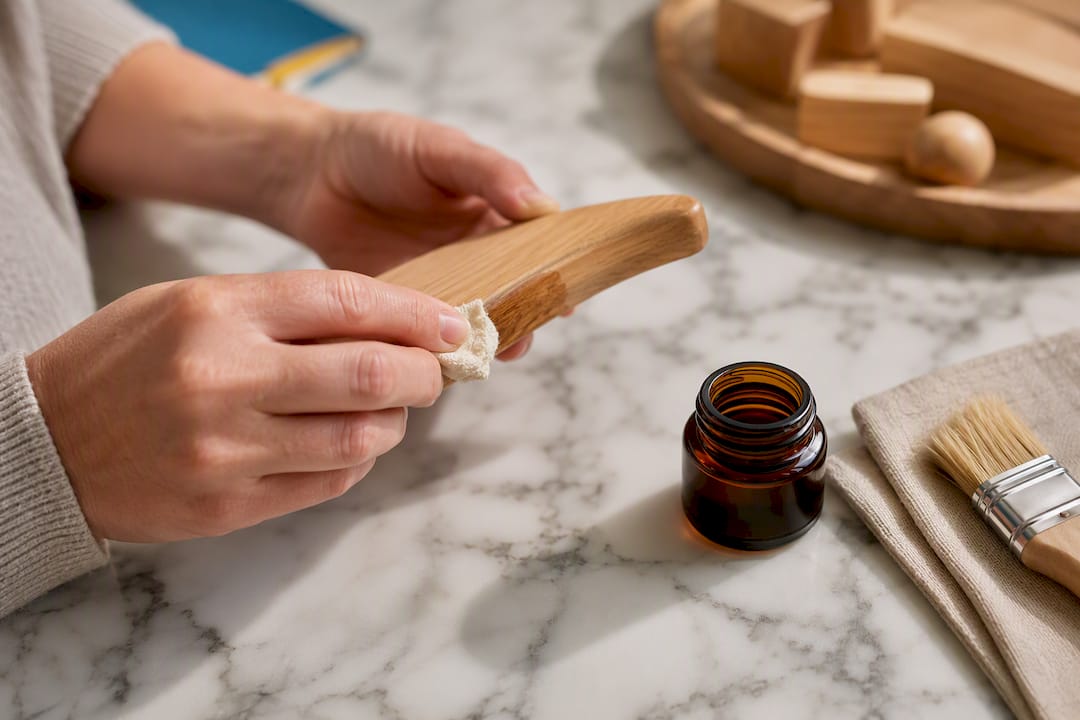
Pro Tip: Beeswax polish doubles as a light seal for small cracks starting to form. If you catch dryness early, a coat of wax can buy a toy months of extra life before it needs sanding.
Inspecting and Repairing Wooden Toys Between Cleanings
A quick once-over during your regular wipe-down catches problems before they become hazards. Look for these signs every time you clean:
- Splinters or rough patches along edges and corners.
- Loose screws, pegs, wheels, or hinges.
- Cracked or separating joints where pieces were glued.
- Flaking, peeling, or chipped paint and varnish.
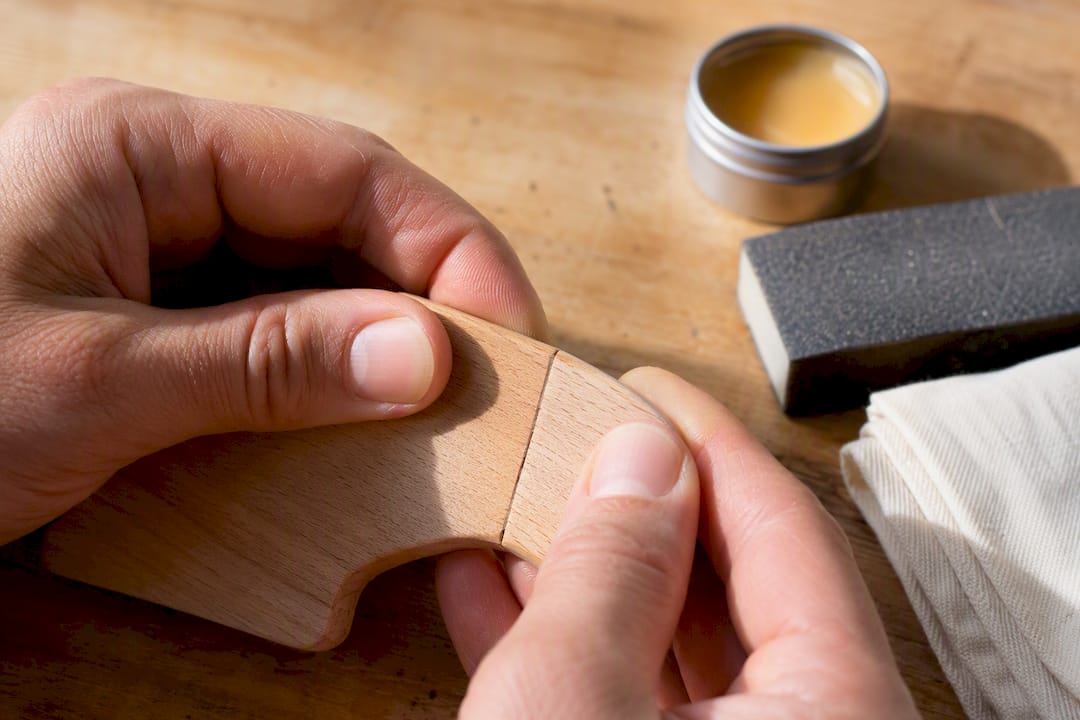
Small splinters sand out easily with fine-grit sandpaper, working with the grain until the surface feels smooth. Loose fasteners can usually be tightened with a small screwdriver, and non-toxic wood glue handles minor joint separations. If a crack runs through a structural piece, or paint is flaking off in chips small enough to swallow, it’s time to retire the toy rather than repair it.
After any repair, test the fix by tugging or flexing the area, recoat with oil or wax if you sanded raw wood, and supervise the first few play sessions to make sure everything holds.
Storage That Keeps Wooden Toys From Warping or Molding
Wood keeps its shape best in stable, moderate conditions, ideally around 40 to 60 percent indoor humidity. Big swings, especially damp basements or stuffy attics, are what cause warping and mildew over the long haul.
- Store toys somewhere dry and ventilated, out of direct sunlight, which fades paint and dries out wood unevenly over time.
- Skip airtight plastic bins in anything less than a bone-dry room. Trapped humidity has nowhere to go.
- Choose breathable storage instead: open shelving, woven baskets, or slatted wooden bins as explained in How to Organize Baby Gear Essentials Without the Chaos. A practical storage setup also makes toys easier for little ones to reach and put away themselves.
- Before packing toys away for a season, clean and condition them first, then wrap delicate pieces in breathable cotton cloth rather than plastic wrap.
How Often Should You Clean and Sanitize Wooden Toys?
The right cadence depends on how the toy gets used, not the calendar.
- Teethers and anything mouthed regularly: Wipe after every use, or at minimum daily.
- Everyday favorites (blocks, cars, puzzles handled constantly): a quick wipe once a week keeps grime from building up.
- After illness: Deep sanitize with the stronger vinegar solution the moment a cold or stomach bug passes through the house.
- Shared or daycare toys: Sanitize weekly at minimum, more often if multiple kids are mouthing the same pieces.
- Visibly soiled toys: Clean immediately rather than waiting for a scheduled wipe-down.
A fast gut check: if it’s been in a mouth, near a sick kid, or looks dirty, it gets cleaned now. Everything else can wait for the weekly pass.
Why Wooden Toy Care Protects Both Safety and Play Value
A well-maintained wooden toy isn’t just safer, it holds its value as a learning tool for years. Montessori-style play depends on toys staying smooth, balanced, and predictable in the hand, which is exactly what regular conditioning and careful drying protect. Neglected finishes and splintering wood undercut that experience fast, and can turn a favorite stacking toy into a hazard.
Every piece in Montessori-inspired collections is ideally chosen with that long play life in mind. If you’re curious about what makes a finish or material safe from the start, our guide to non-toxic toy materials breaks down what to look for before a toy ever reaches your cart.
A Caregiver’s Take on Fitting Maintenance Into Real Life
Ten minutes on Sunday: wipe everything down, check for splinters, oil anything dry. Kids old enough to hold a cloth can “help” wipe their own toys, which teaches care habits early without adding to your workload.
— Danica Hodge
Sources
For deeper detail on the methods above, see Consumer Reports on drying wooden toys, Healthy Kid Play on oils and repairs, KidKraft’s cleaning guide, and the EPA Safer Choice label for picking safer cleaning products.
- How to Safely Clean and Disinfect Your Baby’s Toys - Consumer Reports
- Caring for Wooden Toys: Oils, Repairs, and Storage - Healthy Kid Play
FAQ
What Is the 20 Toy Rule for Kids?
The 20 toy rule limits a child’s accessible toys to about 20 at a time, rotating the rest into storage to reduce clutter and encourage deeper play. It also makes maintenance realistic, since fewer toys in rotation means faster cleaning and inspection each week. Our guide to toy minimalism walks through how to set this up.
How Do I Sanitize Wooden Toys?
Wipe the toy with a vinegar solution diluted roughly 1:1 with water for illness-level sanitizing, or 1:4 for routine deep cleaning. Never soak the toy, and dry it fully, about 24 hours, before it goes back into rotation.
How Do I Store Wooden Toys Long Term?
Clean and condition the toy first, then store it in a dry, ventilated space at 40 to 60 percent humidity, away from direct sunlight. Use breathable bins or baskets rather than sealed plastic containers, which trap moisture.
How Do I Maintain a Wooden Toy Box?
Wipe the interior and exterior with a damp cloth and mild soap regularly, and check hinges and joints for looseness every few months. Condition unfinished wood surfaces with mineral oil or beeswax every three to six months to prevent drying and cracking.