


3 Non Toxic Materials That Make Baby Toys Safe
For babies and toddlers, the safest choices are toys made from food-grade silicone, unfinished beech wood, or certified organic textiles. Skip anything relying on vague “non-toxic” marketing with no material list behind it. Prioritize third-party testing over packaging promises, especially for anything headed straight into a mouth.
TL;DR:
- Toys made from food-grade silicone, unfinished beech wood, or certified organic textiles are the safest options for babies and toddlers, especially for mouthing.
- Avoid plastics with recycling codes #3, #6, and #7, as well as painted or lacquered imported wood, due to chemical leaching and lead risks.
- Always check for explicit material labeling, third-party testing compliance, and durability, especially for toys designed for children under 24 months.
- Certifications like ASTM F963, CPSIA, OEKO-TEX, and FSC help verify safety standards but do not guarantee durability over time.
- Review product listings for clear material disclosure, compliance claims, and avoid vague marketing claims or secondhand toys with signs of degradation.
Table of Contents
- What Are the Safest Non-Toxic Toys for Babies and Toddlers?
- How to Choose Safe Children’s Toys: A Step-by-Step Checklist
- Materials and Finishes: What to Avoid and Why
- Safety Standards, Certifications, and Labels Parents Should Trust
- Shopping Checklist and Red Flags to Skip
- Why Trust This Guide: Best Kids Toys’ Vetting and Author Credentials
- Balancing Safety, Cost, and Play Value
- Start With Thebestkidstoys’ Safety-Reviewed Collection
- Sources
What Are the Safest Non-Toxic Toys for Babies and Toddlers?
Materials matter more than marketing when it comes to non toxic toys, and a handful of options consistently earn a spot on any pediatric safety list. Knowing what these materials look and feel like helps you shop with confidence, whether you’re browsing online at 11 PM or standing in an aisle holding two nearly identical rattles.
Food-grade silicone tops the list for teethers and mouthing toys. It contains no BPA, no phthalates, and no PVC, and it holds up to the boiling water or dishwasher cycles teething toys need for regular sanitizing, a point Seattle Children’s backs directly in its toy safety guidance.
Unfinished or simply oiled beech wood comes next. Beech is dense enough to resist splintering, and when left raw or treated with food-grade mineral oil, it introduces zero chemical risk during the gnawing phase every toddler goes through. Wooden stacking rings, shape sorters, and rattles built this way tend to outlast plastic versions by years, not months, which makes the case for wood toys about more than aesthetics.
Organic cotton with OEKO-TEX certification rounds out the trio for plush toys and soft books. The certification tests for over 100 harmful substances in the finished textile, not just the raw cotton, which closes a gap a lot of “organic” labels leave wide open.
When plastic is unavoidable, not all plastic is equal. Look for these acceptable options and steer clear of these:
- Safer plastics: ABS (used in many building blocks) and LDPE, marked with recycling code #4, both resist leaching under normal use.
- Plastics to skip: recycling codes #3 (PVC), #6 (polystyrene), and #7 (often polycarbonate containing BPA) show up repeatedly in Seattle Children’s list of materials to avoid.
- Good real-world examples: silicone teethers, unfinished wooden stacking toys, organic plush animals, and ABS building brick sets.
Explore our sensory toys collection if you’re building out a safer toy box by developmental stage rather than material alone.
How to Choose Safe Children’s Toys: A Step-by-Step Checklist
Shopping for phthalate free toys gets a lot easier once you have a repeatable process instead of relying on gut instinct in a crowded aisle. Run through these four steps before anything goes in your cart.
- Read the materials list first. If a listing doesn’t say what the toy is actually made of, that’s a red flag on its own. Look for explicit phrases like “food-grade silicone,” “phthalate-free,” or “BPA-free,” not just a generic “non-toxic” sticker.
- Check for referenced standards. Toys that meet ASTM F963 or comply with CPSIA testing requirements have gone through mechanical and chemical screening beyond a manufacturer’s word.
- Inspect small parts and joints. Squeeze rattles, tug on attached ribbons or eyes on plush toys, and check that wooden pieces are glued rather than nailed. Seattle Children’s notes that design and durability matter just as much as chemical safety for preventing choking hazards.
- Favor transparent sourcing. Brands willing to name their factories, show test reports, or explain their supply chain tend to have less to hide than ones that just slap “eco-friendly” on the box.
Age changes what matters most. For babies 0 to 6 months, focus almost entirely on mouthing safety: silicone, wood, and cotton, nothing with detachable trim. From 6 to 24 months, durability and joint strength become just as important as material, since toddlers pull, drop, and gnaw with real force.
Pro Tip: Keep a mental “rule of thumb” test in your pocket: if a toy is small enough to pass through a toilet paper tube, it’s a choking risk for anyone under three, no matter how the material checks out.
Materials and Finishes: What to Avoid and Why
Some toy materials carry risk that has nothing to do with brand reputation and everything to do with chemistry. Knowing the specific culprits turns a confusing shelf of options into a much shorter, safer list.
PVC, or recycling code #3, is the biggest one to avoid. The Ecology Center’s research on PVC’s life cycle flags it as a persistent concern because it often requires plasticizers like phthalates to stay flexible, and those additives can migrate out of the plastic with heat, saliva, or age. Polystyrene (#6) and polycarbonate (#7), which frequently contains BPA, land on the same avoid list.
Painted or lacquered imported wooden toys deserve a second look too. The CPSC confirms lead is banned in U.S. children’s products, but imported toys have still turned up with lead paint on the market, which is exactly why supply-chain transparency matters more than a country-of-origin label alone.
A quick materials snapshot:
- Avoid: PVC (#3), polystyrene (#6), polycarbonate (#7), lacquered finishes on imported wood
- Choose instead: LDPE (#4), ABS, water-based paints, beeswax or jojoba oil finishes
- Watch for: composite woods bonded with formaldehyde-containing adhesives
One statistic worth sitting with: emerging environmental health research links microplastic exposure to inflammation and oxidative stress in the body, which is reshaping how seriously guides treat everyday plastic exposure, not just the chemicals inside a specific plastic type.
Composite woods carry their own asterisk. Cheaper particleboard or MDF toys often use formaldehyde-based binders, and while a sealed surface reduces off-gassing, a chipped or worn one doesn’t. Solid wood with a natural oil finish sidesteps the issue entirely.
Safety Standards, Certifications, and Labels Parents Should Trust
Certifications exist because “trust me” isn’t a testing method. Here’s what the major ones actually verify:
- ASTM F963 is the U.S. mechanical and chemical safety standard covering choking hazards, sharp edges, and toxic substance limits in toys.
- CPSIA sets the federal lead and phthalate limits for children’s products sold in the United States and requires third-party lab testing for most toy categories.
- OEKO-TEX screens finished textiles for over 100 substances, useful for plush toys and soft books where “organic cotton” alone doesn’t guarantee a clean finish.
- FSC certification traces wood back through the supply chain, confirming it came from responsibly managed forests rather than just labeling it “sustainable” after the fact. Our FSC-certified toys guide breaks down what that traceability actually covers.
None of these certifications catch everything, though. They test the toy as sold, not how it holds up after a year of washing, chewing, and dropping, which is why durability inspection still belongs in your own checklist.
Shopping Checklist and Red Flags to Skip
A few seconds of scanning a product listing can save you from a return, or worse. Watch for these red flags:
- Vague “non-toxic” claims with no material specifics listed anywhere
- Missing age guidance on the packaging or listing
- No stated materials at all, just marketing adjectives
- “Organic” claims paired with a price that seems too low to cover real certification costs
Positive signals work the opposite way: a listing that names ASTM F963 or CPSIA compliance, links an actual test report, or spells out the exact material (not just “eco-friendly plastic”) earns your trust faster than any badge graphic.
Secondhand toys need extra scrutiny. Hand-me-down wooden toys are often fine once inspected for cracks, but avoid secondhand plush with matted stuffing, older painted toys (pre-2008 U.S. manufacturing predates today’s lead limits), and any teether or rubber item that’s discolored or sticky.
Pro Tip: Natural doesn’t automatically mean safe. Natural rubber teethers can trigger latex allergies in sensitive kids, and any “natural” material left damp can harbor mold. Spot-clean wooden and rubber teethers regularly and retire them once they start to degrade.
Why Trust This Guide: Best Kids Toys’ Vetting and Author Credentials
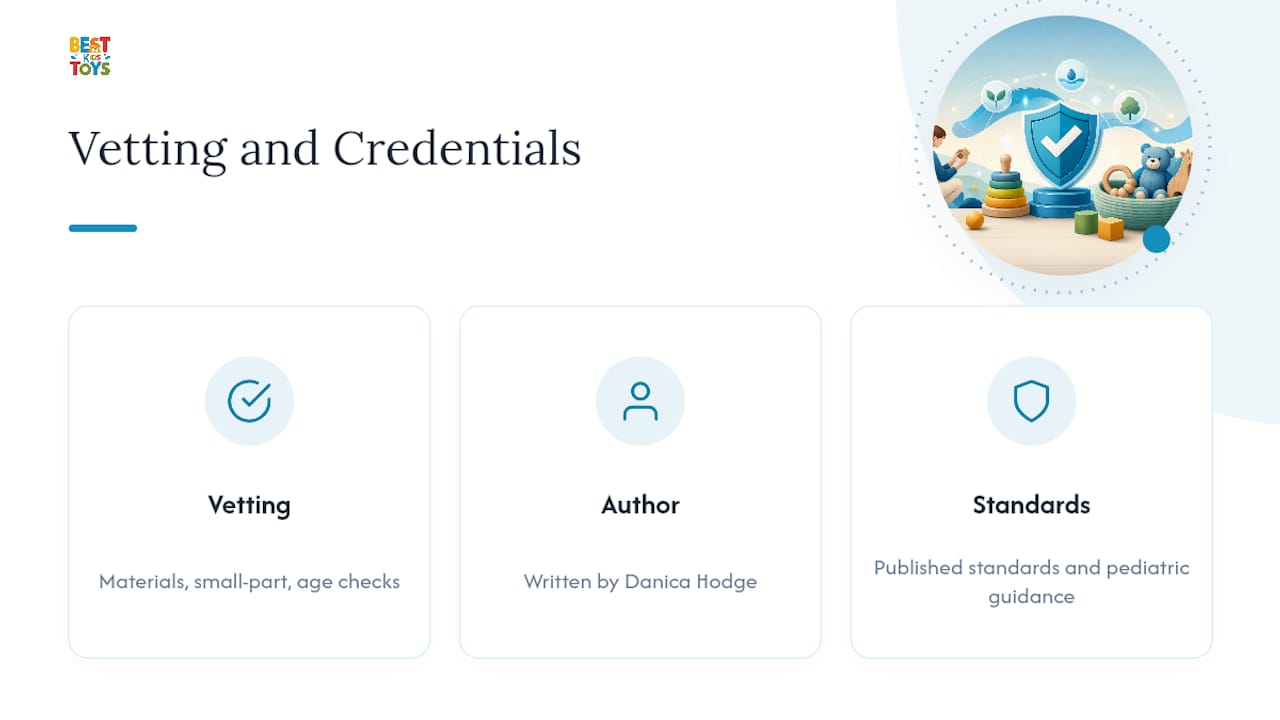
Thebestkidstoys specializes in Montessori-inspired toys, and every product in the catalog goes through a safety review before it earns a spot in the collection. That review maps directly onto the checklist above: materials list confirmed, small-part risk inspected, age range verified.
This guide was written by Danica Hodge, drawing on published safety standards and pediatric guidance rather than guesswork. When a listing on Thebestkidstoys names food-grade silicone or FSC-certified beech, that’s the same standard applied here, not a marketing shortcut.
Balancing Safety, Cost, and Play Value
Perfectly natural toys aren’t always affordable or available, and that’s fine. Swap the mouthing and teething items first since those carry the highest exposure risk, then upgrade other toys as budget allows. Chase certified, durable materials over “all-natural” marketing claims. That’s where the actual safety gain lives.
— Danica Hodge
Start With Thebestkidstoys’ Safety-Reviewed Collection
Every toy in the Thebestkidstoys catalog has already passed the same safety review outlined above, so you’re not stuck cross-checking material labels and test reports on your own for every purchase. That’s the real advantage here: the vetting work is already done before the toy ever reaches your cart.
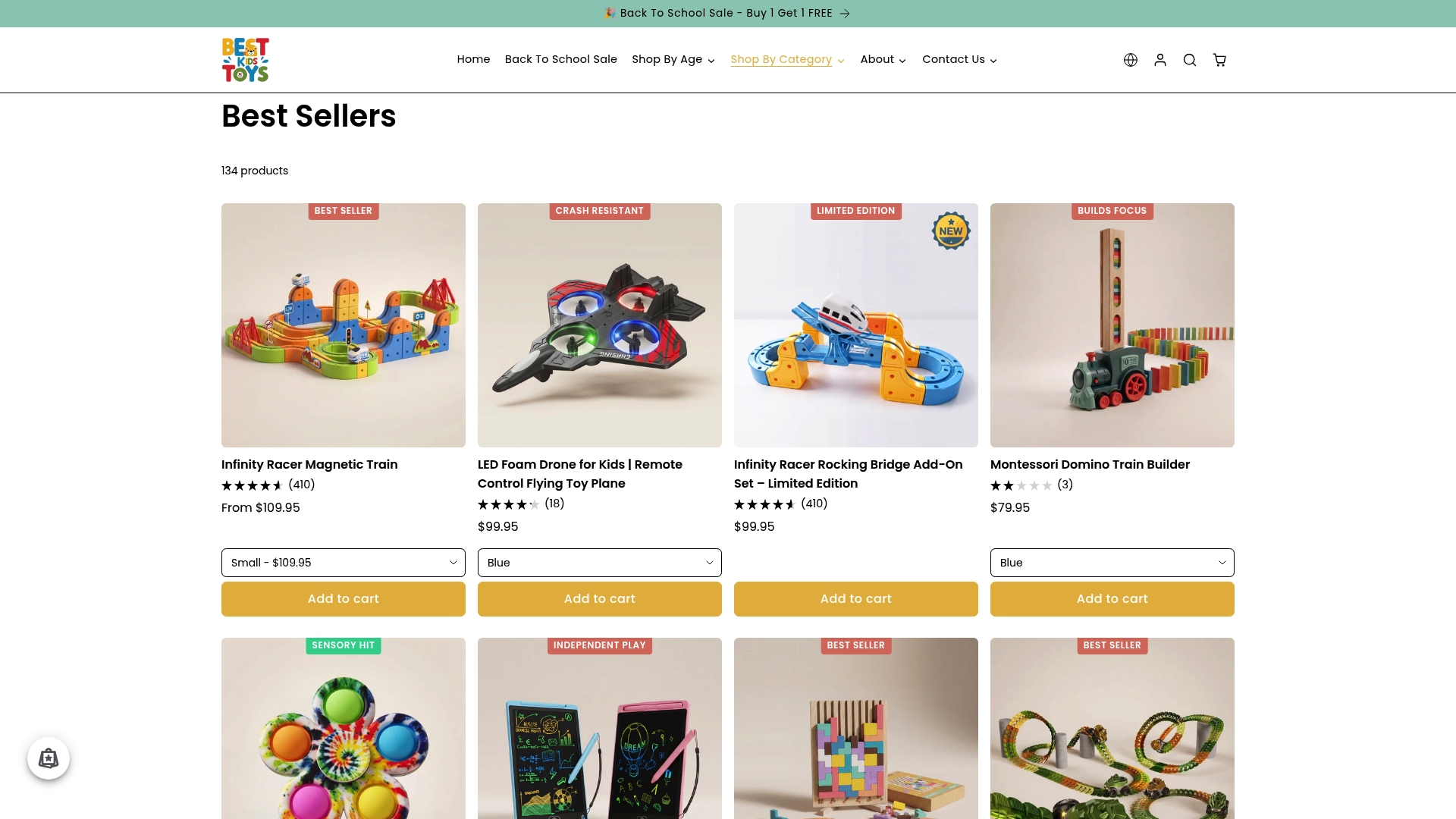
If you’re just starting to build out a safer toy box, our teething toy guide is the fastest entry point since mouthing items carry the highest priority for a swap. From there, browse the best-sellers collection to see which Montessori-inspired, safety-reviewed picks other parents are choosing most.
Sources
For official guidance, consult Seattle Children’s toy safety resources and the CPSC’s page on lead in children’s products, both direct from regulatory and pediatric authorities.