


FSC Certified Toys: What Eco-Conscious Parents Need to Know
FSC certified wooden toys are worth buying if sustainable sourcing and durability matter to you, but the FSC seal alone doesn’t tell the whole safety story. FSC verifies that the wood came from a responsibly managed forest through a traceable chain of custody. It says nothing about the paint or finish on the toy, so you’ll also want to check for marks like ASTM F963, CPSIA, or EN 71.
Here’s the short version before you shop:
- FSC = forest sourcing and traceability, verified independently
- ASTM, CPSIA, EN 71 = the marks that cover finishes and choking hazards
- Ready to skip the research and just shop? Browse Thebestkidstoys’ wooden toy collection for picks that check both boxes.
Key Takeaways
FSC certification confirms responsible forest sourcing, but only independent safety marks like ASTM F963 and CPSIA confirm a wooden toy is safe for children.
| Point | Details |
|---|---|
| FSC verifies sourcing, not safety | Check ASTM F963, CPSIA, or EN 71 marks separately for finish and choking-hazard safety. |
| Always confirm the code | Use info.fsc.org to verify chain-of-custody numbers before trusting an “eco-friendly” claim. |
| Match toy to age and mouthing risk | Younger children need larger pieces and disclosed, food-grade finishes. |
| Maintain toys properly | Clean with mild soap, never soak, and recondition with beeswax or mineral oil only. |
| Shop transparent brands | Thebestkidstoys lists FSC certification and finish details together on curated wooden toy picks. |
Table of Contents
- What Does FSC Certification Mean for Wooden Toys?
- How Do You Verify an FSC Claim Before You Buy?
- Does FSC Mean the Toy Is Non-Toxic and Child-Safe?
- Best Kids Toys’ Curated FSC-Certified Wooden Picks
- How Do You Choose the Right FSC Wooden Toy?
- Caring for Wooden Toys So They Actually Last
- What Should You Expect to Pay for FSC Certified Wooden Toys?
- Where Do Parents Typically Find FSC Certified Wooden Toys?
- What Are the Environmental and Social Benefits of Buying FSC Certified Toys?
- Editorial Take: What Actually Matters When Buying FSC Toys
- Shop FSC-Certified Wooden Toys That Skip the Guesswork
- Frequently Asked Questions
- Sources
What Does FSC Certification Mean for Wooden Toys?
The Forest Stewardship Council audits forest management against environmental, social, and economic criteria, then tracks that wood through every hand it passes through until it becomes a finished product. That tracking system is called chain of custody, and it’s the part that keeps a “sustainable” label honest instead of decorative.
You’ll run into three labels while shopping, and they’re not interchangeable:
- FSC 100% means every fiber in the product came from FSC-certified forests, no blending.
- FSC Mix allows a combination of certified wood, recycled material, and controlled sources that meet minimum FSC standards.
- FSC Recycled means the wood content is entirely reclaimed or recycled material, with no virgin forest wood involved.
For a wooden puzzle or a stacking toy, FSC 100% or FSC Recycled are the strongest claims. FSC Mix isn’t a red flag, just a slightly looser standard worth knowing about.
FSC certification applies specifically to the material source and the chain of custody. It doesn’t certify the manufacturing finish, the paint chemistry, or whether the finished toy passed child-safety testing.
That’s the detail retailers rarely spell out. If you want to confirm a specific claim yourself, Info lets you search certificate numbers directly.
How Do You Verify an FSC Claim Before You Buy?
An “eco-friendly” label means nothing without a code you can check. Here’s how to confirm a claim actually holds up:
- Find the logo and code. Look for the FSC checkmark tree logo alongside a license or chain-of-custody code, usually printed on packaging or listed on the product page.
- Check the code. Plug it into info.fsc.org or look for a brand transparency page that lists certificate numbers directly.
- Confirm at the product level. Material labels on the actual product detail page should match what’s advertised. For unbranded or marketplace listings, ask the seller for documentation before buying.
Pro Tip: If a listing says “made with FSC-certified wood” but shows no license code anywhere, treat it as a claim, not a certification. A real FSC product always has a traceable number behind it.
Does FSC Mean the Toy Is Non-Toxic and Child-Safe?
No. FSC certification and toy safety testing are two completely separate systems, and conflating them is one of the most common mistakes parents make when shopping for wooden toys.
FSC tells you where the wood came from. It says nothing about the paint, glue, or varnish applied afterward. For that, you need separate safety marks:
- ASTM F963 — the U.S. voluntary standard covering choking hazards, sharp edges, and toxic materials
- CPSIA compliance — federal law limiting lead and phthalates in children’s products
- EN 71 — the European equivalent, relevant if you’re comparing imported toys
Look for label language like “water-based paint,” “food-grade finish,” or “lead-free,” which are the clearest practical signals of a toy safe for mouthing toddlers. Before you buy anything a toddler might chew on, run through this quick check: does the listing name a specific finish (not just “natural”), does it cite ASTM or CPSIA compliance, and does it list an age range? If any of those are missing, ask before you add to cart.
Best Kids Toys’ Curated FSC-Certified Wooden Picks
Every toy on this list meets three criteria: FSC-certified wood, clearly disclosed finish information, and an age recommendation you can actually trust.
- Little Learners Montessori Busy Book (ages 2-4, $25-$40): Builds fine motor skills and problem-solving through hands-on activity pages. Verify the finish notes on the product page before it goes near a mouth.
- Montessori Wooden Building Blocks Set (ages 3-6, $30-$50): Open-ended construction play that supports spatial reasoning and executive function far better than themed, single-purpose toys.
- Montessori Wooden Craft Kit (ages 3-5, $20-$35): Encourages creative assembly and hand strength. Check the listed paint type since younger kids will handle pieces frequently.
- Toys curated for 3 to 4-year-olds ($15-$45): This age bracket needs simpler mechanisms and larger pieces. Confirm choking-hazard sizing against CPSIA guidance.
- Toys curated for 4 to 5 year olds ($20-$50): More complex builds and pretend-play sets fit here. Look for finish disclosure on any painted components.
- Toys curated for ages 5 and up ($25-$60): Kits with smaller, more intricate pieces suit kids who’ve outgrown mouthing risk but still need durable, well-finished materials.
Retailers increasingly lean on the FSC seal as a sales argument, which is exactly why checking the actual certificate matters more than trusting the marketing copy.
How Do You Choose the Right FSC Wooden Toy?
Start with three questions before you add anything to your cart:
- How old is the child, and will the toy end up in their mouth? That determines whether finish safety is a dealbreaker or a nice-to-have.
- Does the toy support open-ended play or a single themed activity? Open-ended toys like blocks tend to hold a child’s interest across more developmental stages.
- How much wear will it take? A toy for a rough-and-tumble toddler needs sturdier joinery than a shelf display piece.
From there, run down this checklist:
- Age-appropriate piece size, especially for anyone under three
- Finish type disclosed clearly: oil-based, water-based, or beeswax
- A real return policy, which signals a brand willing to stand behind quality
- Visible safety testing marks, not just vague “eco” language
Walk away from listings with no safety information, generic “eco-friendly” claims with nothing to back them, or an FSC mention with no traceable chain-of-custody code anywhere on the page.
Caring for Wooden Toys So They Actually Last
Most FSC-certified wooden toys outlast their plastic counterparts by years, provided you skip a few common maintenance mistakes.
- Clean with a damp cloth and mild soap. Never soak wooden toys, since standing water warps joints and lifts finishes.
- Recondition worn spots with beeswax or food-grade mineral oil rather than household solvents or spray polish, which can leave toxic residue.
- Retire a toy once you spot splits, splinters, loose small parts, or finish worn through to bare, unsealed wood.
If you’ve ever refinished furniture near curious toddlers, the same caution applies here: what you put back on the surface matters as much as what you take off, a principle cabinet refinishers who work around young families apply just as carefully.
What Should You Expect to Pay for FSC Certified Wooden Toys?
FSC-certified wooden toys typically cost more upfront than mass-market plastic alternatives, and that price difference reflects real costs: certified timber sourcing, third-party audits, and generally more labor-intensive manufacturing.
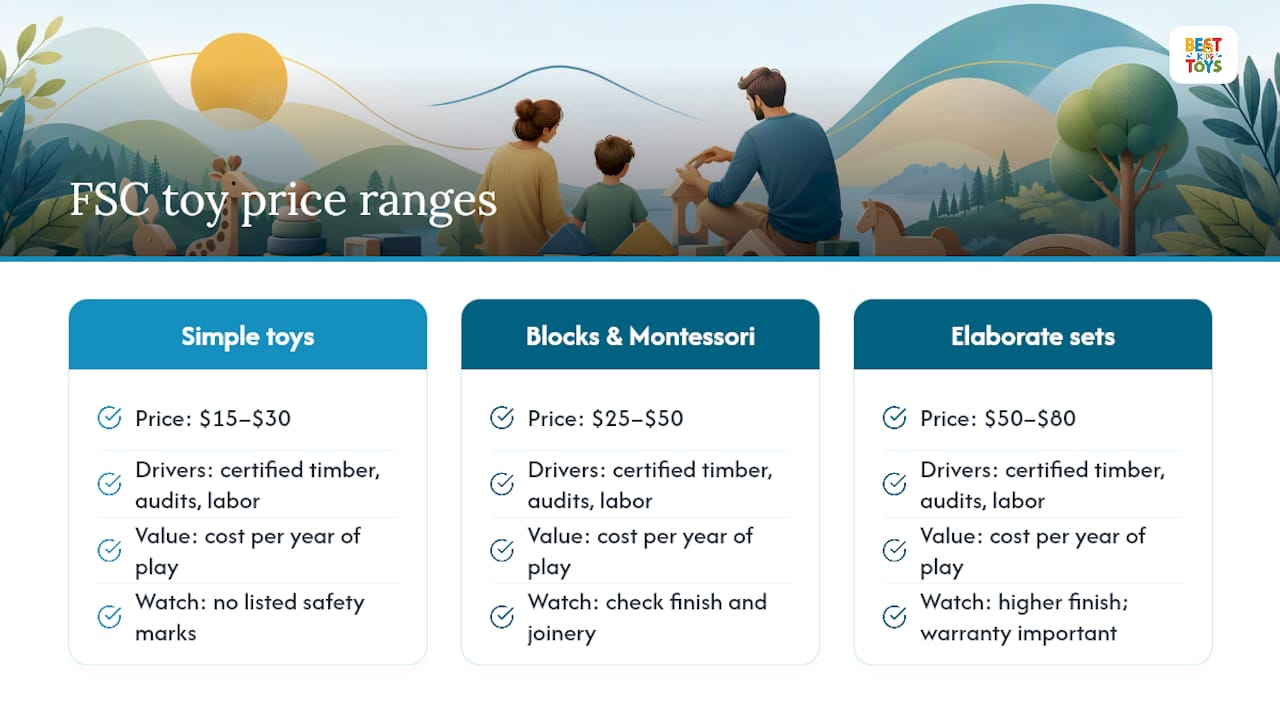
Simple wooden toys like stacking rings or shape sorters tend to run $15 to $30. Building block sets and Montessori-style activity toys usually land between $25 and $50. More elaborate pretend-play sets or multi-piece construction kits can reach $50 to $80, depending on the number of components and finish quality.
The real value comparison isn’t wooden versus plastic sticker price. It’s cost per year of play. A cheap plastic toy that cracks within months and heads to a landfill costs you more over time than a well-made wooden toy that survives multiple children and gets passed down or resold. When you’re comparing two FSC-certified options at different price points, the gap usually comes down to finish quality, joinery precision, and whether the brand backs the product with a real warranty. A toy priced noticeably below the category average with no listed safety marks is worth a second look before you buy, not after.
Free shipping thresholds and seasonal discounts can also narrow the price gap considerably, so it’s worth checking current offers before assuming certified wood is out of budget.
Where Do Parents Typically Find FSC Certified Wooden Toys?
FSC-certified wooden toys show up across a few distinct channels, each with different tradeoffs. Specialty toy retailers that focus specifically on wooden and Montessori-style products tend to carry the deepest FSC-certified selection, since sustainable sourcing is central to their catalog rather than a side offering.
Big-box retailers increasingly stock a handful of FSC-labeled wooden toys, but selection is usually limited to a few flagship product lines rather than a full assortment. Marketplace listings from independent sellers can offer good prices, but they’re also where certification claims are hardest to verify, since third-party sellers don’t always maintain the same documentation standards as a direct brand.
Direct-to-consumer brands built around sustainable materials, including Thebestkidstoys, tend to offer the clearest combination: curated FSC-certified selections with finish and safety details listed directly on each product page, rather than buried in a manufacturer spec sheet you have to hunt down separately. That transparency matters more than the channel itself. Whichever retailer you buy from, the same verification steps apply: check for the license code, confirm the finish, and look for safety marks before checkout.
What Are the Environmental and Social Benefits of Buying FSC Certified Toys?
Buying FSC-certified wooden toys supports forest management practices that protect biodiversity, regulate water systems, and maintain long-term timber yields instead of stripping forests for short-term gain. That’s the environmental case, and it’s the one most parents already know.

The social side gets less attention. FSC’s criteria also address labor conditions and the rights of local and Indigenous communities connected to certified forests, tying your purchase to standards most disposable plastic toys never touch.
There’s a durability angle too, and it’s easy to overlook. A well-made wooden toy that survives one child, then a sibling, then possibly a secondhand sale or donation, keeps far more material out of landfill than a plastic toy built for a single birthday season. Compared to biodegradable toys made from bioplastics, which still require industrial composting conditions most households can’t provide, FSC-certified wood breaks down naturally and starts as a renewable resource in the first place. Choosing certified wood over conventional plastic isn’t just a values statement. It’s a measurable reduction in both forest degradation and end-of-life waste.
Editorial Take: What Actually Matters When Buying FSC Toys
Most articles on this topic treat the FSC seal as the finish line. It’s the starting line. The certification tells you the forest was managed responsibly, and that’s genuinely valuable, but treating it as a proxy for “safe” or “non-toxic” is where well-meaning parents get misled.
The conventional advice, look for the FSC logo and stop there, undersells how much work happens after the wood leaves the forest. Paint chemistry, glue formulas, and finish quality are decided entirely by the manufacturer, with zero FSC oversight. A toy can carry a perfectly legitimate FSC 100% label and still use a finish you wouldn’t want a toddler chewing on.
If you take one thing from this, prioritize brands that disclose both certifications, forest sourcing and safety compliance, on the same product page. That transparency is rarer than it should be, and it’s the real signal of a brand that understands what “sustainable” actually requires.
Shop FSC-Certified Wooden Toys That Skip the Guesswork
Thebestkidstoys built its wooden toy collection around a simple standard: every FSC-certified pick also lists its finish and safety details right on the product page, so you’re not cross-referencing three different websites before checkout. That combination, sustainable sourcing plus upfront safety disclosure, is exactly what this article has walked you through, and it’s baked into how the catalog is organized rather than something you have to dig for.
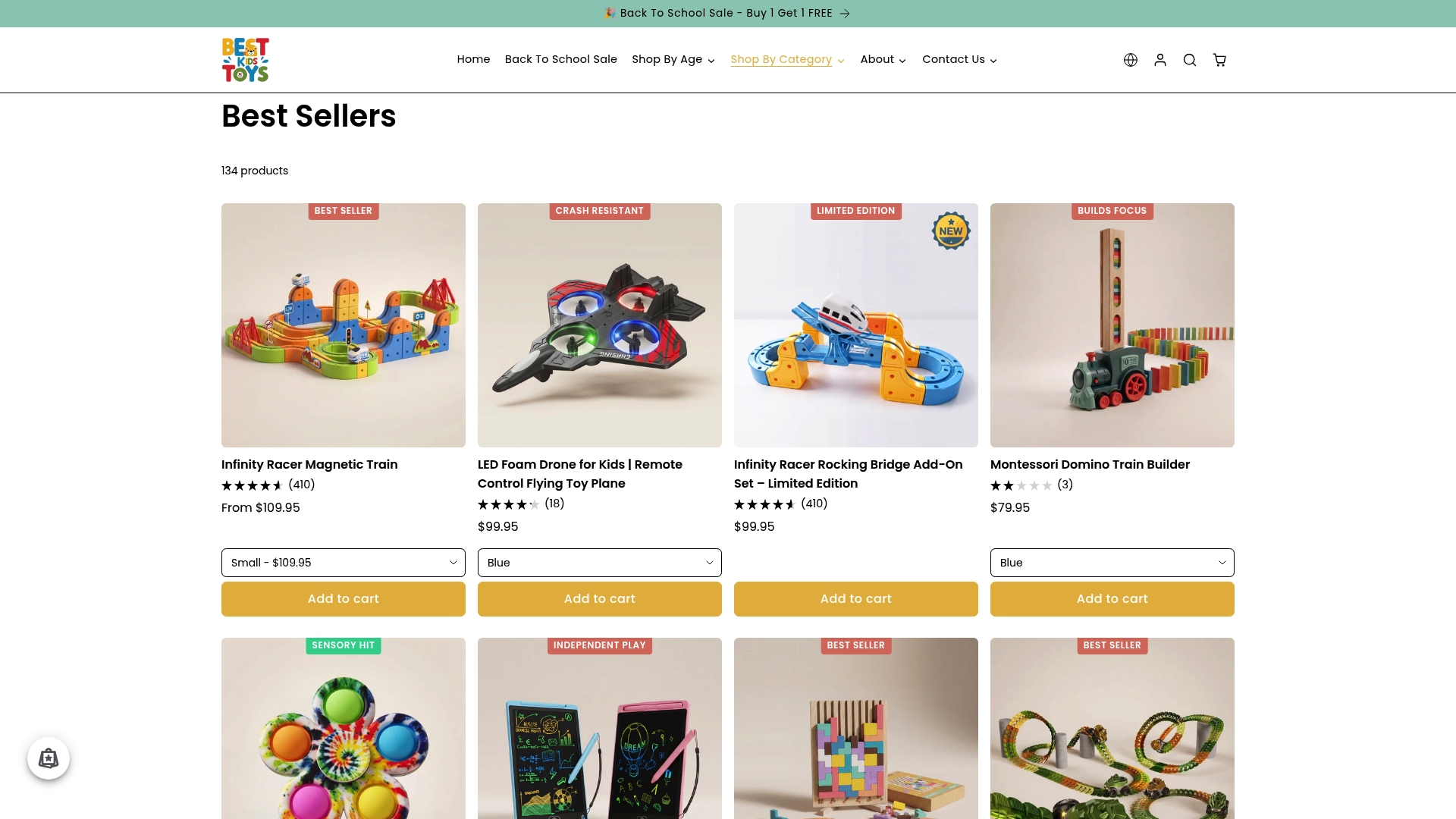
Whether you’re shopping for a toddler who mouths everything or a five-year-old ready for more complex builds, the collection is organized by age so you can find the right fit fast. Start with the wooden toys collection or browse best sellers if you want to see what other parents are choosing first.
Frequently Asked Questions
Does an FSC label mean the wood is real wood, not composite?
Not necessarily. FSC certifies the source and traceability of wood fiber, which can include engineered or recycled wood products under the FSC Recycled label. Check the product description separately to confirm solid wood versus composite material.
Are FSC-certified wooden toys automatically non-toxic?
No. FSC certification covers forest sourcing only. Non-toxic finishes require separate verification through labels like “water-based paint,” “food-grade oil,” or compliance marks such as ASTM F963 and CPSIA.
FSC 100% uses exclusively certified material with no blending, while FSC Mix combines certified wood with recycled or controlled sources that meet minimum standards.
Which brands are known for prioritizing non-toxic, FSC-certified wooden toys?
Look for brands that publish both FSC certificate numbers and finish details, such as paint type and safety compliance marks, directly on product pages rather than in a separate downloadable document. That level of disclosure is the clearest signal of a brand serious about both sustainability and child safety.
What should I do if a listing has no safety information at all?
Request documentation directly from the seller before buying, especially for unbranded or marketplace items. A brand confident in its sourcing and safety testing will have certificates ready to share.
Sources
- My
- Eco friendly wooden toys: a parent’s guide for 2026
- Info
- Benefits of Wooden Toys: Evidence-Based Guide