



Montessori Toys Storage: Practical Guide for Parents
Montessori toys storage is defined as a child-centered organization system designed to give children independent access to their toys while keeping the play space calm, safe, and clutter-free. The right setup does more than tidy a room. It actively supports your child’s development by teaching self-reliance, responsibility, and focus. Montessori simplicity and purpose drive better learning outcomes when storage is treated as part of the environment, not an afterthought. Child-height shelving, non-toxic materials, and modular furniture are the three pillars every parent should build around. Safety standards like EN 71 set the baseline for what furniture belongs in a child’s space.
What are the key features of effective Montessori toys storage?
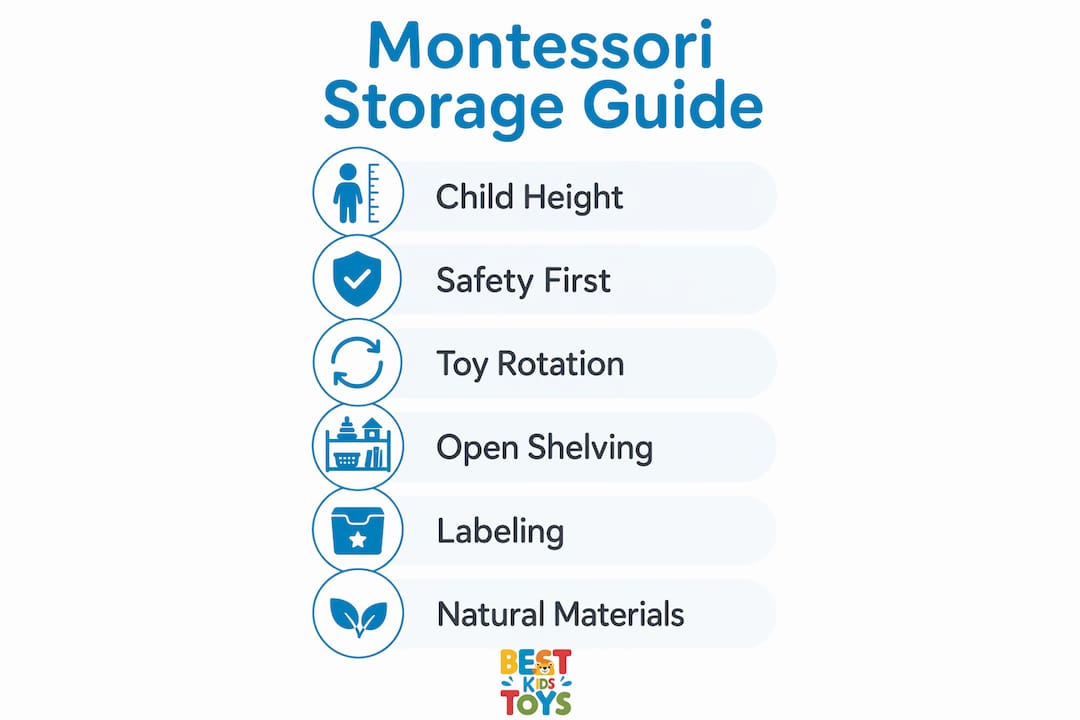
The most effective Montessori storage puts everything at a child’s eye level. Shelves typically stand 10 to 24 inches high with open compartments, so children can see every option without asking for help. That visibility is what makes independent play possible. When a child can scan their choices and reach what they want, they spend less time frustrated and more time creating.
Safety is non-negotiable. EN 71 safety standards require non-toxic finishes and anti-tipping mechanisms on children’s furniture. Rounded edges reduce injury risk during the inevitable bumps and tumbles of active play. Look for water-based, non-toxic paints and finishes that meet these standards before you buy.
Material choice shapes both safety and longevity. Natural wood and plywood provide durability and ease of cleaning, while MDF options offer scratch resistance and are odor-free. Solid pine is a popular choice because it is sturdy, lightweight, and finishes well with non-toxic stains. Rattan baskets add warmth and texture without introducing synthetic materials into the space.
Here are the features worth prioritizing when you shop:
- Child-height access: Shelves at 10–24 inches high let toddlers and preschoolers reach toys without help.
- Anti-tip hardware: Wall anchors or weighted bases prevent tipping on freestanding units.
- Rounded edges: Smooth corners protect children during active movement around furniture.
- Non-toxic finishes: Water-based paints and natural stains keep the space safe for curious hands and mouths.
- Adjustable shelf depth: Shelf depths from 9.5 to 11.8 inches accommodate everything from board books to wooden puzzles.
- Modularity: Units that stack or rearrange grow with your child’s changing needs.
Pro Tip: Before purchasing any storage unit, check the product listing for EN 71 certification or equivalent American safety compliance. A beautiful shelf that lacks anti-tip hardware is a hazard, not a feature.
How does toy rotation enhance Montessori storage effectiveness?
Toy rotation is the practice of keeping only a small selection of toys accessible at one time, then swapping them out periodically to renew your child’s interest. It is one of the most underused strategies in Montessori toy organization. A child surrounded by 40 toys often plays with none of them deeply. A child with 8 well-chosen options tends to engage with each one more creatively and for longer stretches.
Modular wall setups can hold 200+ items, but the Montessori principle is to stock shelves minimally. That means keeping out-of-rotation toys in closed storage, a bin in a closet, a lidded basket on a high shelf, or a dedicated cabinet in another room. Out of sight genuinely means out of mind for young children, which makes the toys that reappear feel brand new.
Here is a simple rotation system that works well for most families:
- Audit your collection. Sort all toys into three groups: active rotation, stored rotation, and donate or retire.
- Set up your active shelf. Place 6–10 items on the accessible shelf, mixing categories like puzzles, building sets, and sensory toys.
- Store the rest. Pack out-of-rotation toys in labeled bins and keep them out of the play area entirely.
- Schedule a swap. Rotate every 2–4 weeks, or whenever you notice your child’s engagement dropping.
- Reassess at each swap. Periodic reassessment updates layouts to fit new developmental stages, so remove anything your child has outgrown.
Pro Tip: Involve your child in the rotation process once they are old enough. Letting them choose two or three items to “put away for later” builds anticipation and gives them a sense of ownership over their space.
What practical Montessori storage solutions can parents use at home?
The best storage for Montessori toys combines open visibility with enough structure to keep things tidy. Open shelving units are the gold standard because they display toys like an invitation. Your child walks in, sees their options, and chooses independently. Baskets and bins work well as a complement, grouping smaller items like building blocks or art supplies without hiding them behind closed doors.
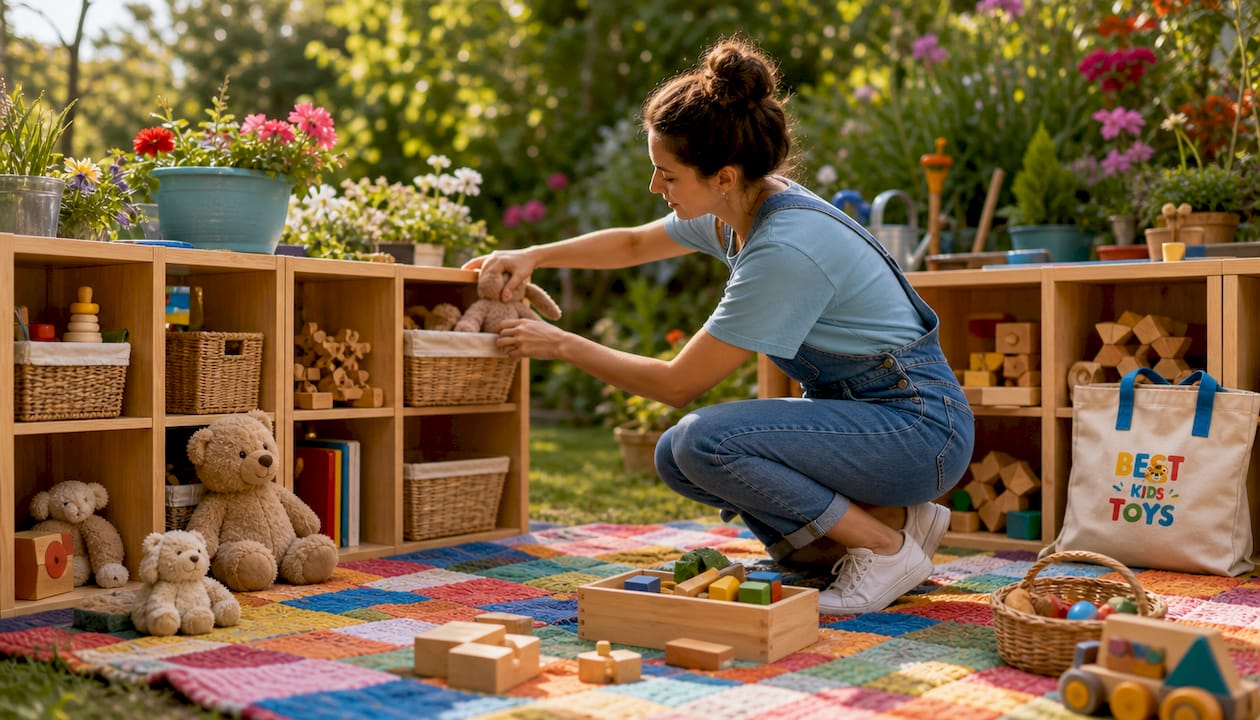
Modular wooden cube systems offer the most flexibility for home setups. You can arrange cubes in an L-shape along a wall, stack them into a tower, or spread them low across a floor. Solid pine cubes are especially popular because they are durable, look clean in any room, and accept both open shelving and basket inserts. This Tetris-style approach means you never outgrow the furniture. You simply rearrange it.
Labeling is a detail many parents skip, but it pays off quickly. Chalkboard labels and picture tags empower children to organize and develop responsibility. A toddler who cannot read yet can still match a picture of a puzzle to the correct basket. That small act of matching builds organizational thinking long before formal schooling begins.
Here is a quick comparison of the most common creative toy storage ideas by format:
| Storage format | Best for | Key benefit |
|---|---|---|
| Open wooden shelves | Puzzles, books, single-piece toys | Maximum visibility, easy access |
| Wicker or rattan baskets | Small sets, art supplies, loose parts | Grouped storage, natural aesthetic |
| Modular cube units | Mixed toy types, growing collections | Flexible layout, long-term adaptability |
| Low drawer units | Flat items, dress-up accessories | Hidden storage with child-height handles |
Eco-friendly materials matter here too. Choosing solid wood over plastic storage furniture reduces off-gassing in your child’s play space and aligns with the Montessori value of connecting children to natural materials. The benefits of natural materials extend beyond aesthetics. They improve focus and engagement during play.
How to balance aesthetics and functionality in Montessori toy storage?
Minimalist aesthetics combined with safety and practicality create inviting, calm spaces that encourage self-directed play. The goal is not a showroom. The goal is a space your child wants to be in and can navigate without your help. Neutral tones, natural wood finishes, and uncluttered surfaces all reduce visual noise that can overwhelm young children.
Functionality and safety take priority over aesthetics. Avoid intricate designs with decorative cutouts, multiple colors, or complex hardware. These details look appealing in photos but create barriers to independent use. A child who struggles to open a latch or pull a heavy drawer will simply stop trying, and the storage system defeats its own purpose.
Color choice is a practical decision, not just a stylistic one. Neutral finishes like natural pine, white, and gray keep the focus on the toys themselves. Bright storage furniture competes visually with the toys on display and can make a room feel chaotic even when it is tidy. The toys are the color. The furniture is the frame.
Pro Tip: When in doubt, choose the simpler option. A plain open shelf your child uses every day beats a beautiful storage unit they avoid because it is too complicated to operate independently.
What are best practices for maintaining Montessori toy storage over time?
A well-designed storage system needs regular attention to stay effective. Children grow fast, and a setup that worked beautifully at age two may frustrate a four-year-old who has outgrown it. Building a maintenance habit into your routine keeps the environment aligned with your child’s current abilities and interests.
Modular storage units can be stacked or rearranged based on developmental needs and space constraints. This adaptability is the single best argument for investing in modular systems over fixed furniture. You are not buying a shelf. You are buying a system that evolves with your child.
Here are the key maintenance practices to build into your routine:
- Monthly toy audit: Remove anything broken, outgrown, or no longer engaging. Less is always more in a Montessori space.
- Seasonal layout review: Reassess shelf height and arrangement every few months as your child grows taller and more capable.
- Regular cleaning: Gentle wiping of rattan baskets and wood surfaces keeps furniture looking fresh and extends its life.
- Child involvement: Teach your child to return toys to their labeled spots after play. This builds responsibility and keeps the system working.
- Resist accumulation: Every new toy that enters the space should replace something, not simply add to it.
Investing in modular Montessori storage ensures longevity through multiple developmental stages and avoids premature replacement. The upfront cost of quality furniture pays off when you are not replacing it every two years.
Key Takeaways
Effective Montessori toys storage requires child-height shelving, non-toxic materials, modular furniture, and a consistent toy rotation practice to support independent play and long-term development.
| Point | Details |
|---|---|
| Child-height access is essential | Shelves at 10–24 inches high let children choose and return toys without adult help. |
| Safety standards matter | Look for EN 71 compliance, anti-tip hardware, and water-based non-toxic finishes. |
| Toy rotation reduces overwhelm | Keeping 6–10 toys on display at a time deepens engagement and renews interest. |
| Modular systems grow with children | Cube-based storage rearranges to match each developmental stage, avoiding replacement costs. |
| Labels build responsibility | Picture tags and chalkboard labels teach children to organize independently from an early age. |
What I have learned from setting up Montessori storage at home
The biggest mistake I see parents make is designing storage for the room, not for the child. A beautiful shelf placed at adult height is just furniture. The moment you drop it to the child’s eye level, it becomes a tool for independence. That shift in perspective changes everything about how you approach the whole setup.
Modularity saved me more times than I expected. I started with a simple two-cube arrangement on the floor for a toddler. Two years later, those same cubes were stacked into a four-unit tower for a preschooler who needed more categories and more challenge. I never replaced the furniture. I just rearranged it. That kind of longevity is rare in children’s products, and it is worth paying for upfront.
The pitfall most parents overlook is over-filling the shelves after a birthday or holiday. The storage system works because of what you leave out, not what you put in. Every time I added too many toys, engagement dropped within days. Every time I pulled back to a minimal selection, my child played longer and more creatively. The research supports this, and so does lived experience.
Balancing simplicity with enough variety to keep a child engaged is an ongoing practice, not a one-time setup. Think of the play space as a living environment that needs tending, like a garden. The Montessori toys that encourage independent learning do their best work when the storage system around them is just as thoughtfully designed.
— Danica Hodge
Thebestkidstoys has the toys your storage system deserves
A well-organized Montessori space is only as good as the toys you fill it with. Thebestkidstoys offers a curated selection of Montessori-inspired wooden toys designed to sit beautifully on open shelves and engage children in screen-free, hands-on learning. Every product is reviewed for safety, developmental value, and long-term play quality.
Whether you are setting up a toddler’s first play corner or refreshing a preschooler’s space, Thebestkidstoys has age-matched options ready. The Little Learners Montessori Busy Book is a perfect shelf-friendly addition for ages 3 and up, combining fine motor practice with independent engagement. Free shipping is available on orders over $60, and current sale pricing makes it a great time to build out your collection.
FAQ
What is Montessori toys storage?
Montessori toys storage is a child-centered organization system that places toys at a child’s eye level in open, accessible shelving. The goal is to support independent play, self-reliance, and a calm, clutter-free environment.
What height should Montessori shelves be?
Montessori shelves work best at 10–24 inches high, keeping toys visible and reachable for toddlers and preschoolers without adult assistance.
How often should you rotate Montessori toys?
Rotating toys every 2–4 weeks maintains a child’s interest and keeps the play space uncluttered. Swap items when you notice engagement dropping or when your child’s developmental needs shift.
What materials are best for Montessori toy storage furniture?
Solid pine, plywood, and rattan are the top choices because they are durable, easy to clean, and free from harmful off-gassing. Look for water-based, non-toxic finishes that meet EN 71 or equivalent safety standards.
Do labels really help children with Montessori organization?
Chalkboard labels and picture tags help children as young as two years old return toys to the correct spot independently. This builds organizational habits and a sense of responsibility long before formal schooling begins.