



15-Minute Montessori-Friendly Story Dice Lesson for Parents & Teachers
A compact storytelling-dice kit or a quick printable roll-a-story sheet is the fastest way to get children inventing full stories out loud or on paper, no screens required. A storytelling dice collection is a simple starting point for families and classrooms, and it works from preschool circle time through upper-elementary writing centers with a few tweaks to how many dice you roll — complemented perfectly by guidance on sensory play and child development that enhances learning through tactile activities.
TL;DR:
- Durable, high-contrast, and easily recognizable icons support participation from children with visual or sensory differences, especially in classroom settings.
- Sets should match age-specific complexity, ranging from one or two dice for preschoolers to up to nine for advanced plot creation.
- Roll-and-assemble activity templates with picture-only, word-only, or customizable faces allow for versatile use across different learning levels.
- Short timed storytelling bursts significantly increase output and confidence by reducing anxiety over blank pages or open-ended tasks.
- Starting with a simple three-dice set and one story build offers instant insight into a child’s engagement and whether the set suits their developmental stage.
Table of Contents
- How to Play Story Dice With Kids: Rules and Quick Variants
- Five Ready-to-Run Story Dice Activities for Different Ages
- Why Story Dice Work: The Research Behind the Play
- DIY and Printable Story Dice: Templates and Quick Assembly
- How to Choose (or Make) Story Dice: A Buyer’s Checklist
- A 15-Minute Story Dice Lesson Plan You Can Copy Today
- The Publisher’s View: What Actually Makes a Story Dice Set Worth Buying
- Where to Start: The Best Kids Toys Storytelling Dice Collection
- Sources
How to Play Story Dice With Kids: Rules and Quick Variants
The basic mechanic never changes: roll, look at the pictures that land face up, and build a story that connects them in order. That is the whole game, and it is exactly why storytelling dice work so well with short attention spans.
Here’s how to run it, step by step:
- Roll. Toss your dice onto a table or into a shallow box lid to keep them contained.
- Read the images. Each face shows a simple icon (a castle, a fish, a lightning bolt) rather than a word, so nonreaders can play too.
- Order the dice. Line them up left to right in the sequence you’ll use them.
- Tell or write the story. Weave each image into a beginning, middle, and end.
Rory’s Story Cubes recommends grouping cubes in sets of three for exactly this reason: one die anchors the setup, one drives the development, and one delivers the conclusion. For younger kids, roll just one die for a thirty-second tale. For older kids, try nine dice and scramble the order instead of reading left to right, forcing them to build a plot rather than narrate a list. A digital story dice generator works well for group settings where physical dice would take too long to pass around.
Five Ready-to-Run Story Dice Activities for Different Ages
Different settings call for different setups. These five have earned their place because each one solves a specific problem: a bored bedtime routine, a blank page, a quiet listener who needs to speak up, or a language learner who needs pictures instead of words.
- Preschool bedtime tale: Roll just one or two dice and tell a thirty-second oral story together, no writing involved.
- Roll-and-write adventure: Early elementary kids roll three dice, then fill in a simple graphic organizer with “First, Then, Finally” boxes before writing sentences.
- Chain-story circle: Each child rolls once and adds a sentence to the group’s story, practicing listening as much as speaking.
- Character deep-dive: Roll two dice and spend five minutes describing a character’s appearance, personality, and secret wish.
- Vocabulary and sequencing games: Because the icons carry the meaning instead of text, these dice let English language learners participate at full speed alongside native speakers.
Pro Tip: Set a two-minute timer for quick-write rounds. A ticking clock turns a blank page into a game, and kids produce more words under a friendly time limit than when you tell them to “take your time.”
Why Story Dice Work: The Research Behind the Play
Story dice solve a problem every writing teacher recognizes: the blank page. A child staring at an empty sheet freezes, but a child staring at a picture of a dragon and a teacup starts talking immediately. Classroom practitioners commonly start reluctant writers with a single die and build up to three or more once confidence grows, which keeps the activity from ever feeling like a test.
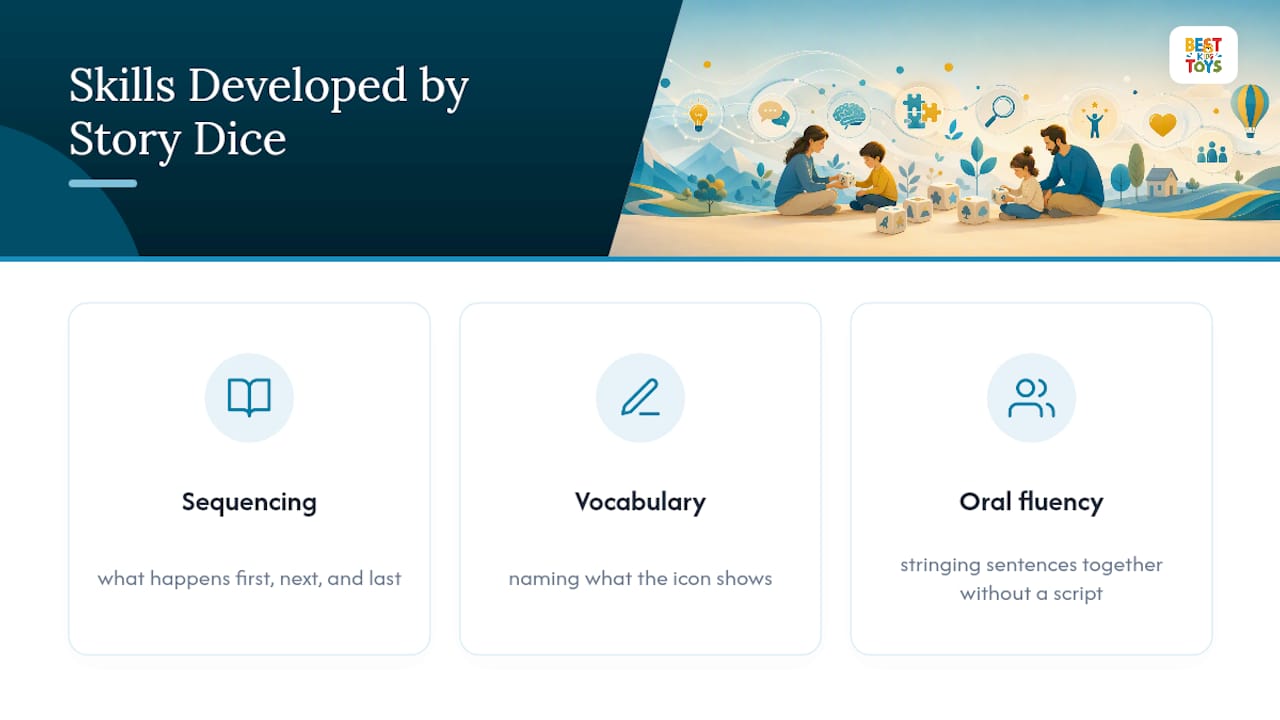
Teachers who use story dice in the classroom describe them as a way to reduce writing anxiety by turning prompts into play, and short timed bursts tend to increase both output and engagement compared to open-ended writing time. The skills at work are concrete: sequencing (what happens first, next, and last), vocabulary (naming what the icon actually shows), and oral fluency (stringing sentences together without a script).
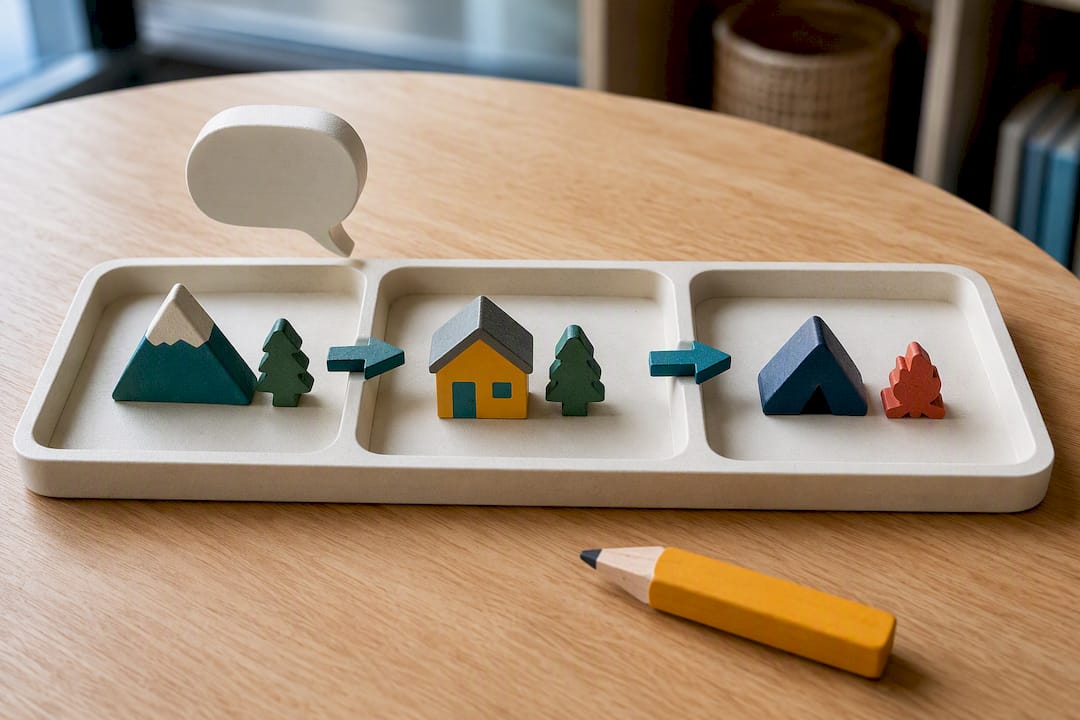
For a quick formative check, skip the rubric. Ask the child to summarize their story in one sentence, or sketch a simple story map with three boxes labeled beginning, middle, and end. Either method takes under a minute and tells you immediately whether the sequencing landed. Storytelling play like this also feeds directly into broader creative and confidence gains that show up well beyond the writing table.
DIY and Printable Story Dice: Templates and Quick Assembly
You don’t need to wait for a kit to arrive. A printable template, some cardstock, and ten minutes at the table will get a working set of story dice into small hands today.
- Gather materials. Cardstock holds a fold better than regular paper, and a bit of tape or glue at the tabs keeps the cube from popping open mid-game. Laminating sheets extend the life of a set that will get rolled hundreds of times.
- Pick a template style. Picture-only templates work for nonreaders and ELL students, picture-plus-word templates bridge emergent readers, and blank customizable faces let older kids draw their own prompts.
- Cut, fold, and assemble. Printable roll-a-story templates typically include fold lines and tab guides, so assembly is closer to origami than crafting from scratch.
- Differentiate by swapping faces. Differentiated printable sets that mix picture-only and word-only prompts let one printable serve an entire mixed-level classroom without redesigning anything.
How to Choose (or Make) Story Dice: A Buyer’s Checklist
Not every set of dice on a shelf is worth the box it comes in. Before you buy or print, run through what actually matters for daily use with kids.
- Durability first. Wooden or thick foam cubes survive years of drops; thin plastic cracks within a season of daily play.
- Icon clarity matters more than icon count. A cube with six crisp, obvious pictures beats one with twelve cluttered symbols kids squint at.
- Match dice count to age. One or two dice for toddlers and preschoolers, three to six for early elementary, up to nine for kids ready to plot a multi-scene story.
- Consider thematic versus generic sets. A generic set (animals, weather, objects) supports endless open stories; a themed set (space, mystery, fairy tale) helps reluctant starters who need a genre nudge.
- Check accessibility. Large, high-contrast symbols and tactile wooden shapes help kids with visual or sensory differences participate fully, and pairing dice with a spoken prompt supports kids who aren’t ready to read icons independently yet.
- Plan for classroom quantity. One set per four students keeps small groups moving; store sets in labeled bins so pieces don’t scatter and vanish by week two.
For age-specific pointers on matching toys to developmental stage, this guide to kindergarten-appropriate learning toys is a useful companion.
A 15-Minute Story Dice Lesson Plan You Can Copy Today

This plan fits a warm-up slot, a writing center, or a rainy-day filler between subjects. It needs almost no prep.
Objective: Students will sequence events into a beginning, middle, and end using visual prompts. Age range: Kindergarten through third grade (adjust dice count for older or younger groups). Materials: One story dice set per pair or small group, paper, and pencils.
- Warm-up (3 minutes). Roll one die as a whole class and build an oral story together to model the process.
- Roll and create (7 minutes). In pairs, students roll three dice, arrange them in order, and either tell the story aloud or jot three sentences.
- Share (3 minutes). Two or three pairs share their story with the group; classmates name one part they liked.
- Quick assessment (2 minutes). Each student writes a one-sentence summary of their story or draws a three-box story map.
Extension: Send a printable roll-a-story sheet home for homework, or challenge kids to write the same three icons into a second, completely different story.
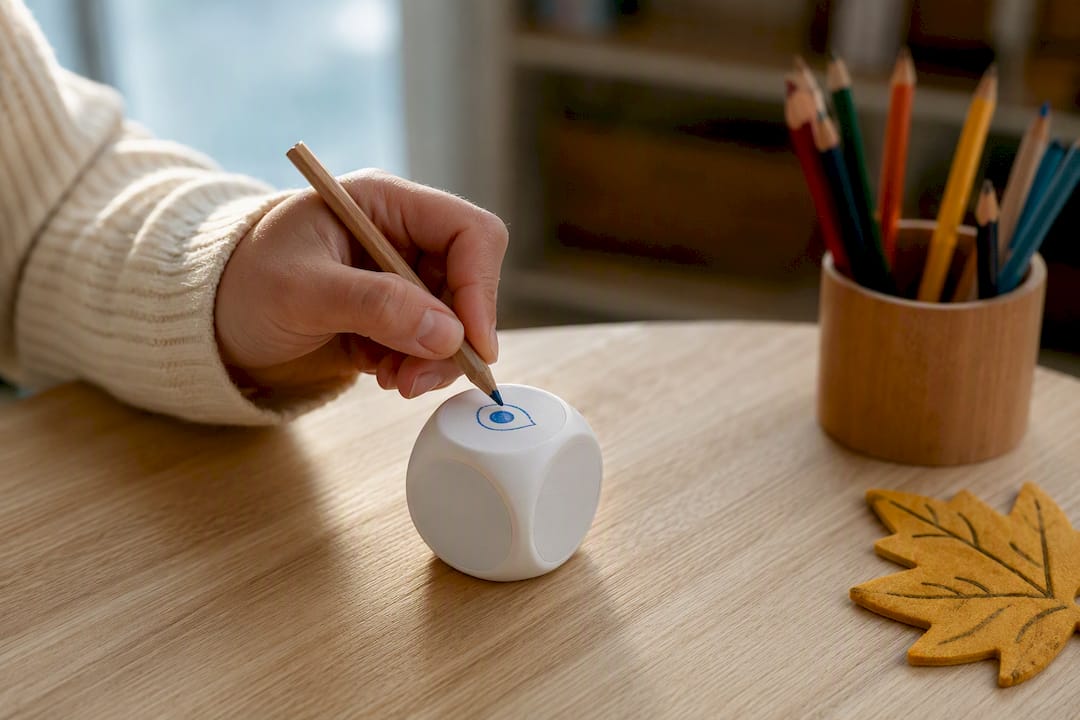
Pro Tip: Keep a “wild card” die in your desk with blank faces you can draw on. When a lesson needs a specific vocabulary word or seasonal theme, sketch it on the wild card and swap it in without reprinting anything.
The Publisher’s View: What Actually Makes a Story Dice Set Worth Buying
Danica Hodge has spent years evaluating children’s toys against a simple standard: does this hold up to real, repeated play without becoming a screen substitute in disguise? Story dice pass that test better than most “educational” products on the market, because the learning happens in the child’s own sentences, not in a preset animation.
What gets overlooked is how much the physical object matters. A cube that feels satisfying to roll and stack invites more play than a set of laminated cards ever will, which is exactly the kind of tactile, Montessori-aligned detail Checks for before a product earns a spot in the storytelling collection include sturdy materials, icons a four-year-old can read at a glance, and enough variety to outlast a week of curiosity. The strongest setup for most families is not either/or. Keep one durable kit at home for regular play, and print a template for the backpack or the car, so the story never has to stop just because the good dice stayed on the shelf.
— Danica Hodge
Where to Start: The Best Kids Toys Storytelling Dice Collection
Thebestkidstoys is the shortcut past the trial and error most parents go through with flimsy sets that crack after a month. Every set in the storytelling dice collection is chosen for the same three things covered in the checklist above: sturdy materials, icons kids can actually read, and enough variety to support both a two-minute preschool tale and a nine-dice adventure for a ten-year-old.
If you’re picking your first set, start simple. Roll three dice, line them up, and tell one short story together before bed tonight. That single round tells you more about which set fits your child than any spec sheet will. And once you’re ready to build out a full playroom rotation, pairing story dice with board games that build critical thinking rounds out a screen-free shelf that keeps kids engaged well past the first roll. Browse the collection, pick a set sized to your child’s age, and start your first story tonight.
Sources
- Spark Creativity in the Classroom with Story Dice – TCEA TechNotes Blog
- Roll an Adventure Story - Storytelling Dice Game | Teach Starter
- Roll a story game for kids — Kids Activities Blog
- How to play - Story Cubes