



Montessori Hundred Board Activities: 10 Games for Home & Classroom
A hundred board is one of the most versatile tools you’ll ever hand a child. It teaches number sequence, skip counting, and basic addition and subtraction through short, playful activities you can run in five minutes flat. Start with a missing-number hunt, skip-count markers, a dice add-and-subtract game, or a puzzle rebuild as simple hands-on activities. Once those feel easy, you’ll want to know how to adapt them by age, which materials fit your space, and why Montessori educators swear by this simple grid in the first place.
TL;DR:
- Using a 1 to 20 chart is best for preschoolers, while full 1 to 100 grids suit first and second graders, with move restrictions scaled accordingly.
- Adjusting the activity difficulty through fill percentage, step size, and allowed moves helps tailor learning to each child’s skill level.
- Wooden Montessori boards with engraved lines promote subitizing and help children grasp addition and subtraction physically, supporting deeper understanding.
- Incorporating tactile tools and manipulatives alongside the hundred board enhances number sense for different developmental stages and abilities.
- Embedding the hundred board into daily routines, like warm-ups or rotations, reinforces pattern recognition and mental math skills over time.
Table of Contents
- 10 Hundred Board Activities Kids Actually Ask to Repeat
- Adjusting Hundred Board Games by Age and Skill Level
- Choosing Between Printables, Pocket Charts, and Wooden Boards
- Daily Routines That Keep the Hundred Board in Rotation
- The Montessori Reasoning Behind a Simple Number Grid
- Making Hundred Board Games Work for Every Learner
- Pairing Hundred Board Play with Hands-On Montessori Toys
- Where to Find Montessori-Inspired Math Tools for Home or Classroom
- Sources
10 Hundred Board Activities Kids Actually Ask to Repeat
A hundred chart isn’t a worksheet in disguise. It’s a hands-on invitation for little fingers to trace patterns, and the hundred board is considered a primary math tool in Montessori classrooms precisely because it turns sequencing, skip counting, and simple operations into something you can touch. Here are ten activities worth keeping in your back pocket.
- Missing Number Hunt. Pull three to five tiles or cover three to five numbers with sticky notes. The child fills the gaps and explains their reasoning out loud.
- Swiper the Sneaky Number. Turn one tile upside down while a child’s back is turned, then ask them to find what “Swiper” stole. This playful hook works wonders for reluctant learners.
- Skip-Count Markers. Place a colored token on every fifth or tenth number, then have the child continue the pattern with matching tokens.
- Dice Add and Subtract. Roll two dice, land on a starting number, then move forward or backward by the sum. Great for physically feeling what “plus seven” means.
- Puzzle Assemble. Cut a printed chart into ten to twenty puzzle pieces and have the child reconstruct it. Fewer pieces mean an easier challenge; irregular shapes raise the difficulty.
- Gem Capture. Assign point values to certain numbers, then let two players race to “capture” tiles by rolling dice and moving along the grid, practicing ones and tens the whole time.
- Column Pattern Spotting. Ask a child to describe what’s true about every number in a single column (they all end in the same digit) or every row (they share a tens digit).
- Blindfolded Number Feel. Using a wooden board with engraved lines, have a child close their eyes and identify a number by touch alone, then say what comes before and after it.
- Race to 100. Two players alternate moving a marker by rolling a die, calling out each number landed on, first to the top wins.
- Token Move Game. Give a stack of directional cards (+1, +10, -1, -9) and have a child move a token accordingly, practicing addition and subtraction of ones and tens kinesthetically rather than on paper.
For any of these, missing-number routines and puzzle assembly let you observe how well a child recognizes patterns, simply by watching which numbers trip them up.
Pro Tip: Keep a small container of blank paper squares near your hundred board at all times. When a game ends mid-lesson, you can instantly turn any leftover minutes into a fresh missing-number round without extra setup.
Adjusting Hundred Board Games by Age and Skill Level
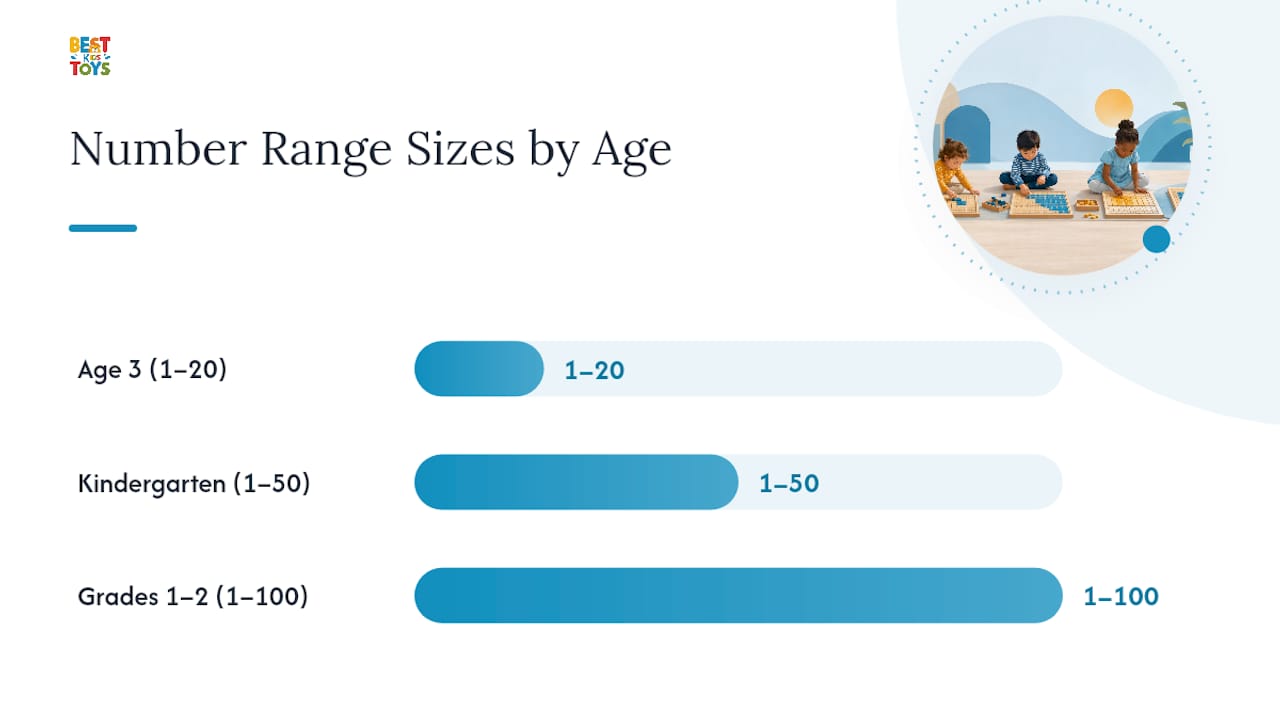
The board itself doesn’t change. What changes is the range you show and the moves you allow. A three-year-old exploring numbers for the first time does best with a 1 to 20 chart and lots of physical tokens to place by hand. Kindergartners typically work comfortably up to 50, while first and second graders take on the full 1 to 100 grid, including regrouping across tens.
Three dials let you fine-tune any activity instantly:
- Percent pre-filled. A nearly full chart with two missing numbers is far easier than a blank grid a child fills from scratch.
- Step size. Counting by ones is the entry point; counting by twos, fives, and tens builds toward multiplication readiness.
- Number range and allowed moves. Restricting moves to +1 and +10 keeps early learners grounded, while allowing +9 or -11 pushes older students toward mental math shortcuts.
Differentiation experts recommend shifting from blank charts to partially filled ones as a clear signal of readiness. When a child fills a 50 percent blank chart without hesitation, that’s your cue to move them up a level.
Choosing Between Printables, Pocket Charts, and Wooden Boards
Your material choice depends on setting and budget more than anything else. Paper printables cost nothing and let you test an activity before buying equipment. Pocket charts work well for whole-group lessons since you can slide numbers in and out during a lesson without erasing anything. Wooden Montessori boards, with their engraved grid lines and grouped-by-five design, hold up to years of daily handling and provide tactile feedback valued by many educators.
- Printables: flexible, disposable, ideal for testing new activities.
- Pocket charts: best for group instruction and visual demonstrations.
- Wooden boards: durable, tactile, worth the investment for regular home or classroom use.
- 120 charts: increasingly common because Common Core practice extends counting to 120, which helps children avoid confusion once they cross the century mark.
If you’re not ready to commit to a wooden set, printables and pocket charts make a reasonable trial run before you invest. Store tiles in a labeled zip bag by number range, and laminate paper charts so dry-erase markers wipe clean between sessions.
Daily Routines That Keep the Hundred Board in Rotation
A hundred board earns its shelf space when it becomes part of your regular rhythm, not a once-a-month novelty.
- Morning warm-up. Spend two minutes on a quick skip-count or missing-number round before the “real” lesson starts.
- Center rotation. Set the board up as one of three or four stations during independent work time, paired with a recording sheet.
- Timed recall check. Ask a child to name the number that comes after 47 or before 80 within five seconds, tracking response speed over weeks.
- Explain-your-thinking prompt. Have the child describe how they found a missing number, which surfaces whether they understand place value or are simply guessing.
- Weekly log. Jot a one-line note on each child’s pattern recognition and speed to inform which range or step size to introduce next.
The Montessori Reasoning Behind a Simple Number Grid
The hundred board isn’t decoration in a Montessori classroom. It’s chosen deliberately.
The engraved quadrant lines and five-number grouping on a wooden board guide a child’s fingers in a way that maps directly onto mental math strategies, like adding ten or subtracting one, long before the child can explain those strategies in words.
That physical mapping is the whole point. Engraved grouping supports subitizing, the ability to recognize a quantity without counting one by one. Moving a token up one row on the hundred board helps make “plus ten” more concrete rather than abstract. Teachers can even layer in directional shorthand, like R for right and U for up, to scaffold children from physical movement toward written equations. Beyond the math itself, hands-on tools like this build concentration and fine motor skills, especially for kids who struggle to sit through a purely paper-based lesson.
Making Hundred Board Games Work for Every Learner
Mixed-ability groups don’t need separate activities. They need the same activity adjusted at the edges.
- Supports: color-code every tenth number, use raised or textured markers for children who benefit from touch cues, and pair a stronger reader with a partner who needs a verbal prompt.
- Simplifications: shrink the range to 1 to 30, and offer a sentence starter like “I know this number because…” to guide thinking.
- Extensions: ask fast finishers to explore multiples, plot coordinate pairs, or create missing-number puzzles for classmates to solve.
Kids who thrive on structure often do better with a laminated chart and dry-erase pen, since mistakes wipe away instantly instead of feeling permanent. For a deeper framework on planning around different needs in a single group, inclusive activity templates offer a useful starting structure you can adapt to any number-grid lesson.
Pro Tip: If a child gets stuck, resist the urge to give the answer immediately. Instead, ask “What number is right above it?” That single question usually unlocks the pattern on their own.
Pairing Hundred Board Play with Hands-On Montessori Toys
A hundred board rarely works alone. It works best sitting alongside other tactile materials that reinforce the same number sense. If you’re setting up a math corner at home, look at collections organized by developmental stage, since a three-year-old and a six-year-old need very different starting points on the same grid.
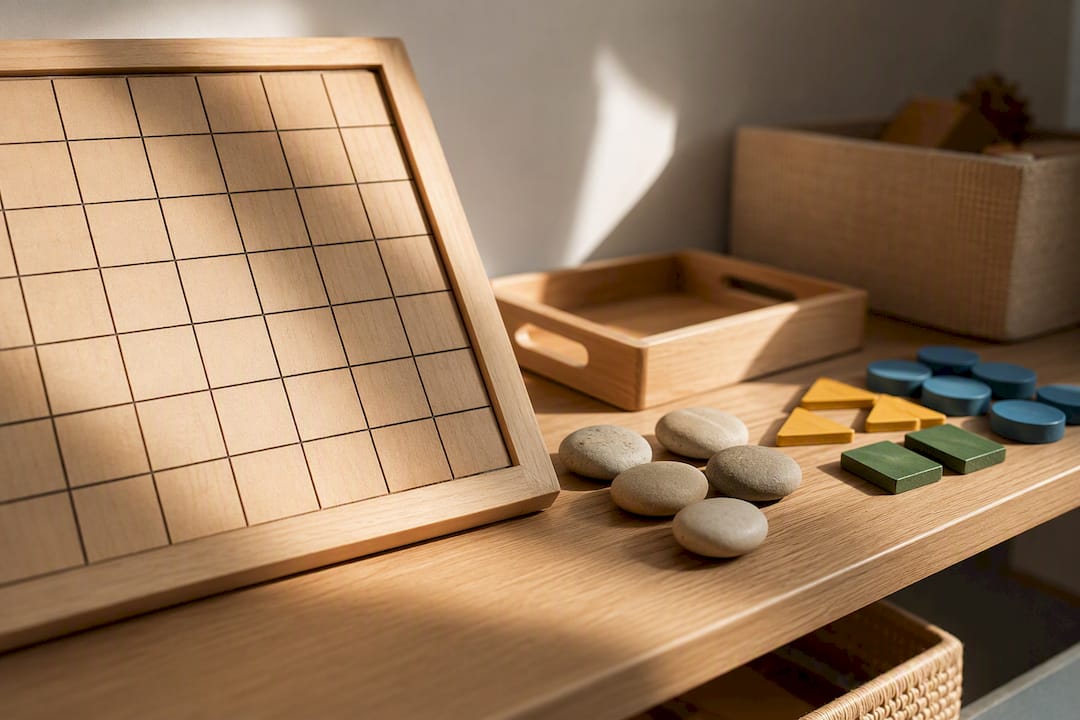
Montessori toys grouped by age give you a quick way to check whether a child is ready for a full hundred chart or should start smaller. Something like a magnetic counting toy builds the same one-to-one correspondence skills a hundred board demands, just with a lower entry point for tiny hands. Sensory-rich manipulatives designed for toddlers also complement early number play well before a child is ready to sit with a full 100-number grid.
Think of the hundred board as the anchor and everything else as scaffolding around it.
— Danica Hodge
Where to Find Montessori-Inspired Math Tools for Home or Classroom
If you’re building out a number-sense corner beyond the hundred board itself, Specialty toy collections curated with Montessori-inspired materials are organized by developmental stages. helping you find toys that match skill levels.
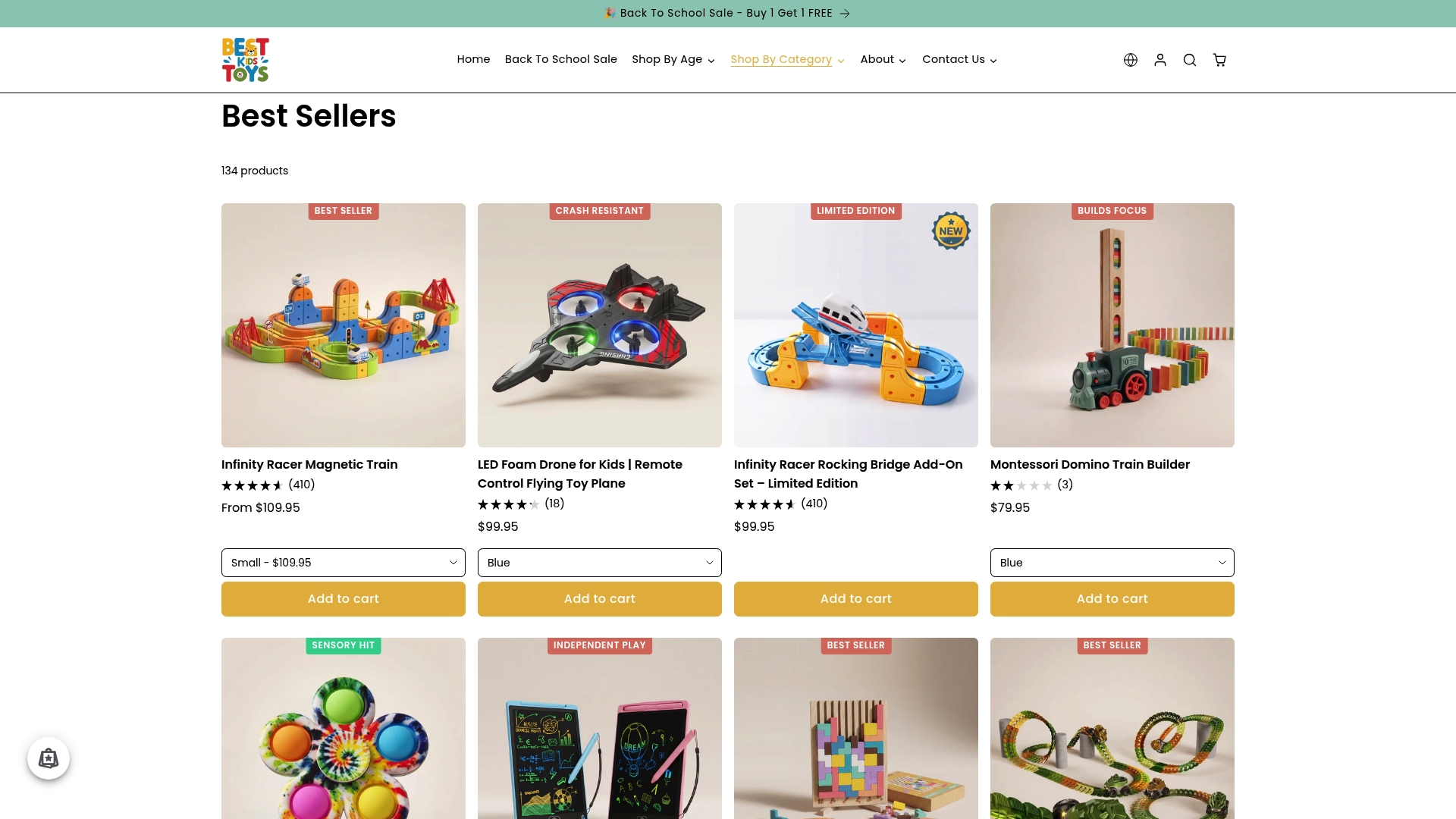
For preschoolers just starting to recognize numbers, the 3 to 4 years collection offers tactile starter materials that pair naturally with a blank or lightly filled chart. Once a child is ready for skip counting and place value, the 4 to 5 years collection leans into that next stage with manipulatives built for small hands and growing number sense. Older kids working through the full 1 to 100 range and simple multiplication patterns will find good extension options in the 5 and up collection. If touch and texture matter most in your household, the sensory toys collection rounds things out with materials built for exactly the kind of tactile learning a wooden hundred board relies on. Browse by age, pick what matches where your child is right now, and add it to your math shelf this week.
Sources
- Hundred Board: 10 Ways to Learn Math With This Montessori Toy
- MathWire | Hundred Board
- The Hundred Chart Game - Math For Love