



Montessori Travel Toys for Toddlers: Compact, Screen-Free Picks
Pack five things: a quiet/busy book, a compact magnetic travel set, a tethered fine-motor toy, a mess-free drawing pad, and one sensory plush. That’s your complete Montessori travel kit, and it fits in a single zip pouch. These aren’t just convenient picks — they’re screen-free travel toys that promote independent, purposeful play, which means your toddler stays engaged without needing you to run the show.
Here’s why each one earns its spot in your bag:
- Quiet/busy book — Keeps little hands busy with buttons, zippers, and lacing; self-contained and silent on planes.
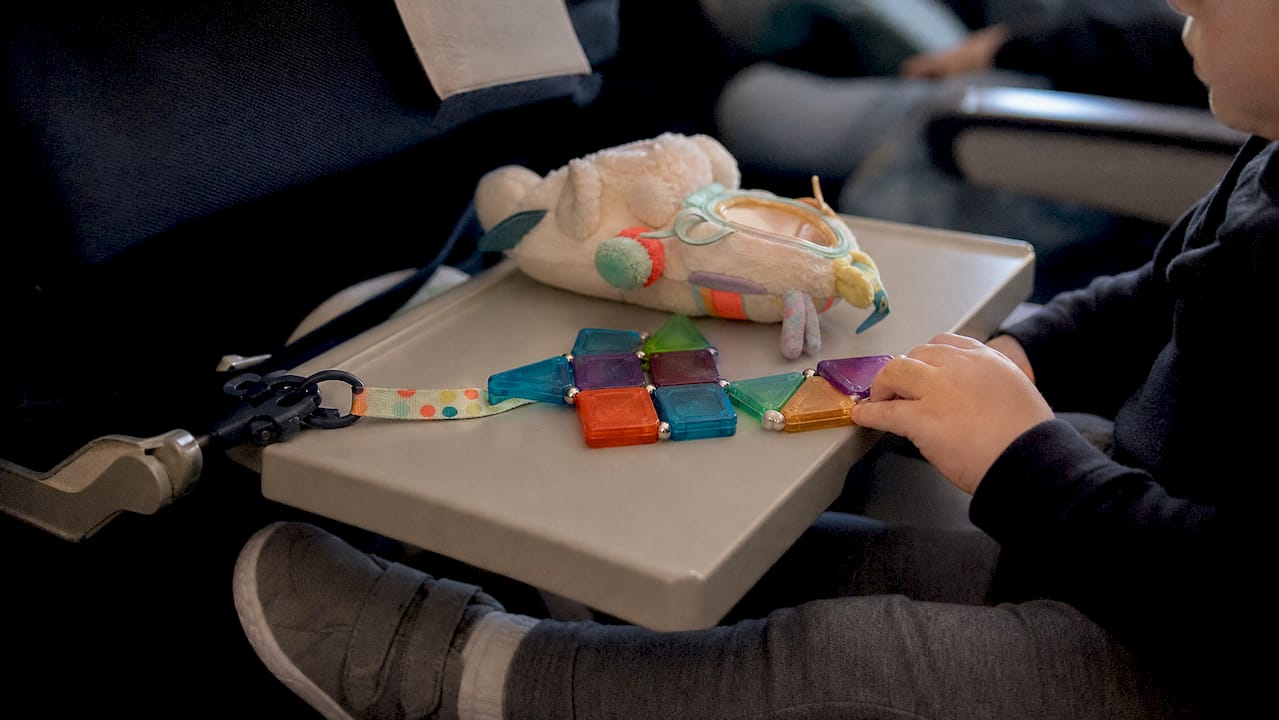
- Compact magnetic travel set — Mess-free, pieces stay put, and doubles as its own play surface; ideal for tray tables and car seats.
- Tethered fine-motor toy — Threading beads or a lacing board clipped to a bag strap means nothing rolls under the seat.
- Mess-free drawing pad — Reusable water-reveal or magnetic drawing boards give open-ended creativity with zero cleanup.
- Sensory plush — Soft, tactile, and calming; works as a comfort object and a fine-motor toy when it has buttons or textures.
Thebestkidstoys carries these three anchor products for this kit: the Little Learners Montessori Busy Book, the Compact Magnetic Travel Kit, and the Sensory Travel Plush. Each one was chosen with portability and developmental value in mind.
Table of Contents
- What types of Montessori travel toys actually work on the go?
- How to pack and rotate travel toys so they actually get used
- How Thebestkidstoys selected these travel-ready Montessori picks
- Key Takeaways
- Why intentional toys calm toddlers better than distraction does
- Thebestkidstoys has your travel-ready Montessori kit ready to ship
- Useful sources for parents who want to go deeper
What types of Montessori travel toys actually work on the go?
The best portable Montessori toys share one quality: they have a clear, single skill at their center. That structure reduces sensory clutter, lets toddlers reset the activity independently, and keeps engagement going without a parent hovering. Here’s how the core categories break down:
- Felt/quiet books — Packed with buckles, snaps, and lacing pages, these build fine motor skills and pincer grip. Most fold flat to the size of a paperback. The benefits of reading to children extend even to tactile books like these, where page-turning and story-following build early literacy alongside motor development.
- Magnetic travel sets — Tiles, letters, or dot boards in a slim tin stay mess-free and won’t roll away. They double as a play surface, which traveling parents consistently rank as a top feature.
- Threading and lacing boards — Tethered to a bag or seat, these build sequencing and focus. A single lacing card with a thick cord is enough for a 2-year-old to work independently for an extended period.
- Stackers and nesting cups — Lightweight silicone versions nest into a stack the size of a coffee cup. They teach spatial reasoning and can be used on a lap, a tray table, or the floor of a waiting area.
- Mess-free drawing pads — Reusable water-reveal pads and magnetic drawing boards give toddlers open-ended creative play with zero mess. NBC News Select’s testing of no-screen travel toys consistently highlights these as top performers for lap play.
- Single-skill posting boxes — A small shape-sorter or coin-drop box with 4–6 pieces teaches problem-solving and hand-eye coordination. Keep the piece count low and store them in a clear zip pouch.
- Sensory plush with fine-motor elements — Soft toys with hidden zippers, snaps, or crinkle panels soothe and stimulate at the same time. Tactile, repetitive engagement like this is particularly calming on planes and in restaurants.
For a deeper look at why simplicity drives better learning outcomes, the Montessori principle of one skill per toy is the reason these categories outperform flashy, multi-function toys on the road.
How to pack and rotate travel toys so they actually get used
The secret to a calm trip isn’t packing more toys. It’s packing smarter and introducing them at the right moment. Open-ended, compact toys provide longer engagement precisely because they don’t have a fixed “end state” — your toddler can keep going without needing a new activity every 10 minutes.
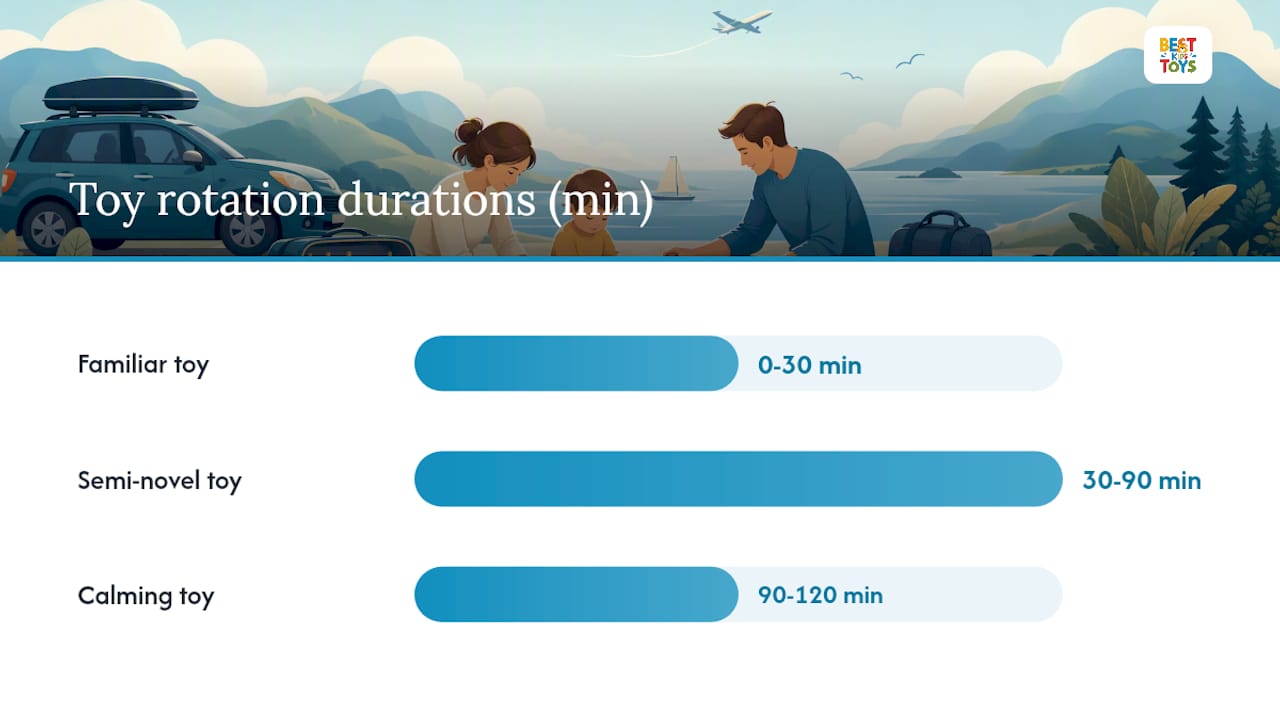
The 3-item packing formula: one familiar toy, one semi-novel toy, and one sensory/calming toy. Start with the familiar one as soon as you’re seated — it’s comforting during the stressful boarding or buckle-up phase. Introduce the semi-novel toy once you’re moving and your child has settled. Save the sensory plush or calming toy for the hardest stretch: descent on a plane, a traffic jam, or the last 30 minutes of a long drive.
Setup matters. Lay a small lap rug or bandana as a “work surface” — this simple ritual signals to your toddler that it’s play time and gives dropped pieces a soft landing. Pre-stage each toy in its own zip pouch so your child can open, use, and return it without your help.
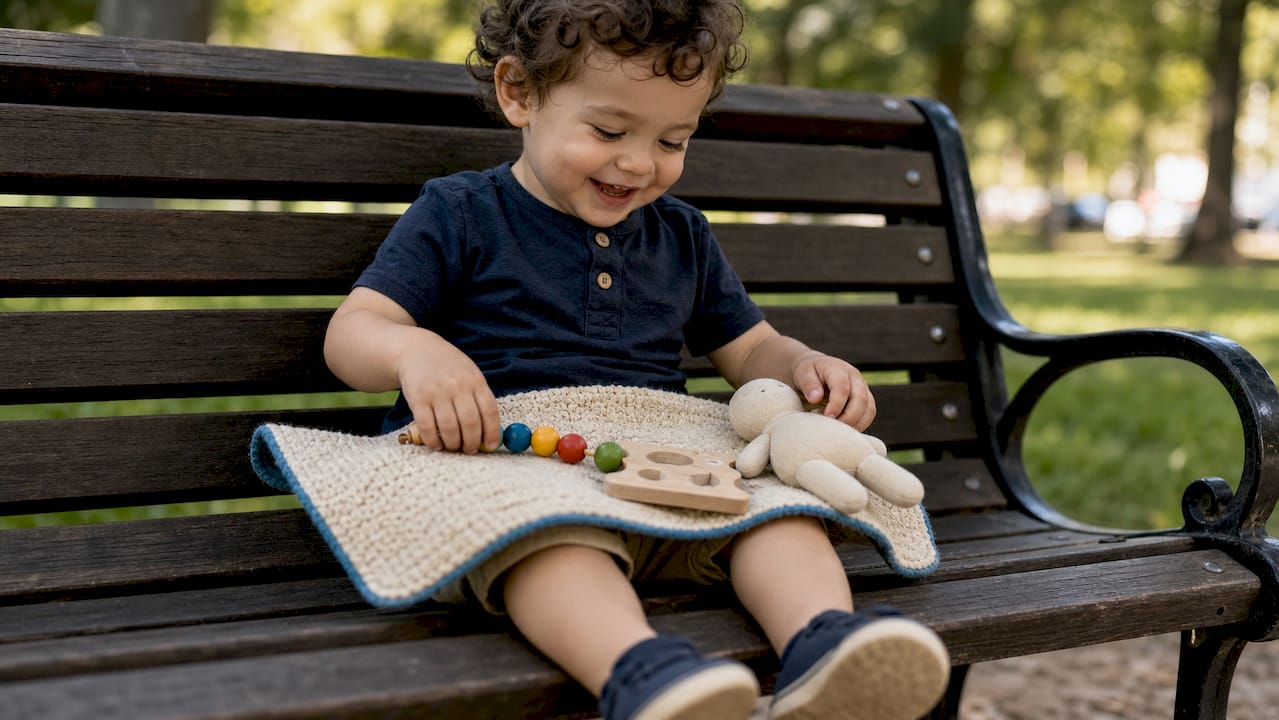
Pro Tip: Tether any toy with multiple small pieces to the seat or your bag using a short clip or ribbon. Magnetic sets that keep pieces attached are even better — nothing rolls under the seat, and you never have to fish around on the floor mid-flight.
| Trip Length | Rotation Plan |
|---|---|
| Under 2 hours | Familiar toy (0–30 min) → semi-novel toy (30–90 min) → sensory plush for landing/arrival |
| 2–4 hours | Familiar toy (0–30 min) → semi-novel toy (30–90 min) → short snack break → calming toy (90–120 min) → re-introduce familiar toy |
| 4+ hours | Cycle through all three, introducing a “surprise” fourth item (a new small book or sticker sheet) around the halfway mark |
One more tactic worth using: practice the routine at home before you travel. Let your child open the pouches, use the toys, and put them away two or three times in a familiar setting. By the time you’re on the plane, the ritual feels natural and your toddler can manage it independently.
How Thebestkidstoys selected these travel-ready Montessori picks
Every product in the Thebestkidstoys travel collection was evaluated against five criteria: independent playability (can a toddler use and reset it alone?), portability (does it fit in a standard zip pouch?), safety (does it pass choking and material checks?), wipeability (can it be cleaned mid-trip?), and open-ended value (does it grow with the child?).
Products were tested with toddlers across the 12-month to 3-year range, with parent testers noting engagement time, ease of reset, and whether the toy survived a full trip without damage or lost pieces. The children’s books and quiet activity books category was also reviewed as a complement to tactile Montessori sets, particularly for the 2+ age band.
The three anchor products that consistently met every criterion:
- Little Learners Montessori Busy Book — Passes all six checklist criteria; self-contained, silent, and adaptable from 12 months through age 4.
The editorial overlap with Thebestkidstoys products is intentional and transparent: these are the toys that genuinely passed the checklist, and they happen to be what the store carries. For a broader look at Montessori summer and travel picks, the Thebestkidstoys blog has additional roundups organized by season and setting.
Key Takeaways
The most effective Montessori travel kit uses three items: one familiar toy, one semi-novel toy, and one sensory/calming toy, all chosen for portability, few pieces, and independent reset.
| Point | Details |
|---|---|
| The 3-item packing formula | Pack one familiar, one semi-novel, and one sensory/calming toy — introduce them in that order during the trip. |
| Piece count matters | Keep loose pieces to 10 or fewer; use tethers or magnetic sets to prevent drops under seats. |
| Safety checks first | Run every toy through the choking-size test, fastener pull test, and projectile check before packing. |
| Practice at home | Let your toddler open pouches and reset toys at home so the routine feels natural on travel day. |
| Thebestkidstoys travel picks | The Little Learners Montessori Busy Book, Compact Magnetic Travel Kit, and Sensory Travel Plush each pass all five selection criteria. |
Why intentional toys calm toddlers better than distraction does
Most travel-toy advice treats toddler engagement as a distraction problem: keep the child occupied so the adults can relax. That framing leads parents toward noisy, flashy toys that spike attention for three minutes and then demand more novelty. The Montessori approach flips this. A single-skill toy with a clear beginning and end — a lacing card, a quiet book page, a magnetic tile set — gives a toddler something to master, not just consume.
What’s genuinely underestimated here is the calming effect of repetition. A toddler who threads the same bead sequence four times in a row isn’t bored. They’re consolidating a skill, and that focused, low-energy engagement is neurologically settling. It’s the same reason a child will read the same picture book 20 nights in a row. The repetition is the point.
The practical implication: you don’t need 10 toys for a 4-hour flight. You need 3 good ones and a rotation plan. Parents who pack fewer, better toys consistently report calmer trips than those who bring a bag full of options. Limiting visible choices to two activities at a time, as TinyLearns recommends, reduces overstimulation and keeps your toddler in a focused, independent play state longer.
The toys that work best on the road are the ones your child already knows how to use. Novelty is a tool, not a strategy. Save the surprise item for the hardest stretch of the trip, and let the familiar toys carry the first hour.
Thebestkidstoys has your travel-ready Montessori kit ready to ship
Packing a Montessori travel kit doesn’t have to mean hours of research and a cart full of unknowns. Thebestkidstoys has already done the vetting. The Little Learners Montessori Busy Book is the single strongest pick for toddlers aged 12 months and up — self-contained, silent, and packed with fine-motor activities that grow with your child through age 4. Pair it with the Compact Magnetic Travel Kit and the Sensory Travel Plush, and you have a complete 3-item kit that fits in one pouch and passes every safety and portability check in this guide.
Orders over $60 ship free, and the current 40% off sale makes bundling all three travel picks genuinely affordable. Browse the full travel-ready collection at Thebestkidstoys, add your kit to the cart, and have everything packed before your next trip.
Useful sources for parents who want to go deeper
These are the sources behind the recommendations and safety guidance in this article. Each one adds something specific.
- Best Travel Toys for Toddlers and Preschoolers - Busy Toddler
- The Best Travel Toys for Kids (After 6 Weeks in Europe) - Mini Jetsetter
- Must-Have Travel Toys for Road Trips With Kids - ParentMap
- The best no-screen toys for travel - NBC News Select
- The Ultimate Guide to Montessori Toys for Traveling Toddlers (Ages 1–3) - Dondersteen
- Montessori Toys for Travel (Car, Airplane, and Small Spaces) - TinyLearns
- Best travel toys for kids — My Urban Toddler