



30 Minute STEM Activities at Home for Busy Families With Prompts
This guide hands you ready-to-run stem activities at home, sorted by age and by how much active time you actually have. You’ll find three age groups with easy hands-on projects, five quick 30-minute picks for busy afternoons, and a simple materials pantry you can build from your kitchen drawers. Every activity includes reflection prompts that turn a fun mess into real learning, so pick one and start today.
TL;DR:
- Active time for early elementary activities ranges from under 10 minutes to 30 minutes, with objectives like understanding liquids, persistence of vision, and buoyancy.
- Mid-elementary projects focus on gravity, momentum, and circuits, typically taking 20 to 45 minutes, often incorporating extensions like adding loops or switches.
- Quick 30-minute picks are designed for busy days, with simple setups such as water migration, straw bridges, and paper airplanes that fit within a half-hour window.
- Guided kits are best for teaching specific concepts and providing predictable results, while open-ended tinkering promotes independent problem-solving and creative design.
- Parental guidance should focus on asking open questions and encouraging reflection, rather than fixing or controlling the process, to maximize learning and engagement.
Table of Contents
- STEM Activities at Home by Age Group
- Quick 30-Minute STEM Picks for Busy Days
- Should You Choose Open-Ended Tinkering or a Guided Kit?
- How to Guide Without Taking Over
- Building a Household STEM Materials Pantry
- Who’s Behind These Activity Picks?
- An Editorial Take on What Actually Works
- Extend the Play With Open-Ended STEM Toys
- Where to Find More STEM Activities and Lesson Plans
- Sources
- FAQ
STEM Activities at Home by Age Group
Not every child needs the same challenge, and matching an activity to your child’s developmental stage is what makes STEM projects for kids click instead of flop. These three groups reflect common school-age ranges, but feel free to bump a project up or down based on your child’s confidence and attention span.
Early elementary (ages 5 to 7)
- Walking Water: Line up clear cups, fill every other one with water and food coloring, connect them with folded paper towels, and watch capillary action pull color between cups. Active setup takes under 10 minutes, though full observation can stretch to several hours or overnight. Objective: see how liquids travel without being poured. Extension: change paper towel thickness and predict which soaks fastest.
- Thaumatrope spinner: Draw a bird on one side of a cardstock circle and a cage on the other, punch two holes, thread string, and spin to see the images merge. Prep is about ten minutes, with active play lasting around fifteen minutes. Objective: introduce persistence of vision. Extension: swap in two of your child’s own drawings.
- Sink or float boat test: Build small boats from foil, clay, and craft sticks, then test which stay afloat while holding pennies. Active time runs 20 to 30 minutes. Objective: explore buoyancy and weight distribution. Extension: chart how many pennies each design holds before sinking.
Mid-elementary (ages 8 to 10)
- Paper roller coaster: Tape foam pipe insulation or rolled paper tubes into loops and hills on a wall or cardboard backing, then race marbles through. Active time typically ranges around 30 to 45 minutes. Objective: teach gravity, momentum, and friction. Extension: add a loop and predict whether the marble makes it around.
- Balloon rocket race: Thread a straw onto string stretched across a room, tape a balloon to the straw, inflate, and release. Active time is about 20 minutes. Objective: demonstrate Newton’s third law in a way kids can feel. Extension: test different balloon sizes for distance.
- Simple circuits: Using a battery, wire, and a small bulb or buzzer (snap-circuit kits work well here), build a closed loop and test what breaks the connection. Keep an adult nearby for wire handling. Objective: understand open versus closed circuits. Extension: add a switch made from a paper clip.
Upper elementary and preteens (ages 11 to 13)
- Marshmallow engineering towers: Build the tallest freestanding tower from mini marshmallows and dry spaghetti, testing for stability under a light book. Active time typically ranges around 30 to 45 minutes. Objective: introduce load distribution and triangulated structures. Extension: add a wind test using a box fan.
- Unplugged coding challenge: Write a “program” of arrow symbols directing a sibling through an obstacle course, debugging when the sequence fails. Active time is about 30 minutes. Objective: teach algorithmic thinking without a screen. Extension: introduce a loop symbol for repeated steps.
- Elephant toothpaste, household version: Mix warm water, dish soap, and dry yeast into hydrogen peroxide for a foaming chemical reaction (adult supervision required, and always outside or on a tray). Objective: show an exothermic decomposition reaction in action. Extension: compare foam height across different peroxide concentrations.
Quick 30-Minute STEM Picks for Busy Days
Some days there’s no time for a project with a dozen steps, and that’s exactly what these five easy STEM at home picks solve.
- Walking Water rainbow: Cups, water, food coloring, paper towels. Setup takes under 10 minutes; color migration is the visible action, though full blending continues for hours. Ask: “Why does the water climb instead of just sitting still?”
- Straw bridge challenge: Straws, tape, a stack of books. Build a bridge spanning two chairs that holds a toy car. Active time is around twenty-five minutes.
- Balloon-powered car: Balloon, tape, straw, bottle cap wheels. Active time: 20 minutes. Ask: “What happens if we use a bigger balloon?”
- Ice excavation: Freeze small toys in a container overnight, then let kids use salt, warm water, and tools to free them. Active time: 20 to 30 minutes.
- Paper airplane distance lab: Fold three plane designs and test which flies farthest. Active time: 20 minutes. Most short elementary activities like these fit comfortably within a 30 to 45 minute window, which makes them ideal for a rainy afternoon or a quick homeschool block.
Should You Choose Open-Ended Tinkering or a Guided Kit?
Kits give kids a prescribed outcome and step-by-step instructions, which works well when you want a predictable result or a specific skill practiced. Tinkering flips that: kids get materials and a loose challenge, then design their own solution through trial and error. Research on guided kits found that ones built with scaffolding prompts led to more sustained use over ten weeks and higher parent confidence than basic kits without that structure. Open-ended tinkering, on the other hand, pushes kids closer to real engineering practice: designing, testing, and revising rather than following steps.
- Use kits when you want a specific concept taught clearly, like circuits or basic chemistry reactions.
- Use tinkering when you want to build independent problem-solving and creative risk-taking.
- Mix both: start with one guided activity, then hand over a bin of recyclables for open building.
To run a tinkering session, give a two-sentence story prompt (“Your cardboard boat has to rescue a stranded LEGO figure from a flooded island”), hand over a bin of bottle caps, straws, tape, and cardboard, and let your child build without correcting the process. Storytelling before tinkering increases how much kids talk through STEM ideas both during the build and weeks later when they recall it.
Pro Tip: Keep a “tinkering bin” stocked year round with clean recyclables. When boredom strikes, you already have a solution ready.
How to Guide Without Taking Over
The parent’s job during hands-on STEM projects isn’t to fix the wobbly tower. It’s to ask the right question at the right moment.
- Ask open questions instead of giving answers (“What do you notice?” instead of “That’s wrong.”)
- Model curiosity out loud (“I wonder what happens if we tilt it.”)
- Let your child fail and retry before jumping in.
- Praise the effort and the strategy, not just the finished result.
Try these six prompts during the activity: “What do you think will happen next?” “Why did that work?” “What would happen if you changed this piece?” “What’s different about this attempt?” “What surprised you?” “How could we test that?” Afterward, two reflection questions cement the learning: “What was the hardest part?” and “What would you try differently next time?”
Parent interaction style shapes how much a child engages. Studies on family STEM play found that overly directive parents saw children take on fewer independent challenges afterward compared to families who worked jointly with their child rather than directing every step. Letting go of the steering wheel, even a little, pays off.
Building a Household STEM Materials Pantry
You don’t need a science closet, just a few organized bins.
- Craft: tape, cardboard, paper towel tubes, rubber bands, craft sticks
- Kitchen science: baking soda, vinegar, food coloring, dish soap, cornstarch
- Tools: scissors, measuring cups, a magnifying glass, tweezers
- Recyclables: bottle caps, egg cartons, cereal boxes, plastic bottles
Swap food coloring for natural options like beet juice if you prefer non-toxic dyes, and always supervise small parts like beads or magnets around younger children. Work on a tray to contain spills, limit liquids to one activity at a time, and take messy builds like Elephant Toothpaste outside whenever possible.
Who’s Behind These Activity Picks?
Danica Hodge and her team build every recommendation around Montessori-inspired, screen-free learning principles. Selection criteria include developmental fit, low-cost materials, real family involvement, and safety review for age-appropriate use. For more on how early hands-on play shapes reasoning skills, see how science-based play shapes logical thinking early.

An Editorial Take on What Actually Works

The internet is full of STEM activity lists promising to turn your kitchen table into a laboratory. Most of them miss the actual lever that matters: not the activity, but how you talk during it. The research on parent-child interaction is blunt about this. Families who direct every step see less independent problem-solving afterward than families who work alongside their child and ask questions instead of giving instructions.
That changes how I’d prioritize this list. Skip the temptation to chase novelty every week. Pick two or three tinkering prompts your child already loves, repeat them monthly, and let the repetition build real design thinking rather than one-off wow moments. Save the elaborate kits for when you want a specific concept taught cleanly, like circuits. For everything else, hand over recyclables, ask what your child notices, and resist fixing the wobble in their tower. The mess is the point. The conversation is the actual curriculum.
— Danica Hodge
Extend the Play With Open-Ended STEM Toys
Household recyclables get you far, but they wear out fast and don’t always scale with a growing builder. Montessori STEM toys are curated specifically because durable, open-ended materials hold up to weeks of tinkering instead of one soggy cardboard afternoon.
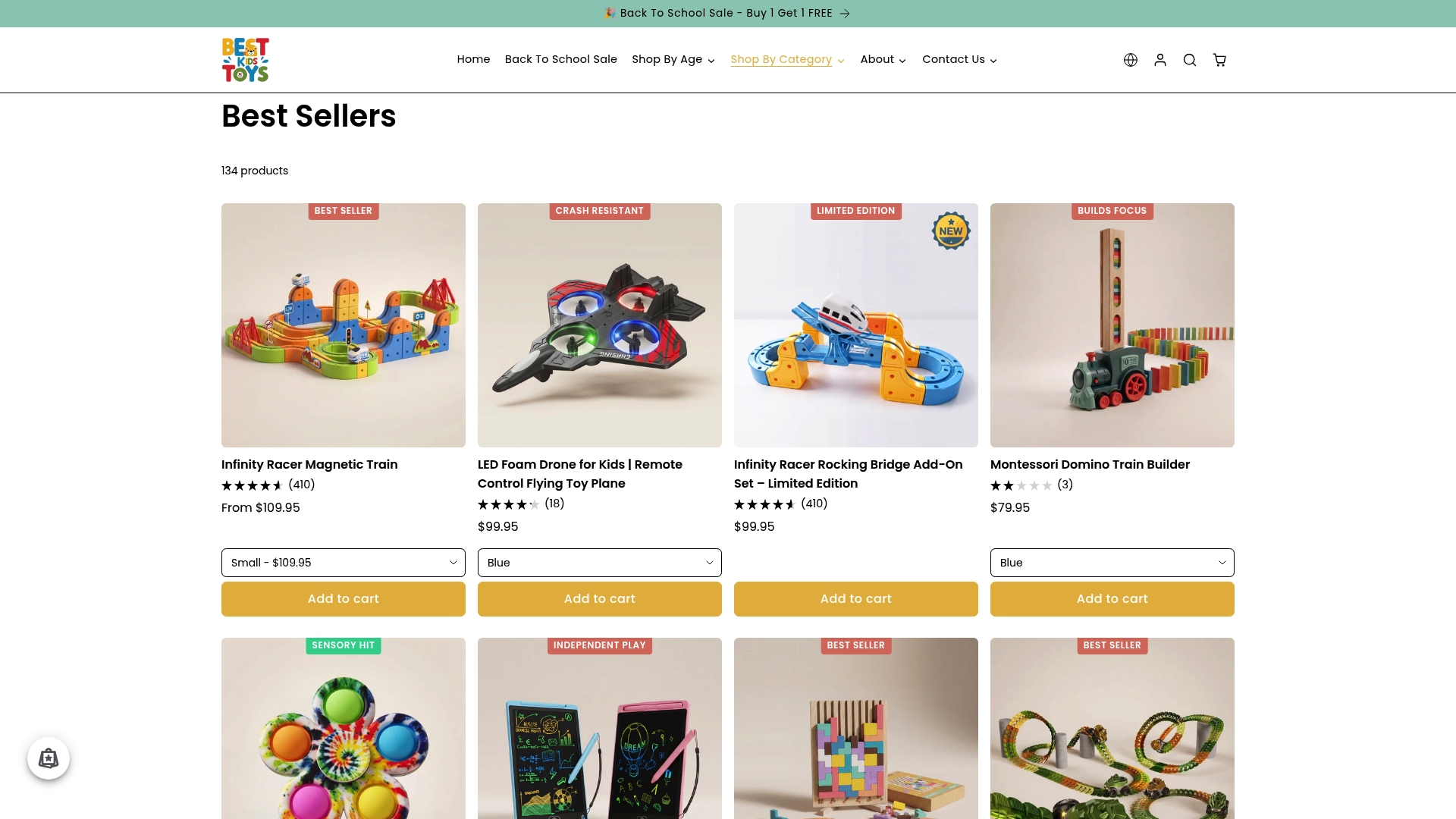
The Montessori STEM Toys collection is built around the same tinkering principle covered above: fewer instructions, more room to design and redesign. If you want one exemplar to start with, the Montessori Kids Tool Box Set gives kids over 200 pieces to build, take apart, and rebuild differently every time, which solves the exact problem recyclable bins eventually hit: running out of parts mid-project. Every product is reviewed for developmental value, and purchases are backed by a 30-day risk-free guarantee. Browse the collection, pick one set that matches your child’s current obsession, and add it to your tinkering bin this week.
Where to Find More STEM Activities and Lesson Plans
For deeper lesson plans and downloadable guides, National PTA’s STEM at Home hub organizes activities by grade and subject, and the tinkering research from IIT Bombay breaks down why open-ended building mirrors real engineering practice.
Sources
- Guided STEM activity kits for parents with preschool children: design, frequency of use, and parent evaluation — NSF Public Access
- STEM activities for at-home learning — Exploration
FAQ
What are some easy STEM activities I can do at home today?
Walking Water, balloon-powered cars, and paper airplane distance tests all use materials most households already have. Each one takes 20 to 30 minutes of active time, making them solid starting points for a first try.
What are some 30-minute STEM activities for elementary school students?
Straw bridges, balloon rockets, and marshmallow towers all fit inside a 30 to 45 minute window of active building. Longer experiments like Walking Water need only a few minutes of setup, even though full results take hours to appear.
What are some basic STEM activities for kids just starting out?
Sink or float boat testing and simple circuit building with a battery and bulb introduce core concepts like buoyancy and closed-loop electricity without heavy prep. Both work well for early elementary kids and take under 30 minutes.
What are engaging STEM activities for 10-year-olds specifically?
Paper roller coasters, balloon rockets, and basic circuit kits challenge mid-elementary kids with real physics and engineering problems. Marshmallow towers and unplugged coding challenges also work well if your 10-year-old wants a bigger design puzzle.
Does Thebestkidstoys sell toys that support these activities?
Yes, the Montessori STEM Toys collection offers open-ended building sets designed for repeated tinkering. Current prices are listed on the site.