



Start STEM Challenges for Kids in 5 Minutes: For Busy Parents
A STEM challenge is a short, open-ended building or design task kids complete by designing, testing, and improving a solution. Pick one below and start in 5 minutes. They work for any child aged 3 to 14, run anywhere from 5 minutes to a full afternoon, and need nothing fancier than tape, straws, and a curious kid. Science Buddies, NASA’s education pages, and Thebestkidstoys are three useful sources to find ideas if you’re not sure where to begin.
TL;DR:
- Kids learn essential engineering skills like problem-solving, iteration, measurement, teamwork, and creativity through short, fun STEM challenges.
- Challenges range from five-minute zero-prep activities to full-session projects, scalable by adding constraints or measurement requirements for older kids.
- Using durable, reusable materials in a carefully stocked STEM corner helps sustain activities without frequent restocking or trash.
- Effective sessions follow a clear rhythm of planning, building, testing, redesigning, and debriefing to maximize learning and minimize chaos.
- Early practice with open-ended, iterative challenges improves resilience to failure and builds skills beneficial for more advanced STEM education later.
Table of Contents
- Why STEM Challenges for Kids Actually Build Real Skills
- 30+ Hands-On STEM Challenges Sorted by Time
- How to Scale Any STEM Challenge Up or Down
- Running a Smooth STEM Session Without the Chaos
- Where Best Kids Toys Fits Into Your STEM Corner
- Why the Debrief Matters More Than the Build
- A Parent’s Take on What Actually Works
- Building a STEM Corner That Doesn’t Need Constant Restocking
- Where to Find More Free STEM Lesson Plans
- Sources
- FAQ
Why STEM Challenges for Kids Actually Build Real Skills
A STEM challenge works because it hides the learning inside the fun. Your kid thinks they’re building a marble run. What they’re actually doing is practicing the same design loop engineers use every day: ask a question, imagine a solution, plan it out, build it, test it, and improve it. That five-step cycle, often called the engineering design process, is the real engine behind why these activities stick.
Each round through that loop builds specific, transferable skills:
- Problem-solving: figuring out why the tower keeps falling and what to change
- Iteration: treating the first attempt as a draft, not a failure
- Measurement: counting coins, timing seconds, measuring inches traveled
- Teamwork: dividing jobs like builder, tester, and recorder
- Creativity: finding a workaround when the “right” material runs out
The Bureau of Labor Statistics notes that STEM occupations span a far wider range of jobs than most people assume, which is exactly why early exposure to design thinking pays off long before any career decision gets made.
Pro Tip: Match the challenge to the child’s stage, not just their age. A preschooler needs open exploration (“stack these blocks”), a K to 2 kid needs a prediction (“will it float?”), and a 3rd to 5th grader is ready to collect data and redesign based on it.
30+ Hands-On STEM Challenges Sorted by Time
Running low on prep time is the number one reason these activities get skipped. Sorting challenges by how long you actually have solves that problem before it starts, an approach that mirrors the format Little Bins for Little Hands uses for busy classrooms and even busier weeknights.
5-minute challenges (zero prep, one material)
- Tallest cup tower. Materials: paper cups. Stack them into the tallest freestanding tower in 5 minutes. Success metric: stands unsupported for 10 seconds.
- Balloon rocket race. Materials: balloon, straw, string, tape. Thread the straw on string, tape a balloon to it, let it fly. Success metric: travels at least 3 meters.
- Paper airplane distance test. Materials: paper. Fold three different designs and test each for distance. Success metric: farthest flight wins, measured in floor tiles or a tape measure.
- Coin sorting by weight guess. Materials: coins, a small scale if you have one. Predict which stack weighs more before checking. Success metric: correct prediction on two out of three tries.
- Sink or float prediction. Materials: a bowl of water, five household objects. Guess before testing. Success metric: at least 4 out of 5 correct predictions.
15-minute challenges (light prep, common materials)
- Popsicle-stick catapult. Materials: popsicle sticks, rubber bands, a plastic spoon, a pom-pom. Build a lever catapult and launch. Success metric: launches an object 1 meter or farther.
- Straw bridge. Materials: straws, tape, two stacks of books as supports. Span the gap and load it with coins. Success metric: holds 10 coins without collapsing.
- Aluminum foil boat. Materials: foil, a tub of water, pennies. Shape a boat and load it until it sinks. Success metric: holds 20 pennies before sinking.
- Marble run from tubes. Materials: paper towel tubes, tape, a marble. Build a path from a table to the floor. Success metric: marble reaches the end without stopping.
- Static electricity balloon test. Materials: balloon, hair, small paper bits. Rub and test what it attracts. Success metric: paper bits jump to the balloon from an inch away.
- Rubber band car. Materials: cardboard, bottle caps, a rubber band. Build a car powered by a stretched band. Success metric: travels 2 feet on release.
30-minute challenges (moderate prep, some redesign time)
- Egg drop protector. Materials: an egg, straws, cotton balls, tape, a small box. Build a container that survives a drop from a set height. Success metric: egg survives a 5-foot drop.
- Marshmallow spaghetti tower. Materials: 20 spaghetti strands, one marshmallow, tape, string. Build the tallest tower topped by the marshmallow. Success metric: stands for 10 seconds unsupported.
- Paper bridge load test. Materials: paper, tape, two supports. Fold and reinforce paper to span a gap and hold weight. Success metric: holds a full water bottle.
- Solar oven s’mores. Materials: a pizza box, foil, plastic wrap, a marshmallow and chocolate. Build a reflector oven and place it in direct sun. Success metric: marshmallow softens within 20 to 30 minutes.
- Water filtration test. Materials: a plastic bottle, sand, gravel, cotton, dirty water. Layer materials and pour water through. Success metric: filtered water is visibly clearer.
- Balloon-powered car, version 2. Materials: cardboard, straws, bottle caps, a balloon. Add gear ratios or wheel size changes from the earlier version. Success metric: beats the previous distance by 25%.
- Wind-powered pinwheel car. Materials: cardstock, a straw axle, a fan or hand blowing. Test how wheel size affects speed. Success metric: crosses a 3-foot line first in a race.
45-plus minute challenges (full session or class period)
- Rube Goldberg chain reaction. Materials: dominoes, cups, marbles, string, household junk. Build a multi-step chain that completes one simple task, like popping a balloon. Success metric: at least 5 connected steps complete without a human touch.
- Toothpick and marshmallow bridge. Materials: toothpicks, mini marshmallows, a ruler for span length. Build a bridge across a fixed gap. Success metric: holds a small toy car.
- Trebuchet build. Materials: wood skewers, a plastic spoon, string, a small weight. Build a swinging-arm launcher. Success metric: launches a pom-pom 5 feet or farther.
- Wind turbine blade test. Materials: cardstock, a straw, a fan, tape. Test three blade shapes for spin speed. Success metric: fastest spinning blade shape identified through three trials.
- Water rocket (outdoor). Materials: a plastic bottle, cardboard fins, water, a bike pump adapter. Build and launch outdoors with supervision. Success metric: rocket reaches visible height over a fence line or tree marker.
Pick two or three that fit your time budget and let kids choose which they attempt first. Choice alone tends to boost engagement more than any material you could add to the bin.
How to Scale Any STEM Challenge Up or Down
The same catapult challenge that entertains a 5-year-old for 15 minutes can become a real engineering problem for a 5th grader, and the difference comes down to constraints, not new materials.
Three levers do most of the work:
- Limit a variable. Tell older kids they can only use 10 pieces of tape, or the tower can only touch the table in three spots.
- Add a measurement requirement. Younger kids guess “will it float?” Older kids record float time in seconds and graph three trials.
- Require a redesign cycle. After the first test, kids must change at least one variable and explain why before testing again.
Material substitutions keep costs near zero. Straws sub in for skewers, foil sub in for plastic sheeting, and a cereal box beats buying foam board every time. DiscoverE’s grade 3 to 5 activities lean heavily on this kind of scaffolding, building the same core concept across a spread of skill levels.
Pro Tip: Give every challenge a numeric success threshold before building starts, like “must hold for 10 seconds” or “must carry 20 coins.” A fuzzy goal like “make it strong” invites arguing after the fact; a number ends the debate and pushes kids straight into their next redesign.
For assessment, a simple three-line recording sheet works better than a rubric: what we predicted, what actually happened, and what we’d change next time. That alone captures most of the thinking you want to see.
Running a Smooth STEM Session Without the Chaos
Good sessions follow a rhythm, and that rhythm matters more than any single material on the table. Here’s a structure that holds up whether you’ve got 3 kids at a kitchen table or 25 in a classroom:
- Prep (before kids arrive): Pull materials into a labeled STEM bin so nothing gets hunted for mid-session. A shoebox with tape, straws, cups, string, and a bag of recyclables covers most of the challenges above.
- Plan (5 minutes): Introduce the constraint and the success metric, then let kids sketch or describe their idea before touching materials.
- Build (10 to 20 minutes): Set a visible timer. Groups of two or three work better than solo builds for younger kids because it forces negotiation.
- Test (5 minutes): Test in front of the group when possible. Public testing normalizes failure fast, since everyone sees towers fall.
- Redesign (5 to 10 minutes): Require one specific change based on what the test revealed, not a total rebuild.
- Reflect (5 minutes): Ask what worked, what didn’t, and what they’d try with more time.
Keep test drops and launches over a towel or in a bin to control mess, and set a clear rule about not throwing materials at other kids’ builds. A reusable STEM bin, restocked between sessions, cuts setup time down to almost nothing after the first round.
Where Best Kids Toys Fits Into Your STEM Corner
Running these challenges over and over wears out cardboard and cups fast, which is where a curated STEM corner earns its keep. Thebestkidstoys builds its catalog around Montessori-inspired materials chosen specifically for repeated, durable use rather than one-off crafts that end up in the recycling bin.
A few things worth knowing about how the collection supports this kind of play:
- The toys are reviewed with attention to developmental milestones rather than only novelty appeal
- Sets favor screen-free, open-ended building over single-use kits with one correct outcome
- Durable pieces like gears, blocks, and connector sets can be reused across dozens of different challenges instead of one
A well-stocked STEM corner can help transform “let’s find materials” into “let’s build,” which often makes it easier to keep STEM challenges going.
Why the Debrief Matters More Than the Build
The five minutes after a challenge ends often teach more than the twenty minutes spent building it, yet it’s the part most sessions skip entirely once the marshmallow tower falls over and everyone loses interest.
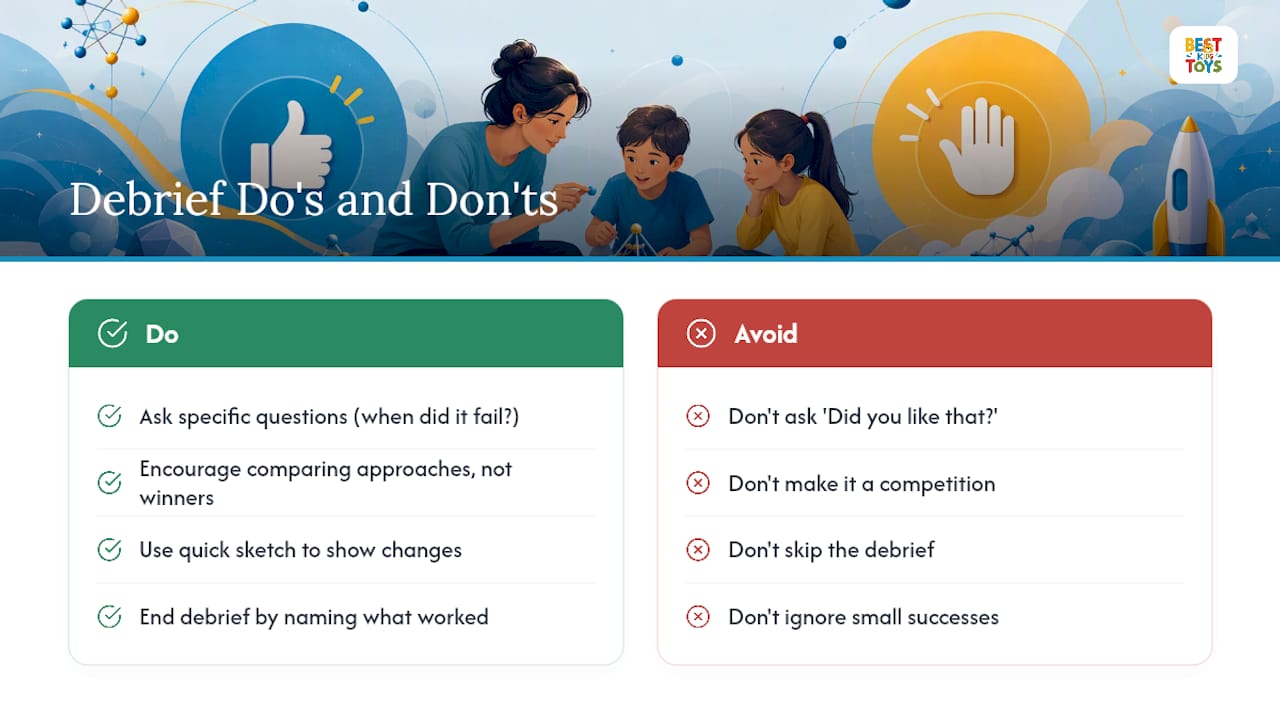
Ask specific questions instead of “did you like that?” Try: “What was the exact moment it failed?” or “If you had one more piece of tape, where would you put it?” Specific questions pull out specific thinking, and specific thinking is what actually transfers to the next challenge.
Let kids compare their approach to a sibling’s or classmate’s build without turning it into a competition about whose was “best.” The goal is noticing different solutions to the same problem, not crowning a winner. A quick sketch of what changed between attempt one and attempt two works well for kids who struggle to explain their reasoning out loud.
For younger children, keep it simple: “What happened? What do you want to try differently?” Two questions are plenty for a 5-year-old’s attention span. For older kids, push toward cause and effect: “Why do you think the wider base held longer?” That question edges toward real engineering reasoning without ever needing the word “engineering” in the room.
End every debrief on what worked, even in a total collapse. There’s almost always one detail worth keeping, whether it’s the shape of the base or the way two kids split up the job, and naming it out loud makes the next attempt start from progress instead of scratch.
A Parent’s Take on What Actually Works
The best sessions I’ve watched skip the pursuit of a perfect result entirely. One family let a 6-year-old rebuild the same wobbly bridge four times in a row, and the fourth version, still crooked, held twice the weight of the first. That’s the whole point. Chase the quick win of “it held for one more second than last time,” not a flawless structure, and treat every collapse as data instead of defeat. Let kids fail loudly and often. That’s where the real learning lives.
— Danica Hodge
Building a STEM Corner That Doesn’t Need Constant Restocking
Cardboard tubes and rubber bands get you through your first dozen challenges just fine, but they wear out fast, and a STEM corner that runs on trash-bin materials means a trip to the recycling before every session. Thebestkidstoys built its Montessori STEM Toys collection around the opposite idea: pieces sturdy enough to survive a hundred rebuilds, curated specifically for the kind of open-ended construction these challenges depend on.
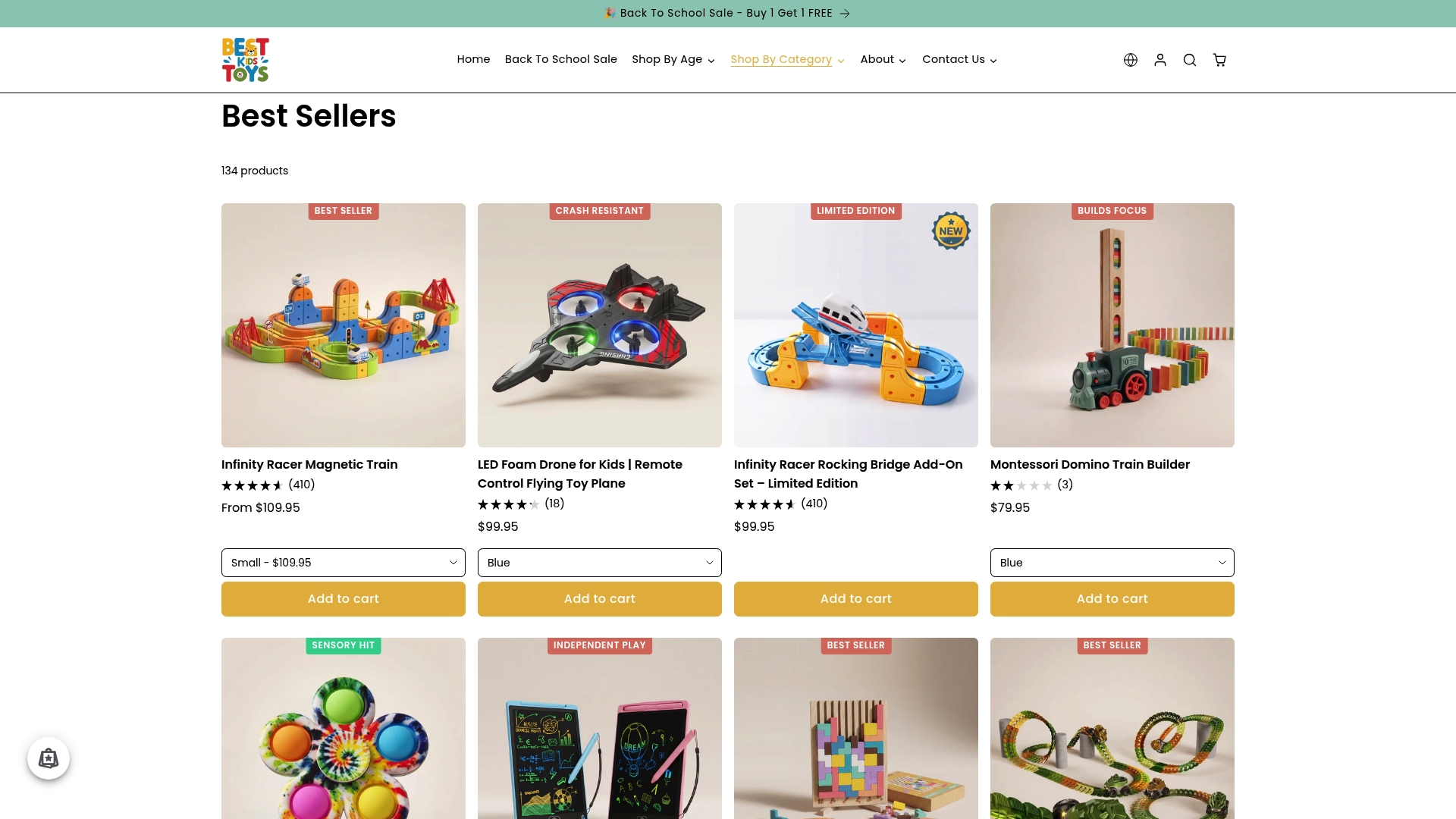
The Montessori Kids Tool Box Set, with more than 200 pieces, gives a home or classroom STEM corner real staying power. Compare that to a bag of straws that gets tossed after one soggy water challenge, and the value case is straightforward: fewer trips to restock, more durable results, and pieces that adapt to dozens of different builds instead of just one. To be clear, plenty of the challenges above work fine with items already in your recycling bin. A curated kit just means you spend your session building instead of hunting for tape.
If you’re setting up a permanent STEM corner rather than a one-time activity, browse the full toy range at Thebestkidstoys and start with whichever collection matches your child’s current stage.
Where to Find More Free STEM Lesson Plans
- Science Buddies offers hundreds of free, step-by-step activities with full materials lists for home or classroom use.
- NASA / JPL’s family STEM page provides standards-aligned, classroom-ready lesson plans at no cost.
- DiscoverE’s grade 3 to 5 activities scaffold engineering concepts specifically for elementary classrooms.
- Little Bins for Little Hands organizes quick, low-prep challenges by time budget, ideal for busy weeknights.
- For sensory-rich extensions, this parenting guide on sensory play explains how tactile exploration supports the same developmental goals.
Sources
- STEM Activities for Kids — Science Buddies
- Quick STEM Challenges for Kids (Low-Prep, Short on Time)
- STEM Activities for Families – NASA / JPL
- Engineering & STEM activities (grades 3–5) — DiscoverE
FAQ
What Are Some Fun STEM Challenges for Kids?
Popsicle-stick catapults, marshmallow spaghetti towers, and balloon-powered cars rank among the most reliable favorites because they’re fast to build, cheap to run, and give kids something to launch or test right away.
What Are Some Fun STEM Building Challenges?
Paper bridges, straw towers, and toothpick-and-marshmallow structures are classic building challenges that teach load-bearing concepts using materials already in most kitchen drawers.
What Are Some Easy STEM Activities for Beginners?
Sink-or-float predictions and tallest cup towers need zero prep and one household material, making them the easiest entry point for a first-time STEM session with young kids.
What Challenges Do STEM Students Face Later On?
Students often struggle most with tolerating failed attempts and redesigning rather than giving up, which is exactly why early practice with open-ended, iterative challenges like these builds a foundation for harder work later.
Does Thebestkidstoys Sell STEM Kits for These Challenges?
Yes. Thebestkidstoys curates a Montessori STEM Toys collection built for durable, repeated use across many different challenges, and current prices are listed on the site.