



Buy 10–30 Minutes: Busy Bag Ideas for Parents, Travel Ready & Low Cost
A busy bag is a single-task, self-contained activity tucked into a small pouch, and the one-task rule is what makes it work. Make six to eight, keep two or three loaded in your diaper bag or car, and you have a rotation that reliably buys 10 to 30 minutes of independent play whenever you need it most.
TL;DR:
- Busy bags should contain only one task with all necessary items sealed inside to ensure focus and avoid messes; use compact containers for portability.
- Toddlers under three need large, chunky pieces like clothespins, pom-poms, and felt shapes, with small parts supervised closely to prevent choking hazards.
- For preschoolers, activities like pattern lacing, threading, and simple puzzles help develop fine motor skills and can be tailored to age and skill level.
- Rotate six to eight bags weekly and keep two or three always packed in your diaper bag or car to maintain novelty and ensure readiness.
- Building busy bags with restraint and safety as priorities yields better engagement than creating numerous elaborate options or over-assigning age groups.
Table of Contents
- Why Busy Bag Ideas Work (And the Rules That Make Them Stick)
- Busy Bag Ideas for Toddlers (18 Months to 3 Years)
- Busy Bag Ideas for Preschoolers and Early Elementary (3 to 6 Years)
- Matching Busy Bags to the Situation: Car, Plane, Restaurant, Waiting Room
- How to Rotate, Store, and Keep Busy Bags Ready
- Where to Get Busy Bag Supplies Cheap
- A Publisher’s Note on Building Busy Bags That Actually Get Used
- Your Practical Take: Where Busy Bag Advice Gets It Wrong
- Ready-Made Starters From Thebestkidstoys
- Sources
Why Busy Bag Ideas Work (And the Rules That Make Them Stick)
The magic isn’t the toy inside, it’s the constraint. When a bag offers exactly one task, a toddler’s attention has nowhere else to go, and that focus is what makes busy bags such an effective quiet activity for toddlers. A well-built bag follows a few non-negotiable rules.
- Everything needed is inside the pouch. No hunting for a missing piece mid-activity.
- The container is compact. It fits in a diaper bag, glove box, or purse pocket.
- The mess stays contained. Loose glitter and dry rice belong in your kitchen, not your car.
- There’s a clear finish. A puzzle gets solved, a scene gets completed, then it’s done.
Busy bags buy 10 to 30 minutes of absorbed, independent play when they’re built this way. For toddlers under three, stick to large, chunky pieces. Always supervise anything with small parts, magnets, or loose components.
Busy Bag Ideas for Toddlers (18 Months to 3 Years)
Toddlers this age want something to grip, drop, match, or press. Keep pieces oversized, keep the container simple, and keep every single one within arm’s reach for supervision.
- Clothespin color match. Clip colored clothespins onto a matching-colored index card. Builds pincer grasp.
- Pom-pom drop. Pom-poms dropped through a hole cut in a sealed container lid. Almost zero mess.
- Pipe cleaner colander threading. Push pipe cleaners through the holes of a plastic colander. Great for bilateral coordination.
- Reusable sticker scene. A laminated background with cling stickers that peel off and stay on for round two.
- Taped zip-lock sensory gel bag. Hair gel and glitter sealed inside a bag, taped shut on every edge. Supervise closely and treat the tape seal as non-negotiable.
- Felt board with a pouch of large pieces. Felt shapes stick to a felt background; store loose pieces in a small zip pouch.
- Button or bear sorting. Sort colored counting bears into the cups of a muffin tin or a divided snack box.
- Mini play-doctor kit. A few soft bandages and a play stethoscope in a mint tin, themed around pretend care.
Pack each activity in a clear zip pouch or a repurposed mint tin so you can see the contents at a glance before handing it over. Themed groupings like these (art, sorting, pretend play) are a format parents reuse and rotate constantly, and rotating between three or four themes keeps a two-year-old from getting bored of the same tin. Pair these with a few sensory toy picks if you want a slightly richer texture bag for this age.
Busy Bag Ideas for Preschoolers and Early Elementary (3 to 6 Years)
Once a child can manage smaller pieces and follow a two-step direction, busy bags can carry real academic weight without ever feeling like schoolwork.
- Lacing pattern cards. Laminated cards with holes punched around a shape; a shoelace threads through in sequence.
- Bead pattern kits. A small dish of colored beads and a pattern card (red, blue, red, blue) for copying onto a pipe cleaner.
- Magnetic tangram tin. Flat magnet-backed shapes in a metal tin so pieces stay put instead of sliding off a tray table.
- Magnetic fishing. Laminated paper fish with a paperclip nose, “caught” with a magnet tied to a string.
- Mini puzzle tins. A 12 to 24 piece puzzle stored flat in an Altoids-style tin.
- Matching card sets. Upper case to lower case letters, or number to quantity, played as a simple memory game.
- DIY busy book pages. A few laminated pages with tracing letters, a simple maze, and a “find the difference” scene, bound with a binder ring.
For this age group, three to four year olds handle threading and clothespin work comfortably, while five and up can manage multi step pattern projects and more complex puzzles without frustration. If you’re assembling for a younger preschooler still developing pincer control, drop the bead size up and cut lacing cards down to fewer holes. A ready-made fine motor toy or two mixed into the rotation covers the gap on days you don’t have time to assemble something new.
Matching Busy Bags to the Situation: Car, Plane, Restaurant, Waiting Room
Not every busy bag belongs in every setting. A restaurant table has different constraints than a car seat, and a plane tray table has different rules than either one.
- Restaurants: felt boards, sticker scenes, and velcro matching cards work well on a flat table and pack away fast when food arrives.
- Car rides: taped sensory bags, lacing cards, and felt pockets hold up on a moving surface. Skip loose beads entirely, since a dropped bead under a car seat is nearly impossible to retrieve safely.
- Flights: reusable water-reveal books, sticker scenes, and a small sealed container of play dough travel well. Avoid magnets on planes since loose magnetic pieces are a hassle mid-flight, and pack any liquid or gel items in your carry-on in case you need to declare them at security.
- Waiting rooms: play dough alternatives, simple puzzles, and quiet fidgets keep hands busy without the noise level rising.
Pro Tip: Pack your travel busy bags in a zippered pencil pouch instead of a plastic sandwich bag. The flat surface doubles as a lap tray, and it survives a diaper bag far longer than a zip-top bag ever will. A few Montessori travel toy picks round out a car or plane kit nicely if you’re building one from scratch, and a family travel resource like these road trip picks for kids can help you round out the rest of the trip beyond the bag itself.
How to Rotate, Store, and Keep Busy Bags Ready
A busy bag that sits in the same spot for a month stops being novel, which is exactly why rotation matters more than variety alone.
- Build six to eight bags total, and rotate the inactive ones weekly to reset the novelty factor.
- Keep two to three packed permanently in your diaper bag or car door pocket for travel.
- Store the rest in labeled pouches inside a bin on a shelf your child can’t reach without you.
- Do a quick maintenance check every few weeks: wipe down surfaces, check for missing small parts, and replace anything consumable like play dough or stickers.
- Label and date each bag so you know at a glance which ones haven’t been touched in a while.
Where to Get Busy Bag Supplies Cheap
You don’t need a craft store trip or a Pinterest-worthy budget to build a real rotation. A single dollar-store run covers most of it.
- Dollar-store staples: pipe cleaners, pom-poms, clothespins, reusable stickers, felt sheets, and zip-lock bags.
- Household substitutes: an empty spice jar for pom-pom drops, a muffin tin for sorting, buttons from an old sewing kit.
- Container options: pencil pouches, Altoids-style mint tins, small snack boxes, or zipper binder pockets.
You can realistically build ten busy bags for under $15 with one focused shopping trip. To batch-assemble efficiently, sort all your loose materials into piles first, bag each activity one at a time, label the outside with a strip of tape, and clip finished bags onto a binder ring so the whole set stays together in one place.
A Publisher’s Note on Building Busy Bags That Actually Get Used
Assembling a busy bag rotation for the first time usually means overbuilding early: too many pieces, too much theme, not enough restraint. Danica Hodge notes that the bags parents keep reaching for months later are almost always the plainest ones, a handful of clothespins, a card, a container that closes properly. Best Kids Toys builds its Montessori-inspired selection around that same restraint, favoring toys with clear developmental purpose over ones designed to impress on a shelf. For families short on prep time, a ready-made option like the Little Learners busy book covers several fine motor and matching skills in one bound piece, which shortens the assembly work down to zero without losing the educational intent behind it.
Your Practical Take: Where Busy Bag Advice Gets It Wrong
Most busy bag roundups treat quantity as the goal, forty ideas, fifty ideas, a Pinterest board with no end. That’s backwards. The research on why these bags work at all points to restraint, not volume: one task, contained pieces, a clear finish. A rotation of six built well outperforms twenty built halfway.
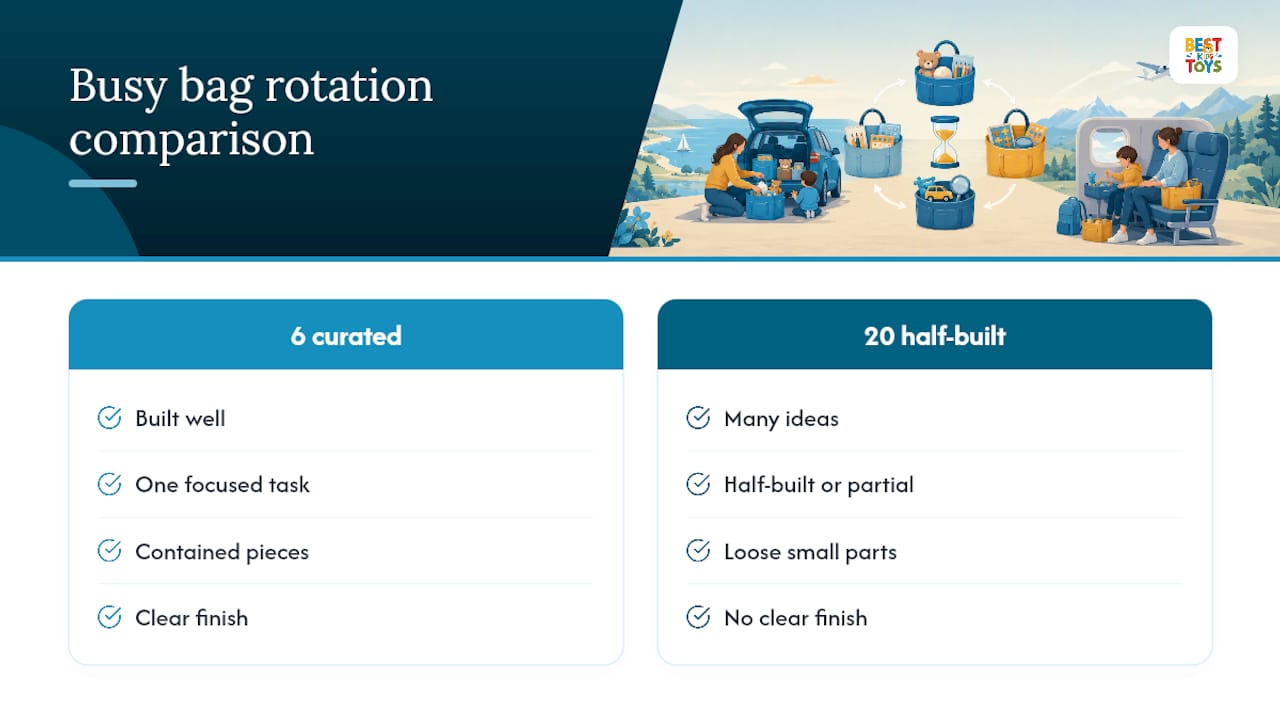
The bigger miss is treating age brackets as suggestions instead of safety guidance. A three-year-old and a five-year-old are not interchangeable when it comes to small parts, and the temptation to hand down an older sibling’s bead pattern kit to a toddler is where most choking hazards actually happen, not from anything marketed as risky.
If you’re starting today, prioritize two things before anything else: pick one skill per bag (a pincer grasp, a color match, a lacing pattern) and pick a container that seals properly. Everything else, the theme, the decoration, the Pinterest polish, can wait. A plain bag your child finishes is worth more than an elaborate one that gets abandoned halfway through.
— Danica Hodge
Ready-Made Starters From Thebestkidstoys
If you’ve read this far and still have zero bags assembled, Thebestkidstoys gets you moving without a dollar-store trip. The Little Learners Montessori busy book bundles several fine motor and matching activities into one bound piece, which is the fastest way to get a real activity in hand tonight instead of next weekend.
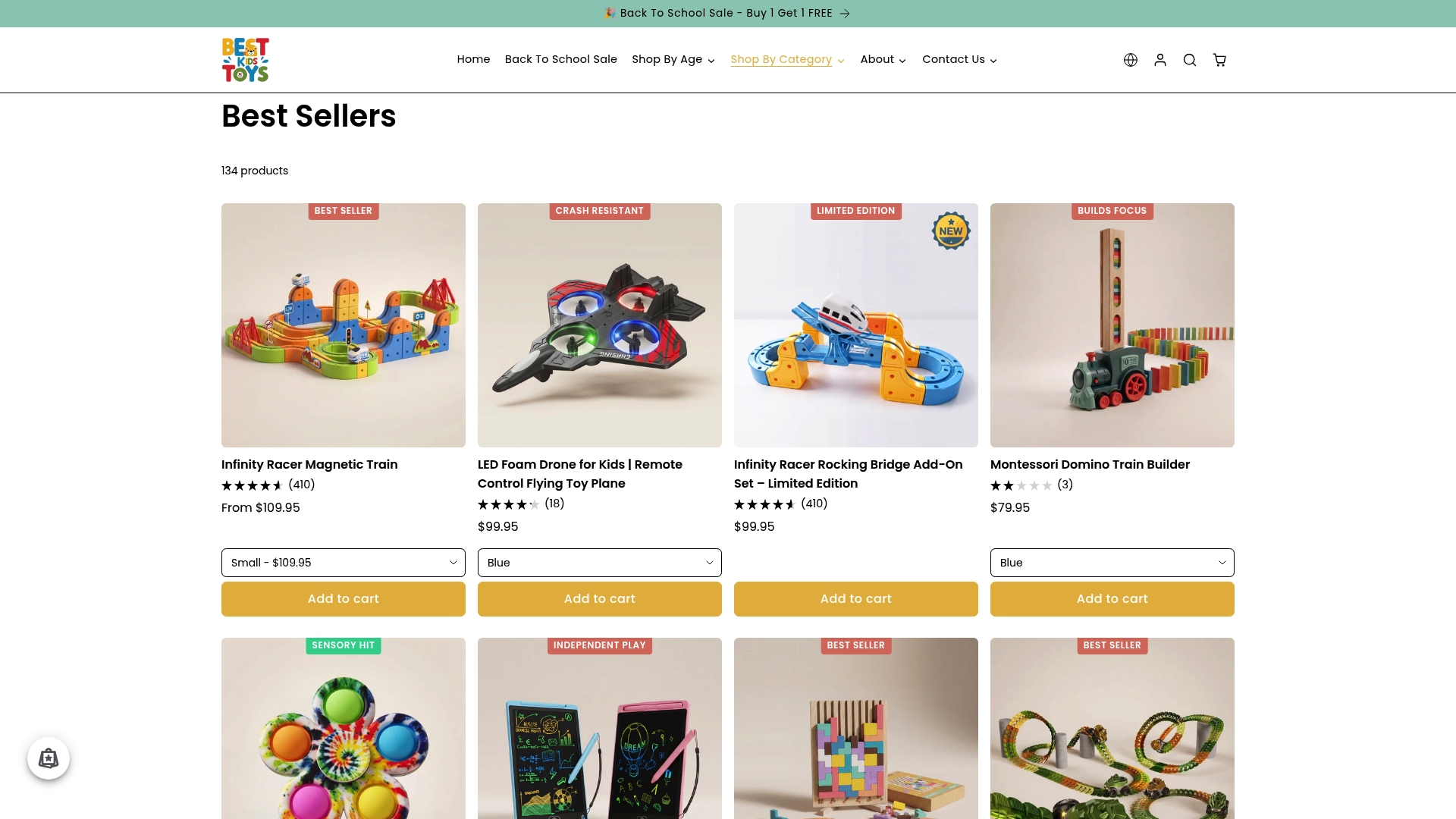
For families building a fuller rotation by age, the 3 to 4 years collection and the 4 to 5 years collection are organized so you can grab items that already match your child’s stage instead of guessing at difficulty. Every item is reviewed for safety and long-term play value, not just packaging appeal. Shop now while the current 40% off sale is running, and orders over $60 ship free, so a starter set for two or three bags costs less than a single toy elsewhere.
Sources
- Busy Bags for Toddlers: 15 DIY Ideas That Buy You 20 Quiet Minutes | Tovi
- Busy Bags for Toddlers: 20 mess-free activities for restaurants, cars, and waiting rooms | TeachToddler
- DIY travel busy bags guide for kids with 20 easy ideas | Play Eat Grow
- 14 Busy Bins & Busy Bags That Will Keep Toddlers Entertained | Entertain Your Toddler