



Classroom Tested Play Ready Sensory Table Fillers for Educators
Use varied, developmentally matched fillers, and rotate them often so little hands stay curious. The one rule that overrides everything else: never leave a child under three alone with water beads or small-part fillers, and always keep water play within arm’s reach. Below, you’ll find categorized options grouped by material, plus the safety guardrails that keep exploration joyful instead of risky.
TL;DR:
- Dry grains like rice and beans can be used safely with children over three but pose choking hazards for those under three, requiring close supervision.
- Water beads are strongly discouraged due to the high risk of ingestion and dangerous expansion, despite recent safety standards.
- Non-food fillers such as birdseed, shredded paper, foam beads, and wood pellets offer tactile variety without allergy or choking concerns.
- Safe water play alternatives include measuring cups, funnels, foam, or frozen ice cubes, with constant adult supervision mandatory.
- Proper prep, sanitation, and storage routines are essential for maintaining sensory table hygiene and preventing mold or odor buildup.
Table of Contents
- Sensory Table Filler Ideas by Material Type
- Age Guidelines, Choking Risks, and Water Bead Safety Rules
- How to Prep, Clean, and Store Sensory Fillers
- Tools and Invitations to Play That Build Real Skills
- Seasonal Sensory Table Themes Worth Rotating Through
- Why Process Beats Product in Sensory Play
- Where to Find Safe, Ready-to-Use Sensory Tools
- Where to Read More on Sensory Table Safety
- Sources
- FAQ
Sensory Table Filler Ideas by Material Type
Choosing sensory table fillers gets a lot easier once you stop thinking of it as one big category and start thinking in material families. Each family brings its own texture, its own sound, and its own set of skills it quietly builds. Rotate between them and you’ll keep even your most sensory-avoidant kiddo curious.
Dry grains and pantry-style bases
These are the workhorses of any sensory table because they pour, scoop, and settle in ways that feel almost meditative.
- Dry rice (plain or dyed) pours smoothly and holds shapes well for scooping and measuring games.
- Dry beans (pinto, kidney, or lentils) add heft and a satisfying clatter, great for sorting by color or size.
- Popcorn kernels offer a lighter texture for younger toddlers who tire easily with denser grains.
- Cornmeal or polenta creates a fine, almost sandy feel that’s ideal for letter-tracing or number-writing games.
- Oats (rolled or steel-cut) add a softer crunch and work well mixed with cinnamon for a low-mess “bakery” theme.
Swap suggestion for food-free classrooms: replace rice or beans with dyed aquarium gravel or small wood beads, which mimic the pour and scoop qualities without resembling snack food.
Non-food dry options for allergen-conscious centers
Some programs ban food-based fillers outright, whether for allergy reasons or because kids kept tasting the “snack.” These non-food fillers solve that problem while keeping the tactile variety high.
- Birdseed pours like rice but reads clearly as “not food,” making it a favorite among educators managing strict no-food policies.
- Shredded paper (colored construction paper or tissue) adds a crinkly, lightweight texture perfect for hiding small toys.
- Foam beads or packing pellets are ultra-light and static-prone, which kids find genuinely funny.
- Wood pellets (the kind sold for animal bedding, unscented and untreated) bring an earthy, natural smell without any food resemblance.
- Pom-poms in assorted sizes work for sorting, counting, and gentle fine-motor squeezing.
Some educators lean on birdseed or wood pellets specifically because they’re inexpensive and easy to source in bulk, though individual program policies on allergy exposure still vary, so check your center’s rules before stocking up.
Tactile doughs and moldable materials
Dough-based fillers slow the pace down. Kids tend to sit longer and work with more intention when the material resists a little.
- Playdough (homemade or store-bought) remains the gold standard for squeezing, rolling, and shaping.
- Kinetic sand holds a shape like wet beach sand but never fully dries out, which makes cleanup dramatically easier.
- Moon dough or cloud dough (flour and oil based) crumbles and reforms, giving a totally different resistance than kinetic sand.
- Therapy putty in graded resistances gives older preschoolers a stronger hand workout, useful for kids building pencil-grip strength.
Use idea: hide small plastic letters or numbers inside dough balls for a “dig and identify” game that sneaks in early literacy practice.
Wet and water-based play alternatives
Water play is where the biggest safety conversation lives, so it deserves the most caution and the most creative substitutions.
- Plain water with measuring cups and funnels is the simplest option and the easiest to supervise closely.
- Soap foam (whipped dish soap and water) adds a sensory surprise without submersion depth.
- Ice cubes (colored or with small toys frozen inside) turn water play into a slow-melt discovery activity.
- Cloud slime or water beads marketed and labeled as compliant with current federal safety standards; they are used only under direct, constant adult supervision and never with children under three.
Given the ingestion risks tied to expanding water beads, many programs are choosing to skip them entirely and lean on ice, foam, or measuring-cup water play instead. It’s a low-effort swap that removes an entire category of worry.
Natural materials for outdoor-inspired exploration
Bringing the outdoors in gives kids a sensory palette that’s harder to replicate with anything manufactured.
- Pine cones, acorns, and dried leaves (inspected for mold and pests first) work beautifully for fall-themed sorting.
- Sand (play sand, not construction sand) remains a classic base for digging tools and mini figures.
- Smooth river rocks in assorted sizes build grip strength during stacking and sorting.
- Dried moss or bark chips add a soft, earthy texture kids rarely encounter indoors.
Use idea: pair natural loose parts with small baskets for a “nature sort” that doubles as an early science observation activity.
Loose parts for open-ended building and math
Loose parts turn a sensory table into a mini engineering station, and they pair naturally with almost every base filler above.
- Wooden blocks or beads add structure to grain-based tables.
- Buttons in varied sizes support patterning and one-to-one counting.
- Fabric scraps introduce texture contrast when layered over sand or rice.
- Bottle caps are free, plentiful, and endlessly sortable by color or brand logo.
Budget tip: loose parts cost almost nothing when sourced from recycling bins, craft scrap piles, or a classroom “bring one from home” request.
Age Guidelines, Choking Risks, and Water Bead Safety Rules
Filler choice depends heavily on age, and the biggest mistake educators and parents make is treating a three-year-old’s sensory table the same as a one-year-old’s. The rules genuinely change as fine-motor control and mouthing behavior evolve.
For children under three, skip anything that fits through a toilet paper tube. That includes beans, small pom-poms, buttons, bottle caps, and any bead smaller than a golf ball. Choking-prevention guidance from the American Academy of Pediatrics flags small round objects as a top hazard category, right alongside whole grapes and hard candies. Stick to large-format fillers like kinetic sand, big wooden blocks, or scoopable dough for this age group.
For children ages three and up, most dry grains, small loose parts, and tactile doughs become appropriate, provided an adult stays within eyesight. Water beads deserve a much stricter line than almost any other filler on this list.
CPSC Safety Alert: Between 2017 and 2022, U.S. emergency departments treated an estimated 6,300 water bead-related ingestion injuries in children. The beads expand after swallowing, which can cause life-threatening intestinal blockages.
The Consumer Product Safety Commission approved a new federal safety standard for water beads in August 2025, which caps how much beads can expand and requires clearer warning labels. That standard took full effect as enforceable federal law in March 2026, and the agency’s current guidance strongly advises removing water beads altogether from any space where young children are present, rather than trying to manage the risk through supervision alone. If your classroom or home already has water beads on a shelf, this is the moment to retire them.
Water play of any kind also triggers the American Academy of Pediatrics’ touch-supervision standard. That means an adult stays within arm’s reach, not just in the room, whenever a toddler is near water, even a shallow sensory bin. Empty open water containers the moment play ends rather than letting them sit out.
Practical classroom rules that reduce both risk and mess:
- Teach a simple “ask before you play” rule so no child starts sensory time unsupervised.
- Keep filler material inside the table with a visible boundary marker (a felt border works well).
- Use a “closed” sign or cover when the table isn’t actively supervised.
- Store any bead-based or small-part filler on a high shelf, clearly labeled, away from toddler reach.
How to Prep, Clean, and Store Sensory Fillers
Good prep habits are what separate a sensory table that lasts all semester from one that grows mold by week three. A little planning up front saves a lot of scrubbing later.
- Dye dry materials safely. Mix rice or pasta with a few drops of food coloring or liquid watercolor and a splash of rubbing alcohol, then spread it on a tray to dry fully before use. Rubbing alcohol speeds evaporation and helps the color set without leaving a sticky residue.
- Check for allergies first. Note any nut, wheat, or latex sensitivities in your group before choosing a dry-grain or dough-based filler, and swap in a non-food alternative when needed.
- Seal and label everything. Store dyed or prepped materials in airtight containers with the prep date written on the lid.
- Sanitize tools weekly. Wipe down scoops, funnels, and tongs with a mild soap solution, and let them air dry completely before returning them to the bin.
- Inspect fillers regularly. Keep a small sample aside and check it weekly for odor, mold, or dampness, especially with anything dye-based or food-adjacent.
- Know when to toss it. Discard dyed rice or pasta after six to eight uses, or immediately if it smells musty or feels damp.
Pro Tip: Keep a rotating log with three columns: filler name, prep date, and last-checked date. It takes thirty seconds to update and saves you from ever wondering how long that rice has been sitting in the bin.
Tools and Invitations to Play That Build Real Skills
The filler is only half the equation. The tools you hand a child determine whether that filler builds fine-motor strength, early math sense, or vocabulary.
- Tongs and tweezers strengthen the pincer grip kids need later for pencil control.
- Melon scoopers and small shovels build wrist rotation and bilateral coordination.
- Funnels teach cause and effect, plus early volume concepts.
- Droppers and turkey basters refine hand strength for kids working on scissor skills.
- Measuring cups in graduated sizes introduce comparison language like “more,” “less,” and “full.”
A few classroom-ready invitations to play that tie directly to academic goals:
- Counting harvest: Hide a set number of acorns in dyed rice and have kids count each one as they find it.
- Color sort station: Provide three bowls and ask kids to sort dyed pasta by color, reinforcing categorization.
- Descriptive language table: Fill the bin with cotton balls, sand, and smooth stones side by side, and prompt kids to describe how each feels using words like “rough,” “soft,” or “cool.”
- Letter dig: Bury foam letters in kinetic sand and have kids name each letter’s sound as they excavate it.
For classroom noise and layout, lay a piece of felt or a yoga mat under the table to muffle scoop-and-drop sounds, and keep the bin depth around three to four inches so materials don’t spill over with enthusiastic scooping. Practical setup tips from early childhood practitioners suggest keeping tools within a child’s reach on a low shelf beside the table rather than mixed into the bin itself, which keeps the play area tidier and easier to supervise.
Seasonal Sensory Table Themes Worth Rotating Through
Swapping fillers by season keeps a sensory table feeling fresh without buying anything new most months.
- Fall: dried leaves, acorns, and cinnamon-scented oats for a harvest theme.
- Winter: cotton balls, white rice dyed pale blue, and small pom-poms for a “snow” sensory bin.
- Spring: dried flower petals, birdseed, and small plastic eggs for a garden-and-hatching theme.
- Summer: sand, smooth stones, and shells for a beach-day feel indoors.
For story-based prompts, pair a picture book about gardens with a birdseed-and-petal table, or read a book about snow before setting out the cotton-ball bin. Simple science inquiry works too: freeze small toys in ice cubes and ask kids to predict how long melting will take. Source seasonal materials cheaply through dollar stores, nature walks, or a parent donation bin at the start of each season.
Why Process Beats Product in Sensory Play
Sensory tables get judged by the wrong metric constantly. Parents and even some educators want to see a tidy outcome, a sorted bowl, a perfectly shaped dough creature, when the real developmental win is happening in the messy middle. NAEYC’s guidance on sensory activities makes this point directly: thoughtfully chosen play materials support cognitive, social-emotional, and physical growth precisely because they invite open-ended exploration rather than a single “correct” result.

That reframing matters more than most filler lists let on. A child dumping rice repeatedly isn’t stalling; she’s testing gravity, volume, and her own motor control in real time. The mess is the curriculum, not a side effect of it.
What gets underestimated is how much cognitive load falls on educators just choosing and prepping materials safely. Curated sensory kits and pre-vetted sensory toys cut that load substantially, freeing up planning time for the actual invitations to play rather than ingredient sourcing and safety research. That’s a real operational win for anyone managing a classroom on a tight prep schedule.
— Danica Hodge
Where to Find Safe, Ready-to-Use Sensory Tools
Specialized sensory-safe tools are available online, with scoops, tongs, and tactile toys reviewed for developmental value to help buyers avoid guesswork about age-appropriateness.
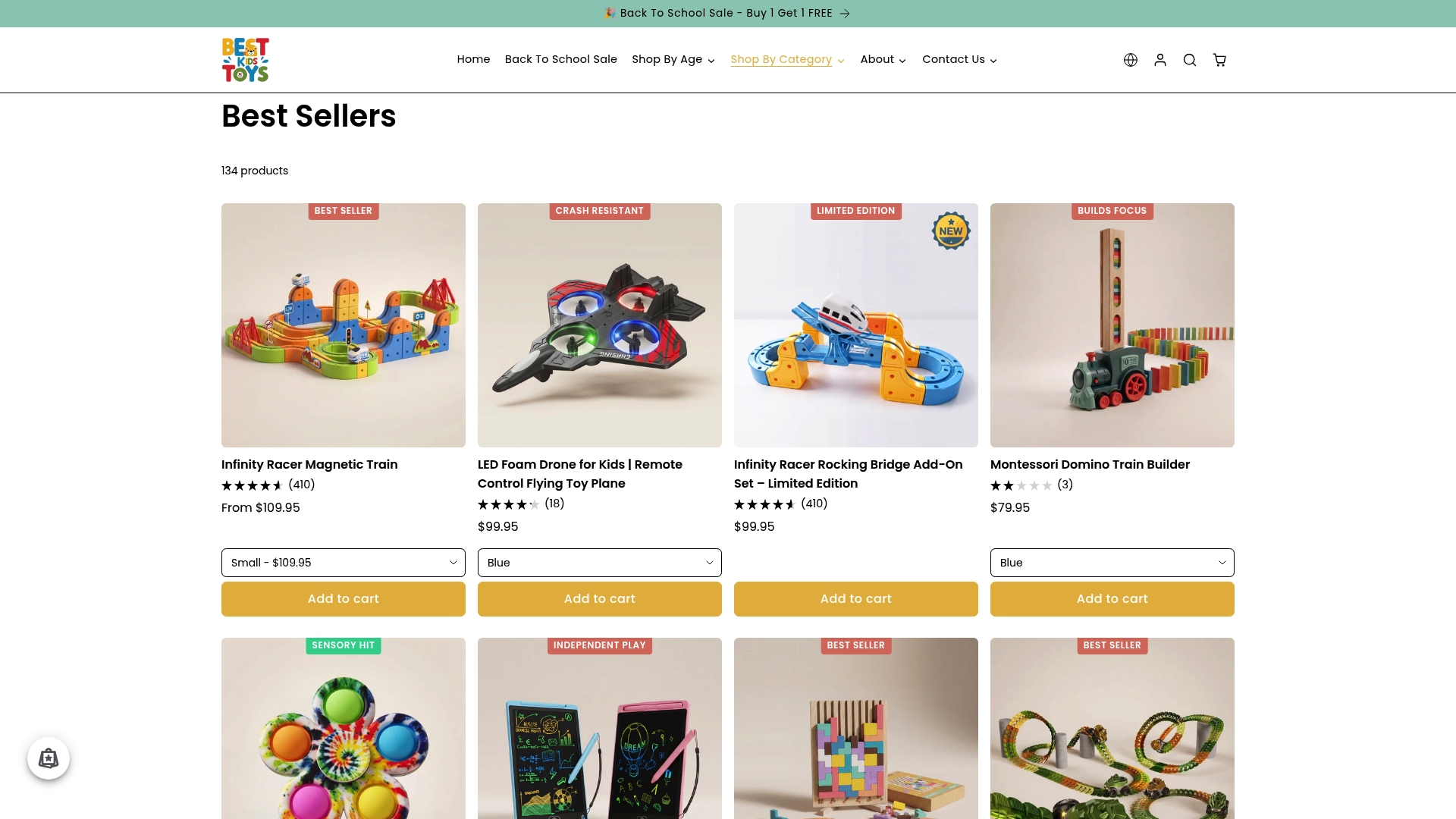
Our sensory toys collection pairs directly with everything covered above: fine-motor tools for scooping and sorting, tactile options for kids who need a different kind of input, and open-ended pieces that work across dry, dough, and loose-parts tables alike. If you’re setting up a classroom station or a home sensory corner, the Montessori STEM Toys collection rounds out your tool kit with graded-difficulty options that grow with your child. Every purchase comes with a 30-day risk-free guarantee, so trying a new tool for your sensory table carries zero downside. Free shipping kicks in over $60, and current sale pricing is posted right on the site. Head to the Montessori STEM Toys collection to browse tools that match the invitations to play in this guide.
Where to Read More on Sensory Table Safety
- The CPSC’s current water bead safety standard explains the federal rule now in effect and why removal is recommended over supervised use.
- The 2025 CPSC approval notice details the expansion-size limits and labeling requirements behind that standard.
- Healthychildren covers touch supervision and container-emptying rules for toddlers.
- NAEYC’s sensory activities guide breaks down the developmental case for process-focused play.
- PreKinders’ sensory table setup tips offer classroom-tested tool and layout ideas.
Sources
- CPSC’s New Federal Water-Beads Safety Standard Takes Effect to Protect Children from Deadly Hazard
- CPSC approves new federal safety standard for water beads to reduce the risk of injury and death to young children
- Healthychildren
- “What’s the harm if I paint my arm?”: A toddler’s guide to sensory activities in the home | NAEYC
FAQ
What should you fill sensory tables with?
Rotate between dry grains like rice and beans, tactile materials like kinetic sand or playdough, natural items like pine cones and smooth stones, and loose parts like wooden beads or buttons. Match the choice to the age group in the room, since anything smaller than a golf ball poses a choking risk for children under three.
What can I use as fillers in a sensory bin for food-free classrooms?
Birdseed, shredded paper, foam beads, and unscented wood pellets all work well without resembling snack food. These non-food options pour and scoop similarly to rice while sidestepping allergy concerns and no-food policy conflicts.
What can I use as dirt for a sensory table?
Cocoa-free coffee grounds, dry potting soil (untreated and pesticide-free), or a mix of cornmeal and crushed graham-style crumbs create a convincing “dirt” texture. For food-free settings, dark-dyed rice or a fine sand-and-brown-paper mix gives a similar look without any food product involved.
What are some good items to put on a sensory table for toddlers?
For children under three, stick to large-format items like kinetic sand, big wooden blocks, and scoopable dough rather than small beads or beans. Add wide scoops and short-handled tongs to build grip strength while keeping every piece too large to swallow.
Are water beads safe for a classroom sensory table?
Current federal guidance advises against using water beads in any environment with young children, given the ingestion and expansion risks documented by the CPSC. Safer wet-play swaps include soap foam, ice cubes, and simple water-and-funnel setups supervised within arm’s reach at all times.