



The Classroom Manipulatives List Every K–5 Teacher Actually Needs
Start with these ten core manipulatives and you can teach number sense, place value, fractions, geometry, and measurement almost entirely through hands-on play: base ten blocks, tens frames, two-color counters, linking cubes, pattern blocks, a rekenrek, geoboards, fraction tiles, and counting bears. That’s the whole shortlist. Nothing exotic, nothing that requires a curriculum overhaul.
The smartest approach isn’t buying one giant class set of everything. Get one demonstration set for whole-class modeling, then build smaller sets of 6 to 12 pieces for center rotations, or size a single kit for your actual roster of 10 to 24 students if your budget allows it. Look for durable plastic or wood over flimsy versions. A well-made set of linking cubes will survive five years of sticky fingers; a cheap one cracks by October.
- Base ten blocks (place value, addition, subtraction)
- Tens frames (early number sense, subitizing)
- Two-color counters (operations, probability)
- Linking cubes (counting, patterning, measurement)
- Pattern blocks (geometry, fractions, symmetry)
- Rekenrek (number relationships, mental math)
- Geoboards (perimeter, area, shape attributes)
- Fraction tiles or bars (fraction equivalence, comparison)
- Counting bears (sorting, early counting, graphing)
TL;DR:
- Focus on buying smaller, durable sets of manipulatives for centers and a demonstration set for whole-class modeling, rather than one set per student.
- Prioritize multi-use, sturdy tools like linking cubes, base ten blocks, and fraction tiles that can serve multiple grades and lessons over several years.
- Organize materials in labeled tubs and pre-packed kits to streamline setup, storage, and independent use by students.
- Essential manipulatives include base ten blocks, tens frames, counters, linking cubes, pattern blocks, geoboards, a rekenrek, fraction tiles, and counting bears.
- Avoid overstocking by purchasing only what is necessary for rotation, focusing on high-impact items that support key math skills across grades.
Table of Contents
- Building Your Classroom Manipulatives List by Learning Goal
- How to Choose Quantities, Organize Storage, and Manage It All
- Six Classroom Activities That Put These Tools to Work
- What Guides Our Picks
- What Most Manipulative Guides Get Wrong
- Where to Find Classroom-Ready Manipulatives Without the Guesswork
- Key Takeaways
- Sources
Building Your Classroom Manipulatives List by Learning Goal
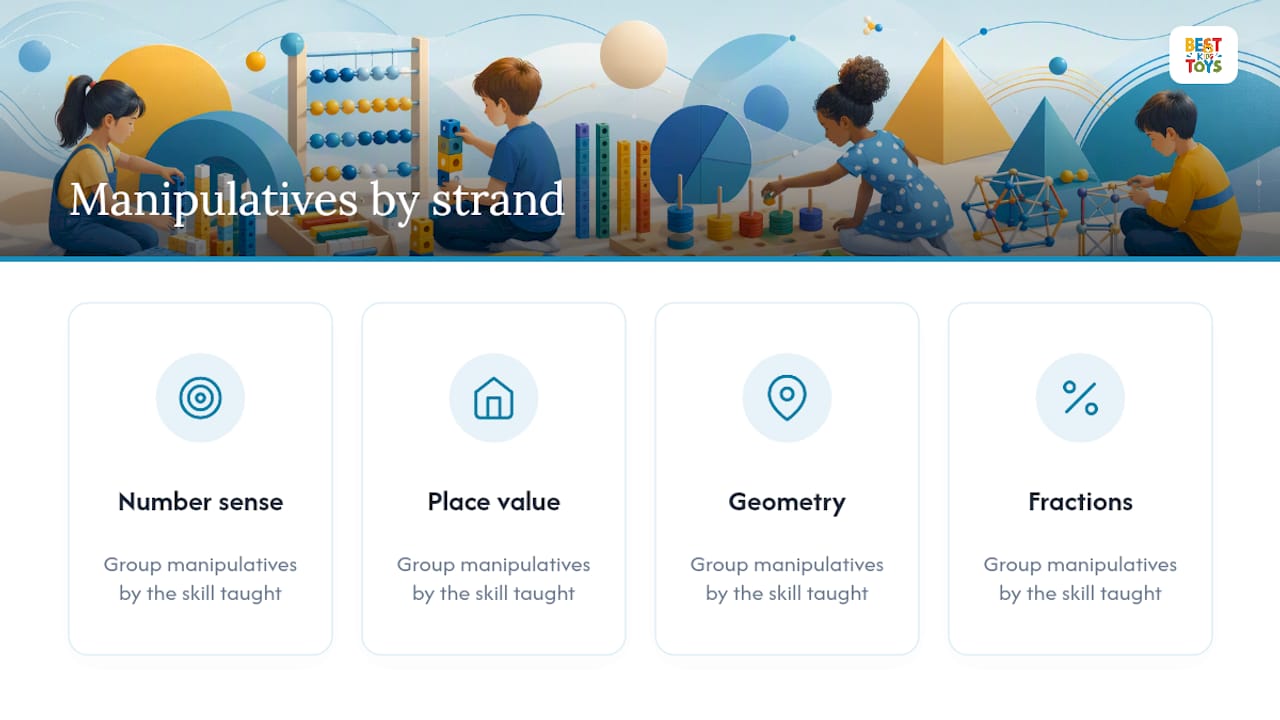
Grouping manipulatives by the skill they teach makes purchasing decisions a lot less overwhelming, and it helps you spot gaps in what you already own. Here’s how to think about a full classroom manipulatives list across the major math strands.
1. Number sense and counting
Counting bears, two-color counters, linking cubes, and number lines form the foundation for kindergarten through second grade. A class of 20 typically works well with four or five center sets of 8 to 10 counting bears each, plus one larger demonstration set the teacher uses on the rug. Linking cubes deserve extra stock because they stretch across grade levels, from basic one-to-one counting in kindergarten to early multiplication arrays in third grade. Lakeshore Learning’s classroom Unifix cube tubs are a good example of how these are packaged for exactly this kind of rotation, with quantities built for group work rather than one-per-student overkill.
2. Place value and operations
Base ten blocks, place value cards, a rekenrek, and tens frames handle the bulk of first through fourth grade arithmetic instruction. These tools let a student physically trade ten ones for a ten rod, which does more for regrouping comprehension than any worksheet. A rekenrek, with its two rows of ten beads, is particularly good at building the kind of automatic number relationships kids need before timed math facts even make sense. The Texas Education Agency’s Bluebonnet Learning kit documentation lists sample K–5 kit contents built to serve roughly 10 to 24 students, including base ten sets, demonstration rekenreks, and student-sized ten-frames, which gives a solid real-world benchmark for how much to buy.
3. Geometry and spatial reasoning
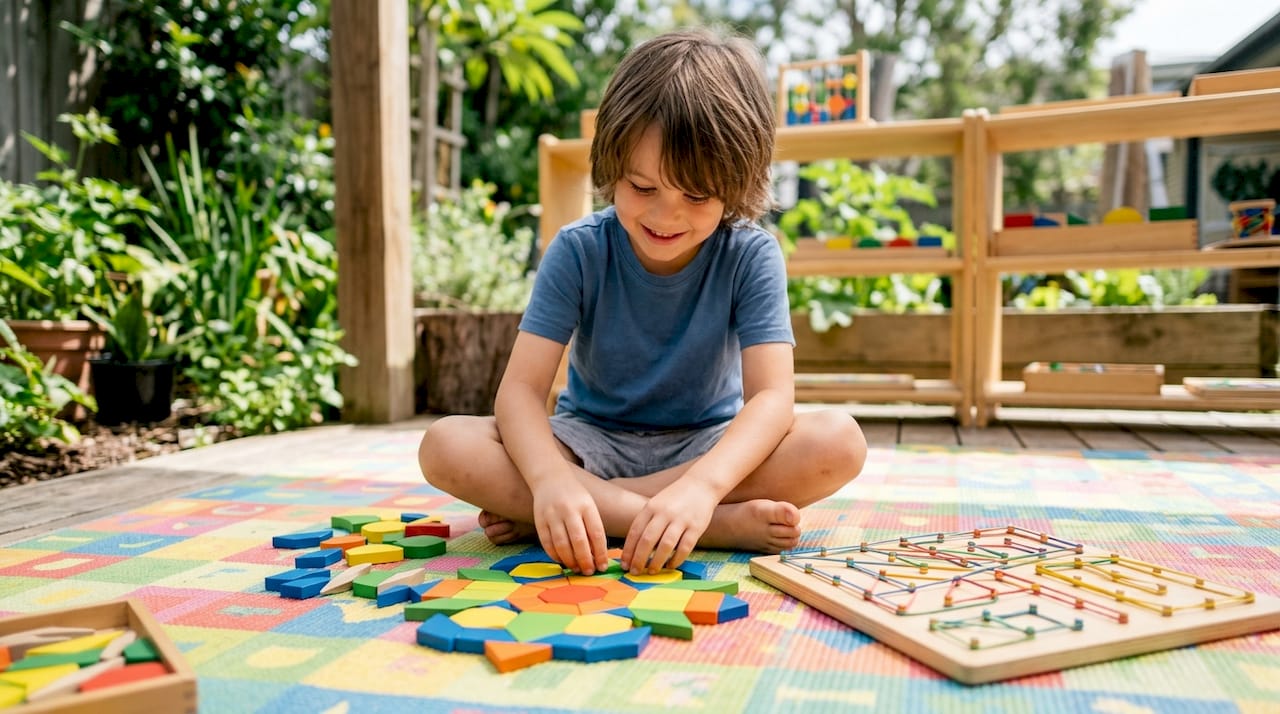
Pattern blocks, geoboards, and geometric solids cover shape identification, symmetry, and early spatial reasoning. Pattern blocks in particular earn their shelf space because they double as a fraction tool later, when students build a hexagon out of triangles and trapezoids and start seeing halves and thirds visually. Geoboards hold up well physically since there’s nothing to lose except rubber bands, which are cheap to replace by the bag.
4. Fractions and ratios
Fraction bars or tiles and fraction circles scaffold beautifully from grade 3 through grade 5. Start concrete with tiles that physically show a half next to two quarters, then move toward the more abstract circle models once students already trust that the pieces represent equal parts of a whole. Maneuveringthe Middle’s list of essential math manipulatives names fraction tiles among the true must-haves for upper elementary, and recommends keeping them in smaller sets for small-group instruction rather than issuing one set per child.
5. Measurement and money
Rulers, measuring tapes, classroom money sets, and simple balance scales round out the practical side of the curriculum. These tie naturally into hands-on activities like measuring the classroom door frame or building a pretend classroom store where kids make change with real coins.
6. Extras worth having
Dice, spinners, pattern cards, timers, and STEM-building manipulatives like magnetic tiles round out a well-stocked classroom. They’re not core to any single lesson, but they show up constantly as supporting tools for games, centers, and cross-curricular projects, including magnet tiles activities that stretch a single set of blocks into dozens of different lessons.
How to Choose Quantities, Organize Storage, and Manage It All
Center-based rotation is your friend here. Instead of buying 24 geoboards so every student has their own, most classrooms do fine with four or five per rotation station, since students cycle through in small groups rather than all at once. Third Space Learning’s manipulatives guide recommends exactly this kind of smaller, station-sized stock for budget and storage reasons, and it works because a rotating group of five needs far less material than a whole class working simultaneously.
Storage makes or breaks whether manipulatives actually get used. Clear plastic tubs with labels, trays sorted by activity, and pre-bagged kits for specific lessons all cut down on setup time. A shelving unit at student height, paired with a simple put-away routine students run themselves, keeps materials from becoming a junk drawer by November.
On budget, buy the multi-use essentials first: counters, linking cubes, base ten blocks. These get used across nearly every grade level and math unit. Add specialized items like geoboards and fraction tiles as your curriculum calls for them, rather than trying to stock everything in year one.
- Clear, labeled tubs by manipulative type
- Pre-bagged activity kits for grab-and-go lessons
- Low shelving with picture labels for early readers
- A simple checkout system for center materials
Pro Tip: Check the small-parts age rating before buying anything for a preschool or kindergarten room, and choose wipeable plastic over porous wood or fabric pieces for anything that will end up on the floor. A quick wipe-down with a disinfecting cloth once a week keeps shared materials genuinely sanitary.
Six Classroom Activities That Put These Tools to Work
- Ten-frame “Make 10” partner game. Two students fill a ten-frame with counters, racing to find combinations that equal ten. Five to ten minutes, perfect for a K–1 math center.
- Rekenrek number talks. Run this whole-class or in small groups. Flash a bead arrangement and ask students to name the total without counting one by one, which builds subitizing fast.
- Pattern-block fraction builds. Small groups construct a hexagon using different combinations of triangles and trapezoids, then label each piece as a fraction of the whole shape.
- Geoboard perimeter and area tasks. Individual or paired work for grades 3 through 5, with task cards scaffolded from simple rectangles to irregular polygons.
- Linking-cube towers. Small groups build towers for addition and subtraction problems, then stretch into early multiplication with “how many cubes in four towers of five” challenges.
- Money shop role-play. Students count coins and make change in a pretend classroom store, a favorite for tying counting money into literacy through shopping lists and receipts.
For at-home practice or hybrid learning days, virtual suites like Didax and Toy Theater give students digital versions of these same tools. We Are Teachers’ roundup of math manipulatives notes these work well as a supplement to physical practice, though they don’t fully replace the tactile feedback of stacking real cubes or snapping real fraction tiles into place.
What Guides Our Picks
Thebestkidstoys builds its recommendations around a simple filter: Montessori-inspired design, real durability, and genuine multi-use value across grade levels, not single-purpose gimmicks that get used once and forgotten in a drawer.
- Montessori alignment: materials that support independent, hands-on discovery
- Durability: built to survive years of classroom handling, not one semester
- Multi-use design: items that serve multiple grade levels and skills
- Safety review: every product checked for age-appropriate construction
For grade-specific stocking lists, see our guides on preschool classroom toys and kindergarten classroom favorites.
What Most Manipulative Guides Get Wrong
Most classroom manipulatives lists read like inventory sheets. Buy this, buy that, buy one per student for good measure. That advice ignores the actual constraint every teacher lives with: storage space and a supply budget that rarely stretches as far as the wish list.
The real skill isn’t knowing which manipulatives exist. It’s knowing which ones earn their shelf space across multiple grade levels and multiple units, and which ones you can safely under-buy because a rotation of five students doesn’t need 25 of anything. Linking cubes and base ten blocks do more instructional work per dollar than almost anything else on this list, which is exactly why they belong in the first purchase, not the fifth.
Where the conventional advice really falls short is treating manipulatives as consumables you buy once and forget. Durability matters as much as function. A geoboard with snapped pegs or fraction tiles missing three pieces teaches nothing except frustration. Prioritize sturdiness over sheer variety, and you’ll spend less over five years than a teacher who buys cheap and replaces constantly.
— Danica Hodge
Where to Find Classroom-Ready Manipulatives Without the Guesswork
Thebestkidstoys is the alternative to piecing together a manipulatives list from a dozen different sellers: every item in our collection is already reviewed for durability, Montessori alignment, and classroom-appropriate safety, so you’re not gambling on quality with each purchase.
Products like the Montessori Wild Friends puzzle blocks and the rainbow ring sorter for counting and stacking work well as durable, multi-use additions to an early-elementary math center. If you want a shortcut past the trial-and-error of sourcing manipulatives piece by piece, browse our best-selling classroom and learning toys and build your kit from options we’ve already vetted for the classroom.
Key Takeaways
A classroom manipulatives list built around ten core tools, sized with a demonstration set plus small center sets, covers K–5 math instruction without overspending on rarely used quantities.
| Point | Details |
|---|---|
| Start with the core ten | Base ten blocks, tens frames, counters, linking cubes, pattern blocks, a rekenrek, geoboards, fraction tiles, and counting bears cover most K–5 math goals. |
| Size sets for centers, not classes | Buy 6 to 12 pieces per center set instead of one per student, and add one larger demonstration set for whole-class modeling. |
| Prioritize durability over variety | Multi-use, sturdy items like linking cubes and base ten blocks earn their cost across multiple grades and years. |
| Organize for independent use | Clear labeled tubs, pre-bagged kits, and student-led put-away routines keep materials lesson-ready. |
| Shop vetted, Montessori-aligned options | Thebestkidstoys offers durable, reviewed manipulatives with sales and free shipping options. |
Sources
- Bluebonnet learning math K–5 manipulative kit information (TEA)
- Guide to hands-on manipulatives (Third Space Learning)
- Essential math manipulatives - Maneuvering the Middle
- 30+ best math manipulatives for all students (We Are Teachers)
Recommended
- Preschool Classroom Toys for Teachers: What to Stock – Best Kids Toys
- Kindergarten Toys: Keep Little Learners Excited All Day Long – Best Kids Toys
- Preschool Toys: Preschool Toys That Prepare Little Learners for School – Best Kids Toys
- 50+ Magnet Tiles Activities for Hands-On Learning – Best Kids Toys