



Preschool Classroom Toys for Teachers: What to Stock
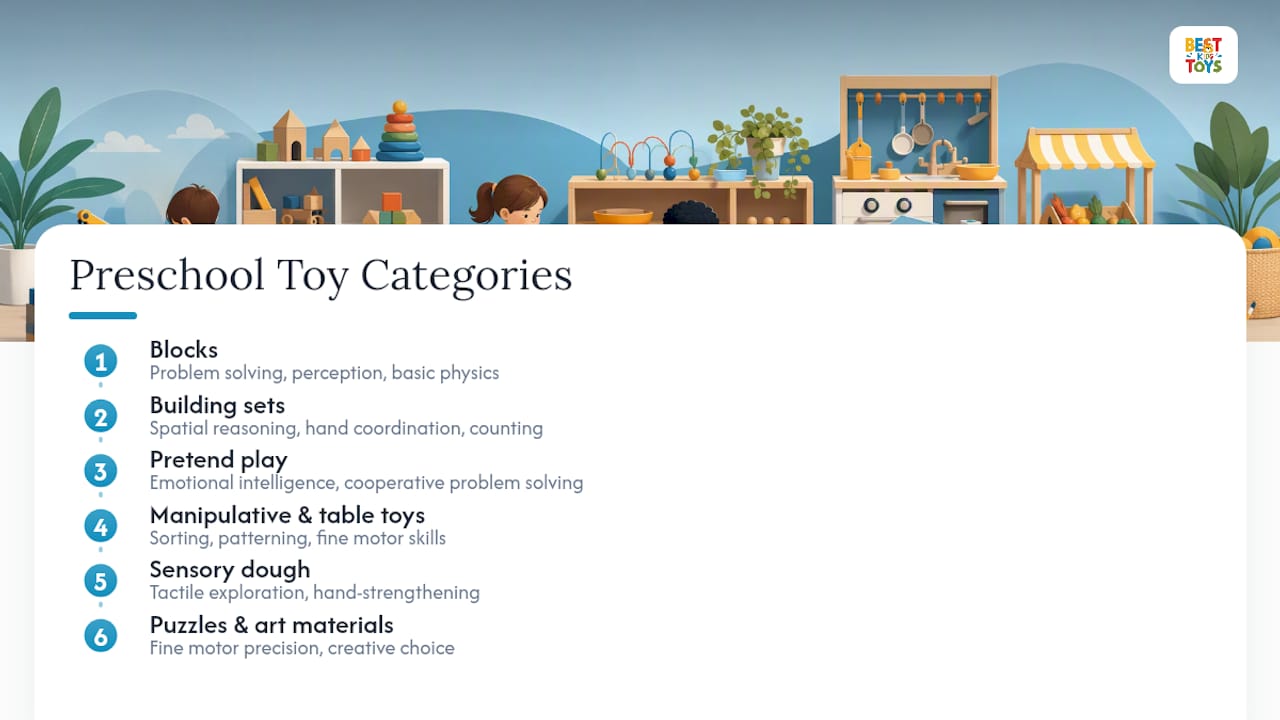
Stock seven categories first: wooden unit blocks, building/construction sets, pretend-play materials, manipulative table toys, sensory dough, puzzles and matching games, and open-ended art supplies. These preschool classroom toys cover the developmental ground a strong early learning environment needs, from spatial reasoning to social-emotional growth to the fine motor control that gets little hands ready for writing.
Here’s the quick reasoning behind each pick:
- Wooden unit blocks build spatial reasoning and problem solving through construction and balance.
- Building sets (magnetic tiles, DUPLO) add fine motor practice and early engineering thinking.
- Pretend-play materials (dollhouses, figures) grow language and social-emotional skills through role-play.
- Manipulative table toys (lacing beads, counters) train hand strength and early math concepts.
- Sensory dough supports tactile exploration and calming, focused play.
- Puzzles and matching games reinforce visual discrimination and persistence.
- Art materials invite creative expression and prewriting grip strength.
Montessori-inspired materials in these categories tend to outperform novelty toys because they’re open-ended, and common preschool product categories reflect this same mix of sensory, manipulative, and building materials that classrooms rely on year after year.
Key Takeaways
Stocking preschool classroom toys around seven core categories, mapped to specific developmental goals, builds a room that supports learning without constant restocking.
| Point | Details |
|---|---|
| Stock seven core categories | Blocks, building sets, pretend play, manipulatives, sensory dough, puzzles, and art materials cover the key developmental bases. |
| Match quantity to class size | Aim for close to one table toy bin per child, around 12 to 15 tubs for a 15-student room. |
| Choose open-ended over single-use | Durable, multi-use materials like blocks and tiles reduce replacement costs over the school year. |
| Clean by material type | Wipe wood daily, deep-clean dough and sensory bins weekly, and inspect wear monthly. |
| Rotate on a two-week cycle | Introduce one new material at a time and log what’s out to keep engagement fresh. |
| Start with a curated bundle | Thebestkidstoys offers Montessori-inspired starter items like the Little Learners Busy Book built for classroom-ready, repeated use. |
Table of Contents
- Recommended Preschool Classroom Toy Categories to Stock
- Which Toys Build Which Preschool Skills
- Starter Classroom Inventory and Suggested Quantities
- How to Choose Toys for a Preschool Classroom
- Safety, Cleaning, and Storage for Shared Classroom Toys
- Montessori-Inspired Starter Kit for Your Classroom
- Integrating Toys Into Daily Lesson Plans
- Build Your Classroom Starter Bundle
- Frequently Asked Questions
- Sources
Recommended Preschool Classroom Toy Categories to Stock
A well-equipped classroom does not need dozens of gadgets. It needs the right categories, stocked with sturdy, open-ended pieces kids can return to all year.
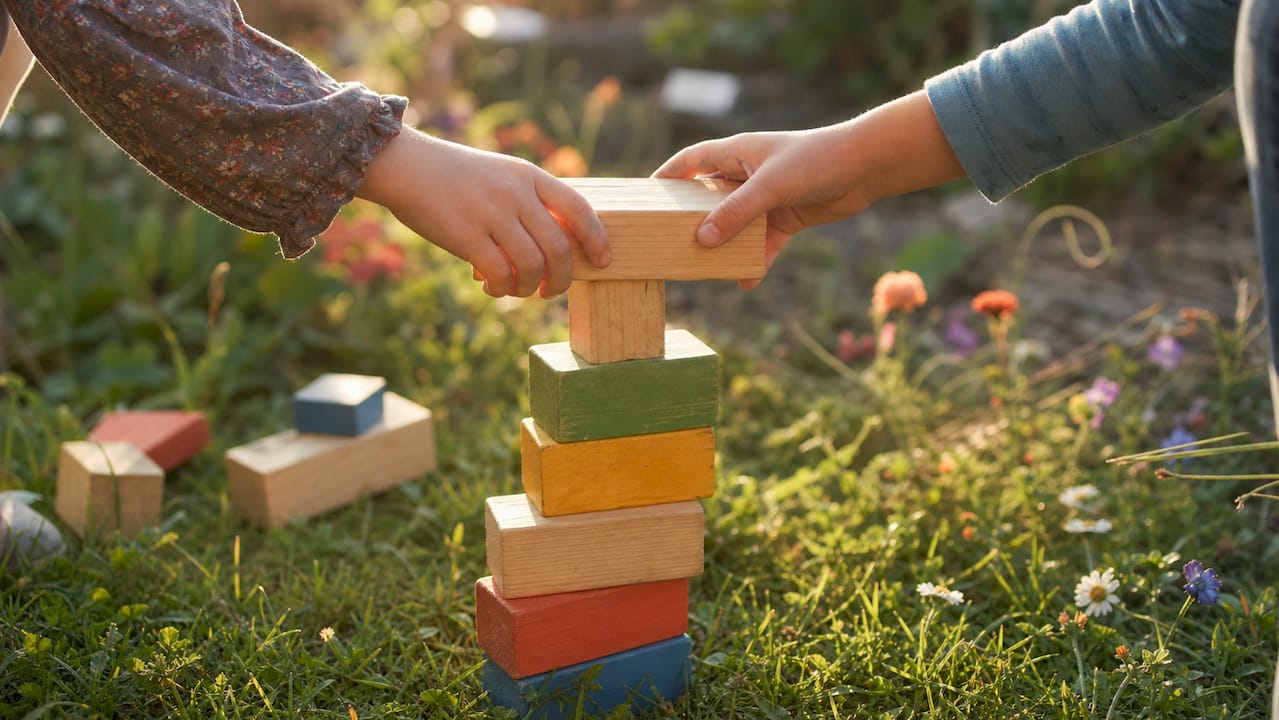
Blocks. Wooden unit blocks remain the anchor of any building center. A quality hardwood set gives children the chance to explore problem solving, perception, and basic physics as they stack, balance, and knock down their own creations. Pair a large multi-shape set with a low shelf for independent access, and you’ve built the busiest corner of the room.
Building sets. Magnetic tiles and DUPLO bricks belong side by side. Magnetic tile play strengthens spatial reasoning and hand coordination while letting kids build in three dimensions instead of just stacking. DUPLO bricks, sized generously for small hands, work well for sorting and counting activities alongside free building. Both categories reward problem solving and creativity in ways a single toy rarely can.
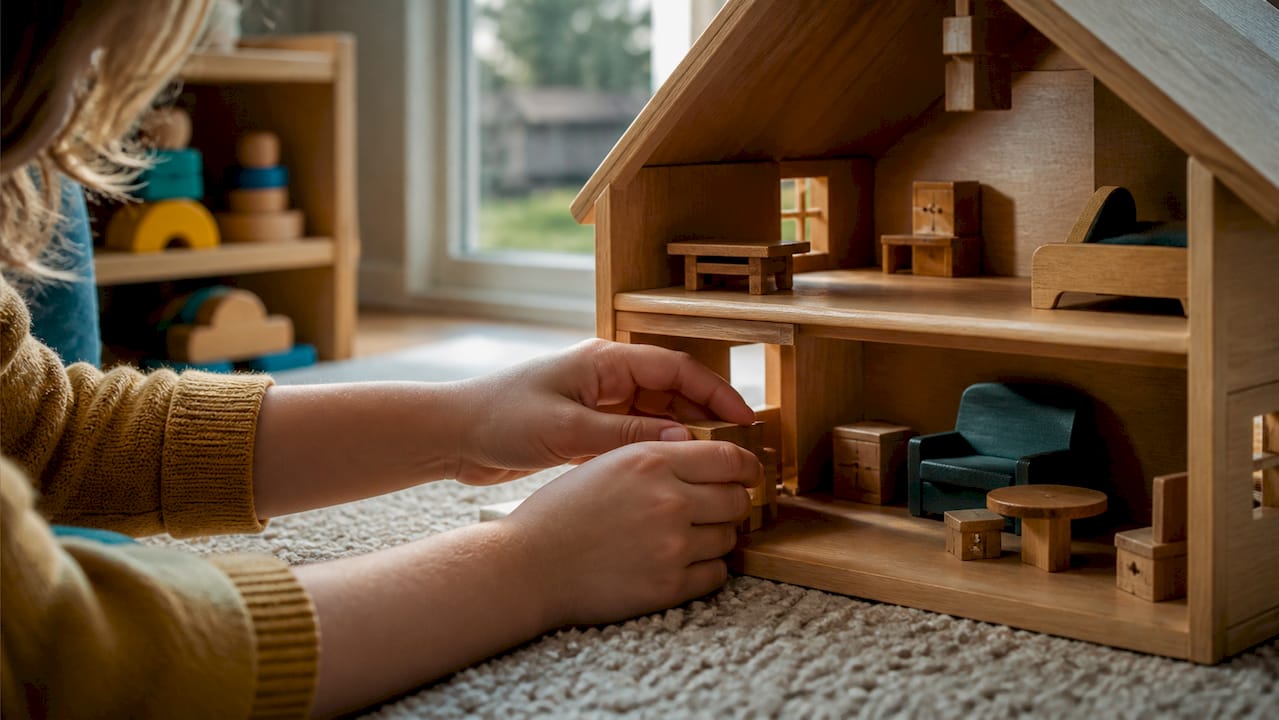
Pretend play. A dollhouse with a family of figures gives children a stage for working out real feelings through play. Dollhouses create rich dramatic play opportunities that build emotional intelligence and cooperative problem solving, and they pair naturally with dress-up and role-play materials.
Manipulative and table toys. Lacing beads, stacking counters, and small sorting sets fill the gap between big block play and quiet independent work. An early math activity kit with illustrated mats and counters gives kids hands-on sorting and patterning practice without teacher direction.
Sensory dough. Play-Doh and similar dough, paired with rollers and cutters, gives children a daily outlet for tactile exploration and hand-strengthening.
Puzzles and art materials round out the list. Simple wooden puzzles and washable paints let kids practice fine motor precision and creative choice on their own terms.
Which Toys Build Which Preschool Skills
Every toy in your classroom should earn its shelf space by targeting a real skill. Here’s the cheat sheet:
- Wooden blocks → spatial reasoning and problem solving. Have kids build a tower as tall as themselves; works for all ages 3 to 5, though 3-year-olds need larger, simpler pieces.
- Manipulative counters → early math and one-to-one correspondence. A five-minute sorting activity by color or size builds number sense before kids can count reliably.
- Dollhouse and figures → social-emotional growth and language. Prompt a short scenario (“the family is having breakfast”) and let language flow from there.
- Magnetic tiles and DUPLO → fine motor and spatial planning. Challenge 4 and 5-year-olds to copy a picture card; 3-year-olds do better with free building.
- Play-Doh → fine motor strength and sensory regulation. Rolling snakes and pinching pieces prepares fingers for pencil grip long before formal writing starts.
- Puzzles → visual discrimination and persistence. Start with 4 to 6 pieces for younger threes, scaling to 12 or more for kindergarten-bound fives.
Starter Classroom Inventory and Suggested Quantities
Budgeting for a new or refreshed room gets easier with real numbers attached. Here’s a starter checklist built for a standard 15-student classroom:
- Wooden unit block set (1 large multi-shape set, roughly 150 to 250 pieces) for the block corner.
- Building sets (2 to 3 magnetic tile sets and 2 DUPLO buckets) to support small-group building.
- Dollhouse setups (2 to 3 stations) so more than one group can engage in dramatic play at once.
- Table toy bins (12 to 15 tubs), close to one bin per child so transitions during arrival and dismissal stay calm rather than crowded.
- Sensory dough tubs (4 to 6, with rollers and cutters) rotated between two or three tables.
- Puzzle rack (8 to 10 puzzles at varying difficulty) stored within easy reach.
- Art supply bin (washable paints, crayons, and paper) restocked weekly.
Store high-demand items like table toys and dough near the daily transition areas, and keep one or two duplicate bins on hand to head off sharing conflicts. If your budget is tight, stretch further by choosing multi-use materials, like counters that double as sorting and building pieces, over single-purpose toys.
How to Choose Toys for a Preschool Classroom
Not every item marketed to classrooms deserves a spot on your shelf. Run each option through these criteria before buying:
- Durability. Can it survive daily group use for a full school year, not just a home playroom?
- Open-ended play value. Does it support multiple uses and skill levels, or does it do exactly one thing?
- Ease of cleaning. Can it be wiped down or washed between groups without damage?
- Developmental alignment. Does it target a skill you’re actually teaching toward?
- Size and age-appropriateness. Is it sized right for the ages in your room?
- Storage footprint. Will it fit your shelving without eating the whole room?
Watch for red flags too: small loose parts in a room with any under-3 children, single-use electronic toys with flashing lights and one built-in game, poorly sanded wood that splinters, and fabric pretend-play items that can’t be laundered.
Pro Tip: Prioritize open-ended materials like blocks, tiles, and dough over single-purpose toys. They grow with the child, work across every age band in your room, and need replacing far less often, which saves your supply budget for the categories that actually run out, like art paper and glue.
Safety, Cleaning, and Storage for Shared Classroom Toys
Shared materials need a rhythm, not a one-time cleaning. Wipe high-touch items like table toys and building pieces daily. Give sensory bins and dough tools a deeper weekly clean, since dough traps oils and residue that a quick wipe won’t catch. Inspect wooden blocks and puzzles monthly for splinters, loose parts, or missing pieces before they become a hazard.
Material matters for method: wooden blocks need a damp cloth and mild soap, never a soak. Plastic manipulatives can handle a dishwasher-safe rinse or sanitizing wipe. Fabric dollhouse accessories should be machine washable. Play-Doh tools need warm water and a stiff brush to clear dried residue from grooves.
For storage, label bins clearly and aim for close to one bin per child for table toys, which keeps transitions calm and supports independent choice without a teacher directing every move.
Montessori-Inspired Starter Kit for Your Classroom
A focused starter kit beats a cluttered toy closet every time. Build yours around five pieces: wooden unit blocks, a busy book or activity set for table time, sensory dough with tools, magnetic building tiles, and a manipulative counter set for early math.
Introduce one new material per week over a two-week rotation rather than dumping everything out at once. Place the busy book and counters at morning arrival table time, save blocks and tiles for center time, and bring out dough during a calm transition slot after lunch.
- Week one: introduce blocks and dough.
- Week two: layer in tiles, the busy book, and counters, rotating out one item from week one to keep novelty alive.
These Montessori-inspired, open-ended learning materials cut daily prep because they don’t require new instructions every time you bring them out, and children return to them with fresh ideas each round.
Pro Tip: Keep a simple rotation log taped inside a supply closet door. A one-line note on what’s out and what’s due back saves real planning time by week three.
Integrating Toys Into Daily Lesson Plans
Toys work best when they’re tied to a purpose, not just left out as filler between activities. Anchor each toy category to a specific slot in your daily schedule: table toys during arrival, blocks and building sets during center time, dough during a midday transition, and pretend play during choice time in the afternoon.
Match the toy to your actual learning target for the week. If you’re working on patterns, pull out the counters and sorting mats. If you’re building vocabulary, spend extra time at the dollhouse prompting new words through play scenarios. This kind of intentional pairing means every material in the room is doing double duty, supporting both free play and your written lesson goals.
Keep instructions light. A five-minute demonstration when you introduce a new toy is usually enough. From there, let children direct their own play, stepping in only to extend thinking with a question rather than a correction.
Fine motor practice deserves its own thread through the day. Building on partner resources like guidance on hand-eye coordination can help you frame why lacing, stacking, and dough work aren’t just filler activities, but real preparation for writing and other precise hand movements kids need later.
Review your weekly plan every Friday and ask one question: which materials got the most use, and which sat untouched? That answer should drive your rotation the following week more than any calendar.
A quick habit that keeps toys working
I run a five-minute end-of-day tidy where kids sort pieces back into labeled bins themselves, which doubles as a fast inventory check and teaches ownership of shared materials.
Build Your Classroom Starter Bundle
Once you’ve mapped out your categories, the fastest path to a ready classroom is a starter bundle rather than a dozen separate orders. Thebestkidstoys curates Montessori-inspired, open-ended materials specifically chosen for durability and long-term classroom use, so you’re not replacing worn-out plastic pieces every semester.
The Little Learners Montessori Busy Book fits directly into your table-time rotation and pairs naturally with the manipulative and sensory categories covered above. A few reasons it fits a classroom setup:
- Built for repeated daily use rather than occasional home play.
- Covers multiple fine motor and early academic skills in one resource, cutting down on separate purchases.
- Complements dough, counters, and building sets already on your shelf.
For age-specific stocking, browse the 3 to 4 years collection for your youngest group or the 4 to 5 years collection for children heading toward kindergarten readiness. Order this week and you can have your starter bundle on shelves before your next rotation begins.
Frequently Asked Questions
What are the most important toys for a preschool classroom? Wooden unit blocks, building sets like magnetic tiles and DUPLO, pretend-play materials, manipulative table toys, sensory dough, puzzles, and art supplies cover the core developmental needs of a preschool room.
How many toys does a preschool classroom actually need? Quantity matters less than variety and access. A strong starting point is close to one table toy bin per child, plus a large block set, two or three building sets, and a couple of dollhouse stations for a class of 15.
How often should classroom toys be rotated? A two-week rotation works well for most classrooms, introducing one new material at a time while retiring an older one to keep engagement high without overwhelming storage space.
Are wooden toys better than plastic for a preschool classroom? Wooden toys like unit blocks tend to last longer under daily group use and offer more open-ended play value, though durable plastic building sets like DUPLO and magnetic tiles hold up well too when chosen for classroom-grade quality.
How do I keep shared classroom toys sanitary? Wipe high-touch items daily, deep-clean sensory materials like dough weekly, and inspect wooden and puzzle pieces monthly for wear or damage before they become a safety concern.
Sources
- Table Toys for Preschool
- 5 Must-Have Preschool Toys for a Successful Classroom
- Preschool | Educational Products for Preschoolers | Lakeshore®
Recommended
- Preschool Toys: Preschool Toys That Prepare Little Learners for School – Best Kids Toys
- Preschool Learning Toys: How Early Academic Play Builds Classroom Conf – Best Kids Toys
- Preschool Toys: The Best Features to Look for in School-Readiness Toys – Best Kids Toys
- Learning Resources Toys: How Learning Resources Toys Make Education Ha – Best Kids Toys