



Montessori Nature Play by Motif: Low Prep Ideas for Parents
Here are many low-prep nature play ideas you can pull off in a backyard, a park, or on a short walk. They’re grouped by motif (sensory, building, imaginative, observation, and movement) so you can scan for whatever your child needs that day, plus age adaptations, a pack-and-go kit, simple tools, and safety notes to keep exploration relaxed instead of stressful.
TL;DR:
- Sensory activities like texture hunts and sound mapping help children process the outdoors through touch, smell, and hearing before they use words.
- Building activities such as fairy houses and rock towers promote balance, patience, and fine motor skills with natural materials, requiring minimal setup.
- Imaginative play options like forest cafes or animal tracking encourage storytelling and problem-solving without needing specialized tools.
- Proper tools, including magnifiers and bug viewers, enhance exploration while remaining simple, durable, and suitable for young children’s handling.
- Safety measures, respectful wildlife observation, and limiting outcomes help foster deep engagement and a love of nature, especially when activities are unstructured and child-led.
Table of Contents
- Nature Play Ideas Grouped by Motif
- Adjusting Nature Play by Age and Development
- Setting Up Nature Play at Home, in the Park, or on the Go
- Tools That Deepen Exploration Without Overcomplicating It
- Keeping Nature Play Safe and Respectful
- What Actually Makes Nature Play Work
- Sources
Nature Play Ideas Grouped by Motif
Most nature-based activities fall into a few natural categories: sensory exploration, artistic creation, and observational science, and nearly all of them require little to no setup once you know the pattern. Grouping ideas by motif rather than by age or location makes it easier to grab the right one for the mood your child is in.
Sensory play. Kids process the outdoors through touch, smell, and sound long before they process it through words.
- Texture hunt. Collect five things that feel different (rough bark, smooth stone, fuzzy moss) and sort them into a container.
- Mud kitchen. Set out old pots, spoons, and a bucket of water near dirt for open-ended mixing and “cooking.”
- Sound mapping. Sit still for two minutes and draw or point to every sound heard, from birds to wind in leaves.
- Smell walk. Blindfold-free version: sniff crushed leaves, flowers, and pine needles and guess what they are.
Building and construction. Loose parts (sticks, rocks, pinecones, bark) are nature’s version of blocks.
- Fairy house. Stack twigs and bark into a tiny shelter using no glue, just balance and patience.
- Stick raft. Lash or lay sticks together and float them in a puddle, birdbath, or shallow stream.
- Rock towers. Stack stones by size for an easy lesson in balance and cause and effect.
Imaginative play. This is where nature stops being scenery and becomes the whole story world.
- Forest café. Serve “meals” of leaves, berries, and mud pies to stuffed animal customers.
- Animal tracker. Pretend to track a fox or deer using real footprints, scat, or nibbled leaves as clues.
- Map and pathway quest. Draw a simple treasure map of the yard and follow it to a hidden object.
Observation and STEAM. Nature scavenger hunts build observation and early science skills without feeling like a lesson, especially texture hunts and sensory bingo designed for exploring rather than checking boxes.
- Sensory scavenger hunt. Skip the printable and hunt for objects by feel and smell using locally sourced clues, which works especially well for prereaders.
- Color scavenger hunt. Find one item of each color in a small paint chip or crayon set.
- Bug survey. Find and gently observe three different insects, noting how each one moves.
- Cloud watching. Lie back and name shapes for five minutes, no equipment required.
Movement play. Nature play doesn’t have to be still and quiet.
- Log balance walk. Practice heel to toe on a fallen log or curb-height rock.
- Leaf pile jump. Rake a small pile and jump in repeatedly, which is really a gross motor drill in disguise.
- Shadow tag. Chase and stomp on each other’s shadows as the sun moves.
Pro Tip: Resist the urge to turn every idea into a finish line. A successful session might be twenty minutes of searching or ten minutes of staring at one beetle. Both count.
Adjusting Nature Play by Age and Development
Babies mostly need safe sensory input close to your body. Toddlers want to touch, dump, and repeat. Preschoolers can follow simple multistep instructions and start asking real questions about what they find.
- Babies (0-12 months): Lay a blanket under a tree and let them reach for leaves or grass within arm’s reach; supervise constantly since everything goes in the mouth.
- Toddlers (1-3 years): Swap written scavenger hunt cards for tactile or picture-matching versions. A real-object matching approach builds independence faster than a checklist a toddler can’t read.
- Preschoolers (3-5 years): Introduce simple tools like a magnifier during bug surveys, with one adult-taught rule: never point it at the sun.
- Neurodivergent or sensory-sensitive kids: Offer texture options instead of requiring a specific one (a smooth stone instead of prickly bark), and let the child set the pace rather than a timer.
Caregivers who model curiosity out loud (“I wonder why this leaf has holes”) deepen a child’s attention and engagement far more than instructions alone.
Setting Up Nature Play at Home, in the Park, or on the Go
A pack-and-go kit removes the “we don’t have the right stuff” excuse before it starts. Keep a small bag by the door with:
- A child-safe magnifier for close-up bug and leaf viewing.
- A small container or jar for temporary collecting and releasing.
- Wipes for muddy hands before snack time.
- A sketchbook and crayon for quick drawings of finds.
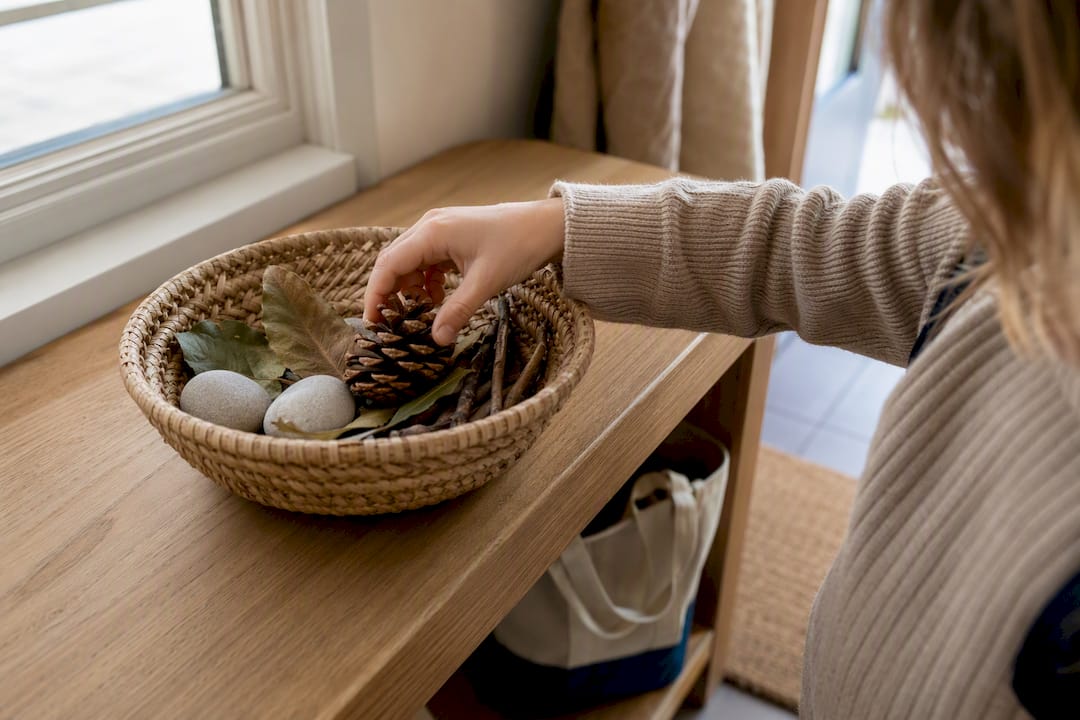
DIY swaps work fine: an old yogurt container replaces a bug jar, and a phone camera can stand in for a sketchbook in a pinch. At home, a 10-minute setup like a loose-parts caddy (a bin of sticks, rocks, and pinecones by the back door) or a basic mud kitchen keeps materials ready without daily prep. On a short walk or park trip, one open-ended prompt, like “find something that moves in the wind,” does more work than a full list of instructions.
Pro Tip: Store the kit in a spot your child can reach independently. Handing them the choice to grab it themselves builds the exact independence Montessori-style play is built around.
Tools That Deepen Exploration Without Overcomplicating It
A few well-chosen tools turn casual outdoor time into real investigation, without needing a curriculum. A child magnifier, a bug viewer with a vented lid, a simple compass, and a small sketchbook cover most of what a preschooler needs to feel like a field scientist.
- Magnifier: Teach the sun rule immediately, and keep use to short bursts so it doesn’t become a fight over turns.
- Bug viewer: Best for kids 3 and up who can handle “look, then release” as a rule.
- Recycled jars or tongs: A safe, low-cost DIY swap for a store-bought collecting kit.
- Compass: More novelty than necessity before age 5, but fun for preschoolers starting to grasp direction.
Where possible, choose wood, metal, or plant-based plastic tools over flimsy plastic. They hold up to drops, mud, and years of reuse, which matters more outdoors than almost anywhere else in a toy box.
Keeping Nature Play Safe and Respectful
A few ground rules prevent most outdoor mishaps: constant supervision near water or ledges, no pointing magnifiers at the sun, hand-washing after handling soil or plants, and a quick check for anything that looks like poison ivy or a wasp nest before kids dig in. Rotating who holds shared tools cuts down on the fights that flare up over one magnifier and three kids.
Model respectful practices alongside the safety rules: observe insects and animals rather than catching and keeping them, photograph interesting finds instead of picking every flower, and leave nests and burrows undisturbed. In shared or protected spaces, always check posted rules before letting kids dig, collect, or build.
- Supervise closely near water, elevation, or unfamiliar plants.
- Wash hands after any hands-in-the-dirt activity.
- Observe wildlife; avoid touching or removing it from its habitat.
- Confirm collecting is allowed before taking anything home from a park or trail.
Time outdoors pays off well beyond the moment: even short stretches of unstructured outdoor play support attention and engagement in ways that structured, screen-based activities rarely match.
What Actually Makes Nature Play Work
Most advice on outdoor play focuses on ideas, but the real skill is restraint. Caregivers do their best work when they resist grading the outcome. A twenty-minute scavenger hunt that ends with one carefully examined beetle isn’t a failed activity; it’s often the whole point. The instinct to keep kids moving through a checklist is understandable, but it can quietly undercut the deep, sustained attention that makes nature play valuable in the first place.
The other underrated piece is accessibility. Printable scavenger hunt lists are genuinely useful for some families, but tactile and picture-based versions open the same activity to prereaders and sensory-sensitive kids who would otherwise sit out. A good caregiver keeps both options on hand rather than assuming one format fits every child.
This approach is built around Montessori principles precisely because independent, hands-on exploration tends to outlast any single toy or gadget. A magnifier or bug viewer can spark a session, but it’s the habit of noticing, an ant’s path, a cloud’s shape, a leaf’s smell, that sticks. If you want a starting kit for that kind of exploration, browse best-selling outdoor and STEM toys built to survive mud, drops, and daily reuse. For more setup ideas, the outdoor pretend play guide and this sensory play guide from Baby Bare Essentials are both worth bookmarking.
— Danica Hodge
Sources
- Engaging Toddlers in Nature Play
- DIY Nature Scavenger Hunt (A Sensory Nature Hunt for Kids)
- 35 Nature Play Ideas for Preschool & Kindergarten