



40+ Low Prep Counting Bears Activities, Printables for Classroom & Home
Use counting bears in short, hands-on games and printable mats to teach counting, sorting, patterning, and early addition to toddlers and preschoolers. A single tub of bears covers one-to-one correspondence, color sorting, and fine motor practice in ten-minute bursts. Below, you’ll find more than 40 counting bears activities organized by age and skill, plus the printables and setup tips that make them classroom-ready.
TL;DR:
- Counting bears help build early math skills like number recognition, patterning, and basic addition, especially when activities are scaled to the child’s skill level.
- Activities like sorting by color, filling ten-frames, and story problems support different ages and allow easy progression from simple to more complex concepts.
- Printable mats and task cards are durable tools that reinforce skills and can be reused across multiple sessions with minimal setup.
- Design your counting bear station with just a few essential items, including a set of colorful bears, small containers, tongs, dice, and a laminator for longevity.
- Tailor activities for children with special needs by simplifying tasks, providing larger manipulatives, or shortening session times to match individual pacing and sensory needs.
Table of Contents
- 40+ Hands-On Counting Bears Activities By Skill Level
- Printable Mats And Task Cards Worth Keeping On Hand
- What You Need To Set Up A Counting Bears Station
- Why Counting Bears Build Real Math Readiness
- Making Activities Easier Or Harder For Mixed Groups
- Adapting Counting Bears For Children With Special Educational Needs
- Extending Counting Bears Into Multiplication And Division
- Building Counting Bears Into A Daily Math Routine
- Teaching Number Recognition With Counting Bears
- Using Counting Bears In Story Problems And Everyday Math
- Why Hands-On Manipulatives Still Win
- Toys And Printables That Pair Well With Counting Bears
- Sources
- FAQ
40+ Hands-On Counting Bears Activities By Skill Level
Counting bear sets earn their keep because one bag of plastic bears teaches a dozen different skills depending on how you frame the task. Below are activities grouped from toddler-simple to small-group games, each with materials, setup, and a quick way to play.
Group A: Toddler-ready activities (ages 2 to 3)
- Bear Color Hunt. Hide bears around a room or sensory bin. Toddlers search, then sort by color into cups. Learning objective: color recognition and gross sorting.
- Simple 1 to 5 Counting Line. Line up five bears and count aloud, touching each one. Objective: one-to-one correspondence.
- Bear Bath Scoop. Float bears in a shallow water bin; scoop with a slotted spoon and count into a cup. Objective: fine motor plus counting.
- Match the Bear to the Card. Show a card with one to three dots; child places that many bears on top. Objective: quantity matching.
- Bear Parade. Walk bears one by one into a “den” (small box), counting each entry. Objective: sequencing and number words.
Group B: Preschool skill builders (ages 3 to 5)
- Color Sorting Bears Mat. A mat with five colored circles; children sort a mixed pile of counting bears by color into matching circles.
- AB Pattern Trains. Line bears in a red, blue, red, blue sequence and ask the child to extend it.
- AAB and ABC Patterns. Once AB feels easy, move to red, red, blue or red, blue, green sequences for a harder pattern challenge.
- Ten-Frame Fill. Using a printed ten-frame, fill boxes one bear at a time while counting to ten.
- Bear Addition Mats. Two small circles (“sets”) get combined into one big circle; count the total together.
- Simple Subtraction Story. Start with five bears, “eat” two, count what’s left.
- Numeral Match-Up. Place number cards 1 through 10; child places the matching count of bears beside each.
- Weight Comparison Cups. Put different bear counts in two cups and ask which cup feels heavier, connecting quantity to a physical sense.
- Syllable Counting Bears. Say a word, and the child places one bear per syllable, a favorite variation from The Kindergarten Connection’s printable pack.
- Bear Size Order. Line bears from smallest to largest group by count, reinforcing more/fewer vocabulary.
Group C: Center or small-group games
- Bear Dice Race. Roll a die, add that many bears to a den; first to fill ten wins. Downloadable race boards for this format come from Fun Learning for Kids.
- Bear Graphing. Dump a handful of bears, sort by color, then color in a bar graph to show which color has the most.
- Bears in the Cave. Hide a set number of bears under a cup; a child guesses how many are missing from the full set, a favorite free printable game that works for counting to five or to ten.
- Bear Store Role-Play. Set a price (in bear counters) for pretend items; children “pay” the correct number of bears.
- Two-Dice Addition Race. Roll two dice, add the bears together, and place that total on a shared game board.
- Bear Tong Transfer. Use kitchen tongs to move bears from one bowl to another, counting each transfer, building grip strength along the way.
- Clip Card Counting. Attach a clothespin to the card showing the correct bear total. Great for independent center work.
- Bear Bingo. Call out a number; children cover it with a bear if it appears on their card.
Each activity above works as a standalone ten-minute session or a rotating center station. Swap out the materials, keep the structure, and you’ve got a week of math warm-ups without reinventing anything.
Printable Mats And Task Cards Worth Keeping On Hand
A handful of printable formats cover almost every skill above, and they hold up over dozens of uses if you protect them right.
- Number mats (1 to 10, five and ten-frame formats) give visual structure for counting, and the ten-frame version specifically builds number sense for addition later on.
- Pattern strips and graphing sheets turn into reusable stations once laminated or slipped into sheet protectors, a practical habit teacher blogs repeat often for classroom durability.
- Clip cards and task cards double as quiet independent work and quick informal assessment, since you can see at a glance whether a child clipped the right number.
- Full printable packs, like The Kindergarten Connection’s set, bundle sorting mats, patterning sheets, and graphing pages so you’re not designing from scratch.
- Free single-activity printables are easy to find through resources like Homeschool Giveaways, which is a good starting point if you just need one or two mats.
What You Need To Set Up A Counting Bears Station
Keep the materials list short, and the setup goes fast.
- A counting bears set with multiple colors and a moderate number of pieces suitable for the activities
- Small cups or bowls for sorting, plus a tray to contain the mess
- Tongs or a scoop for fine motor variations
- A pair of dice for game-based activities
- A laminator or sheet protectors so mats survive repeated use
Store bears by color in a divided container so setup for the next activity takes seconds, not minutes. A labeled bin system also lets kids help clean up, which is its own small independence win.
Pro Tip: Keep loose bear counters away from children under three, since small manipulatives are a choking risk without direct supervision. Larger jumbo bear sets exist for younger toddlers if that’s a concern in your home or classroom.
Why Counting Bears Build Real Math Readiness
Physical manipulatives like counting bears help children move from touching and moving objects to holding numbers in their heads. That shift from concrete to abstract thinking is the entire goal of early math instruction, and it’s a big part of why Montessori classrooms lean so heavily on hands-on materials rather than worksheets alone.
Each activity type maps to a specific skill: sorting builds classification, ten-frame fills build subitizing (recognizing a quantity without counting one by one), and pattern trains build the sequencing skills kids need before algebra ever enters the picture. A pre-K counting-bear lesson plan built around warm-ups and printable counters includes exactly this kind of structured observation step.
Watch for a child who starts predicting the next color in a pattern before placing it, or who counts a group of five without touching each bear. Both are signs they’re ready for the next difficulty level.
Making Activities Easier Or Harder For Mixed Groups
- Scale up by moving from ten-frames to twenty, adding two-digit story problems, or asking for two-color addition (three red bears plus two blue bears).
- Scale down by cutting the color set to two, capping counts at five, or adding a visual number line for support.
- Rotate stations so advanced kids tackle graphing while others practice basic sorting, then pair a stronger counter with a peer who needs more repetition.
Adapting Counting Bears For Children With Special Educational Needs
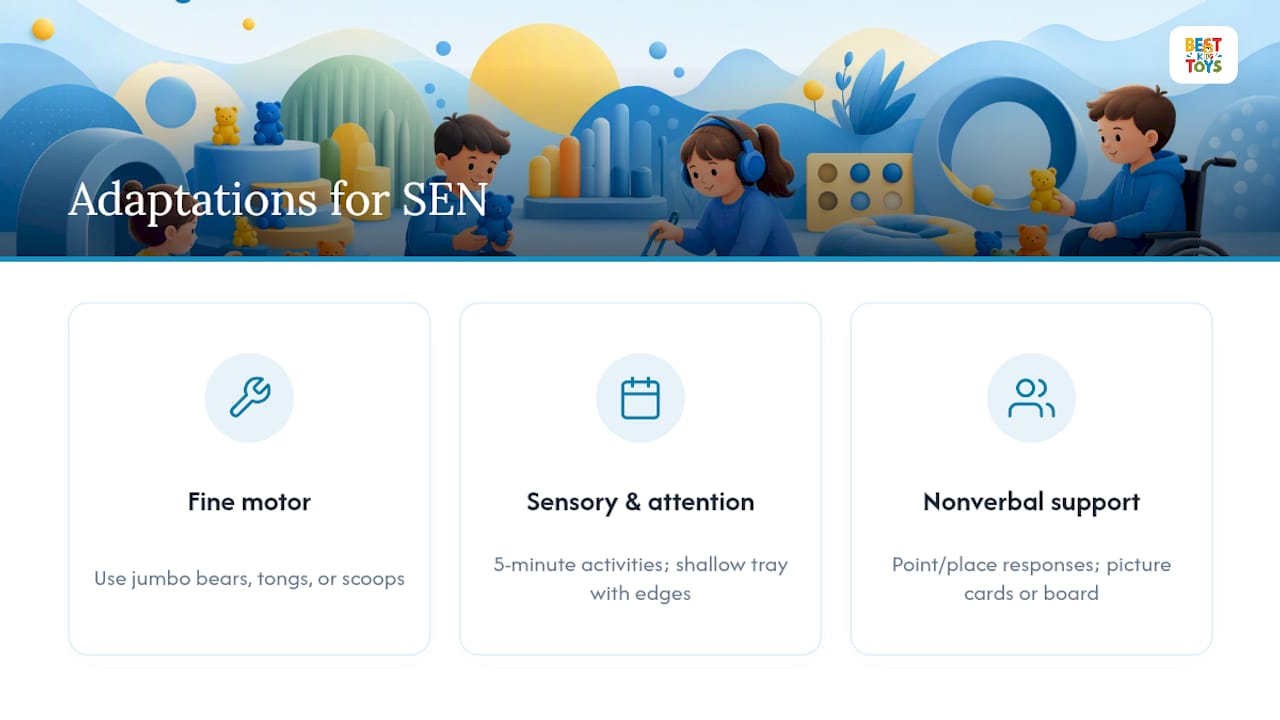
Counting bears work well for children with special educational needs precisely because they’re tactile, flexible, and forgiving of different paces. A few adjustments make a real difference without changing the core activity.
For children with fine motor delays, swap small bears for jumbo counting bear sets, or use tongs and scoops instead of asking for a precise pincer grasp. Reducing the number of colors in play, sometimes down to just two, cuts visual clutter for kids who get overwhelmed by choice. Weighted trays or non-slip mats help keep bears from sliding away during a session, which matters more than it sounds for a child working on hand control.
For children with attention or sensory differences, shorten each activity to five minutes and build in a predictable routine, such as always starting with a color sort before moving to counting. Some children respond better to bears in a shallow tray with raised edges, which contains the workspace and reduces the chance of pieces scattering. Visual supports, like a printed number line taped beside the workspace, help kids who process written numerals more easily than spoken counting.
For nonverbal or minimally verbal children, counting bears remove the pressure to speak the answer. A child can point, place, or match instead of saying a number aloud, which still demonstrates the skill. Pairing the activity with picture cards or a simple communication board lets every child participate at their own level, and that flexibility is one of the biggest advantages manipulatives have over worksheet-only instruction.
Extending Counting Bears Into Multiplication And Division
Counting bears aren’t just for early counting. Once a child is comfortable with addition, the same bears set up multiplication and division groundwork naturally, well before formal instruction starts.
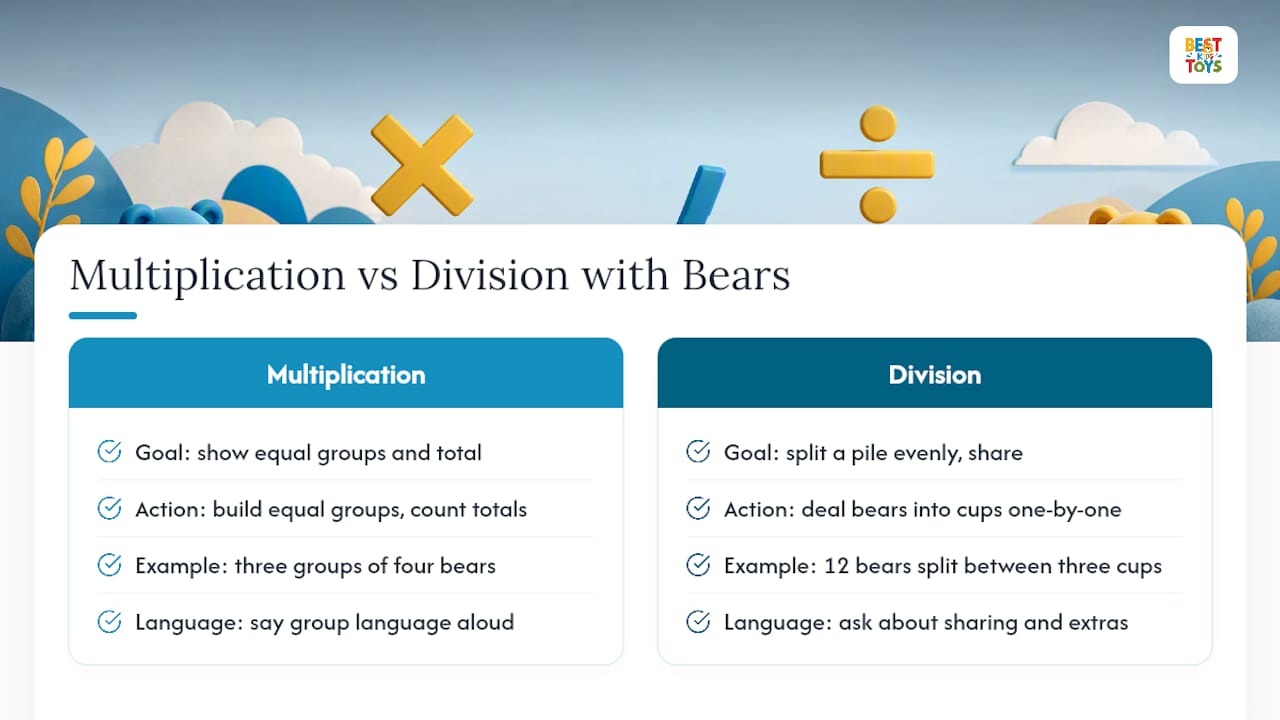
For multiplication, build equal groups: three cups with four bears each shows “three groups of four,” and counting the total introduces the idea behind multiplication before a child ever sees the times symbol. Say it out loud as you go: “We have three groups. Each group has four bears. How many bears in all?” That language matters more than the arithmetic itself at this stage.
For division, reverse the process. Start with a pile of twelve bears and ask a child to split them evenly between three cups. The physical act of dealing bears out one at a time, watching the pile shrink, gives division a concrete meaning that abstract worksheets can’t match. If the split isn’t even, that’s actually a useful moment. It opens the door to talking about remainders in a low-stakes, hands-on way.
Story problems help bridge this to real math language: “You have ten bears and four friends. Can you share them equally? What happens to the extra bears?” These questions work for kindergarteners exploring early multiplication concepts and for older kids reviewing division with visual support.
Keep sessions short. Multiplication and division with manipulatives should feel like play, not a formal lesson, especially for children encountering the concepts for the first time.
Building Counting Bears Into A Daily Math Routine
Counting bears work best as a five to ten minute daily habit rather than an occasional special activity. Consistency does more for number sense than any single elaborate lesson.
A simple structure: open circle time with a quick counting song using bears as visual props, run one skill-based activity from the lists above during center time, then close the day with a thirty-second “count the bears in your cup” check as part of cleanup. That third step doubles as informal assessment, since you’ll notice quickly which children count confidently and which ones need another day on the same skill.
For home routines, tie counting bears to something already happening: count bears equal to age at breakfast, sort by color while waiting for a sibling, or use bears to preview tomorrow’s grocery list (“we need two apples, let’s count out two bears”). Repetition in different contexts helps math vocabulary stick faster than repetition in the same setting every time.
For classrooms running a formal curriculum, counting bears slot naturally into calendar math, morning meeting, or a rotating center schedule. Many teachers keep one bin of bears permanently in the math corner so kids can self-select the activity that matches their current skill, which cuts down on setup time across an entire week.
Teaching Number Recognition With Counting Bears
Counting bears bridge the gap between saying a number and recognizing its written form, which is one of the trickier jumps in early math. A child might count perfectly out loud but still not connect the spoken word “five” to the numeral 5 on a page.
Numeral matching activities close that gap directly. Lay out number cards 1 through 10, and ask the child to place the matching quantity of bears next to each numeral. Flip it around occasionally: show a group of bears and ask the child to find the matching numeral card instead of counting up to it. Alternating direction keeps the skill from becoming rote memorization of a single pattern.
Clip cards work particularly well for numeral practice because they combine fine motor work with recognition in one task, and they’re nearly self-correcting once a child learns to check their own count. A numeral bingo game using bears as game pieces adds a group dynamic to the same skill, and it disguises repetition as play, which matters more for young attention spans than adults tend to expect.
Using Counting Bears In Story Problems And Everyday Math
Story problems turn abstract counting into a scenario a child can picture, and counting bears make the scenario physical instead of just verbal.
A basic story problem might sound like this: “Three bears are playing in the park. Two more bears come to join them. How many bears are playing now?” The child acts it out with real bears rather than just listening, which builds comprehension long before children can solve the same problem on paper. Once addition feels solid, subtraction story problems follow the same format in reverse: “Five bears were napping. Two woke up and left. How many are still napping?”
Real-life scenarios extend the same idea outside a worksheet. Counting out bears to represent snack portions, days of the week, or family members at dinner connects the abstract idea of “five” to something a child already understands. Grocery-list counting, calendar counting, and even counting steps on a walk all borrow the same skill counting bears teach directly.
The pre-K lesson plan from TeacherVision includes enrichment ideas built around exactly this kind of scenario-based extension, which is worth borrowing if you’re building out a week of lessons rather than a single activity.
Why Hands-On Manipulatives Still Win
Worksheets can test whether a skill has landed, but they rarely teach it the first time. Counting bears do the teaching part because a child can touch the quantity, move it, and see it change, which is the entire foundation Montessori-style materials rest on. The activities in this guide reflect that philosophy directly: start concrete, repeat often, and let the numbers stay physical for as long as a child needs them to be.
— Danica Hodge
Toys And Printables That Pair Well With Counting Bears
Thebestkidstoys is built around exactly the kind of hands-on, screen-free learning covered in this guide, so pairing a few extra tools with your counting bear sessions is an easy next step rather than a separate project.
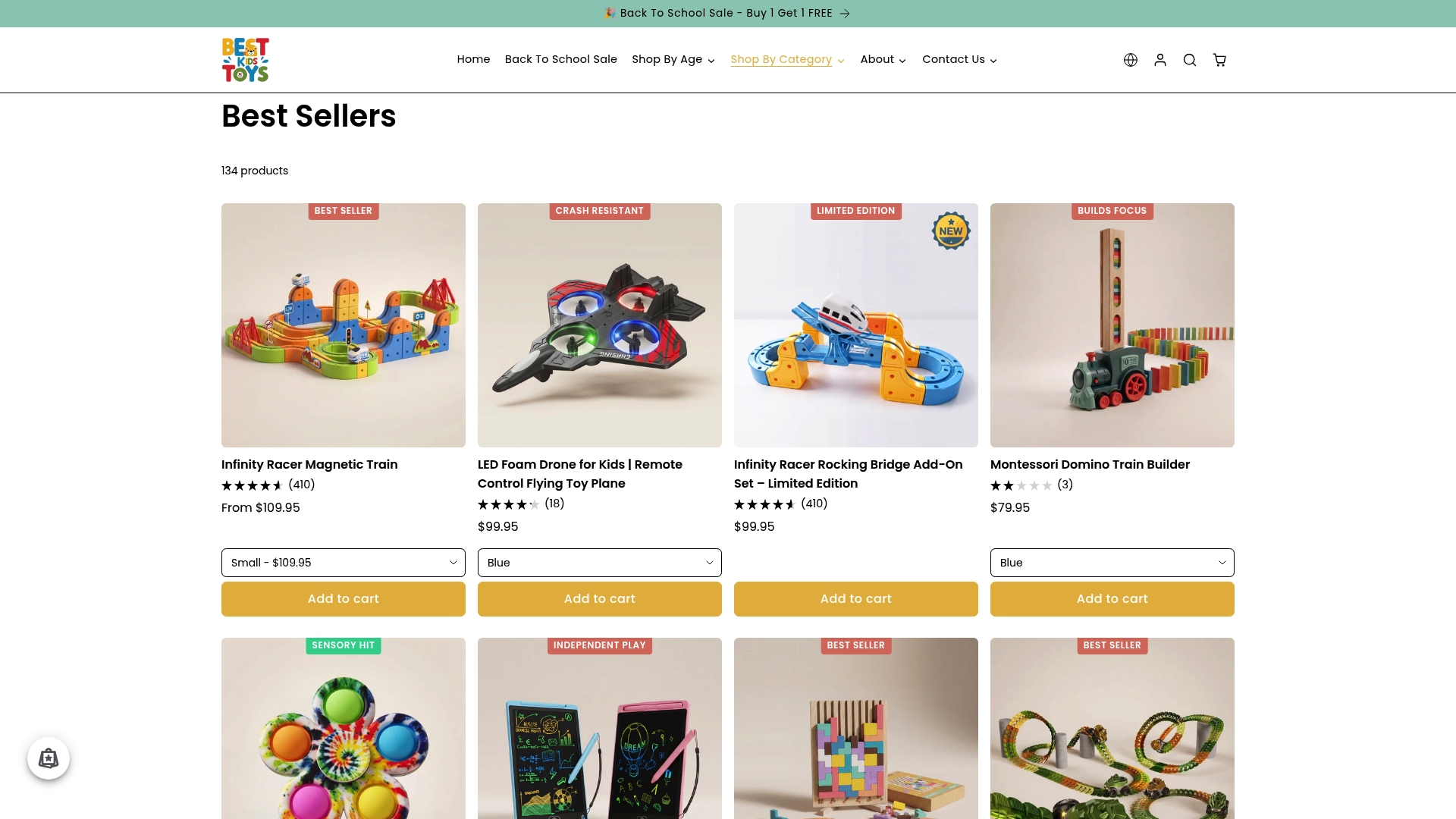
The FingerCount Learning Box works well alongside bears for kids ready to connect finger counting to written numerals. The Magnetic Fish & Worm Counting Game offers a fresh visual theme when bear counters start feeling repetitive, useful for keeping longer stretches of practice interesting. And the full Montessori STEM Toys collection rounds out a math corner with tools built for the same skills this guide covers: counting, patterning, and early number sense.
The selection emphasizes toys curated and reviewed for developmental value and includes a guarantee for customer satisfaction. Browse the collection, add a piece or two to your current counting bears setup, and build out a math corner that grows with your child.
Sources
- K Math Lesson Plan Printable - TeacherVision
- Printable Counting Bear Activities for Pre-K & Kindergarten
- Counting Bears Fun: Free Activities, Mats & Games for Kids
- Counting Bears Math Game and Activities
FAQ
What are some fun counting bears activities for kids?
Bear Color Hunt, ten-frame fills, pattern trains, and dice-based addition races are among the most popular counting bears activities because they combine movement with math skill practice. Graphing by color and Bears in the Cave, a free hide-and-guess game, are also strong choices for small groups.
What are common bear counting methods?
The most common methods are one-to-one correspondence counting (touching each bear while counting aloud), grouping into sets for addition and subtraction, and sorting by color or size for classification practice. Ten-frame counting is another widely used method for building number sense before formal addition instruction.
What are some fun activities to practice counting on?
Numeral matching, clip cards, and bear bingo all reinforce counting through repeated, low-pressure practice. Story problems using real scenarios, like sharing bears between friends, also build counting skills while making numbers feel practical rather than abstract.
How do I make counting bears activities work for different ages?
Toddlers do best with simple 1 to 5 counting and color sorting, while preschoolers can handle patterning, ten-frame work, and basic addition or subtraction. Scale difficulty up with larger numbers and story problems, or down with fewer colors and visual number-line supports.
Does Thebestkidstoys sell counting bear sets?
Thebestkidstoys carries counting-focused Montessori toys like the FingerCount Learning Box and the Magnetic Fish & Worm Counting Game, which pair well with traditional counting bear sets. Current prices and availability are listed directly on the site.