



Best Montessori Toys for 3-Year-Olds: Top Picks
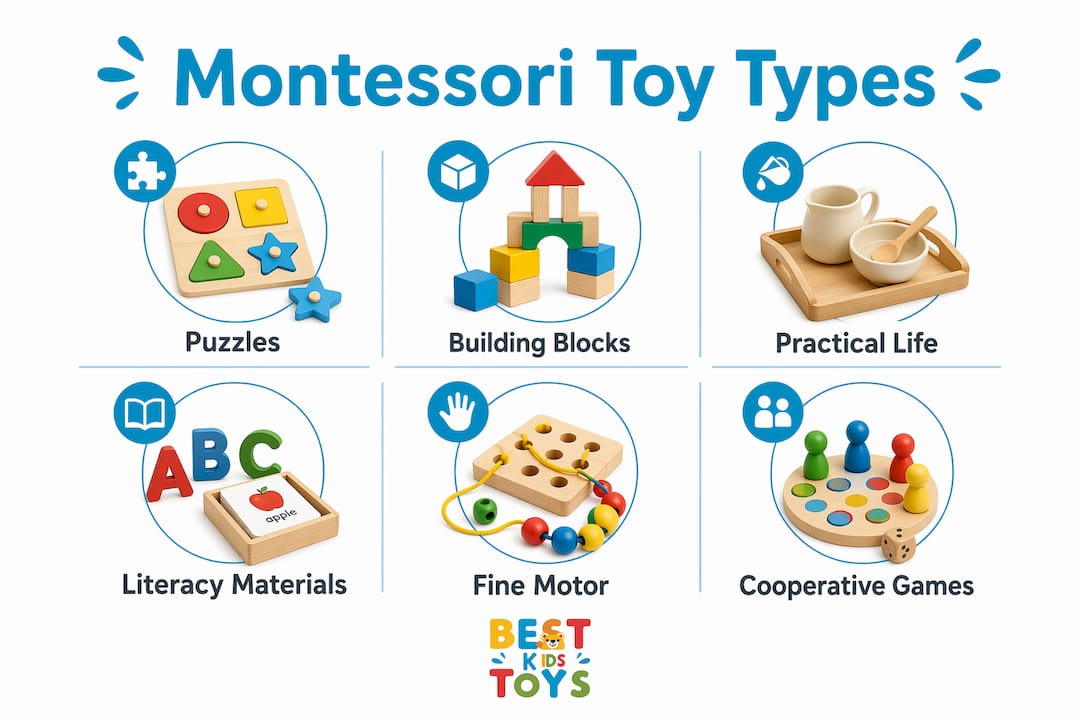
The six categories that deliver the most developmental value for a 3-year-old, right now, are multi-piece wooden puzzles, open-ended block sets, practical-life starter kits, tactile alphabet and number cards, fine-motor lacing sets, and cooperative board games. Maria Montessori’s core insight was that children this age are wired for deep, self-directed concentration, and the right toy either invites that focus or kills it. Every item Thebestkidstoys curates for its 3–4 years collection meets CPSC and ASTM safety standards and is selected specifically to support independent, screen-free play.
Quick-pick shortlist:
- Multi-piece wooden puzzles (12–24 pieces) — builds spatial reasoning and working memory
- Natural Wooden Block Set — open-ended building that grows with the child for years
- Practical Life Starter Set — pouring, sorting, and real-tool tasks that wire independence fast
- Alphabet & Number Matching Cards — tactile pre-reading and early numeracy in one set
- Fine-Motor Lacing & Threading Set — hand-eye coordination and pencil-grip prep
- Cooperative board games — turn-taking, emotion regulation, and early logic
Pro Tip: Avoid battery-powered, noisy toys entirely at this age. Early childhood educators consistently find they fragment attention rather than build it.
Table of Contents
- What are the best Montessori toys for 3-year-olds?
- How do you choose Montessori toys for a 3-year-old?
- What developmental milestones do these toys support?
- What safety and material checks matter before you buy?
- How do Montessori toys fit into daily routines?
- Key Takeaways
- Why these picks reflect real Montessori goals
- Ready to shop the curated 3–4 years collection
- Useful sources and further reading
What are the best Montessori toys for 3-year-olds?
Three-year-olds are entering what developmental educators call the “big kid” phase: improved logic, multi-step task capability, and genuine early literacy readiness. The toys that serve them best move beyond simple sensory play into open-ended, multi-piece challenges that reward repetition.
Thebestkidstoys organizes its picks around six categories. Each one below includes the target skill, the recommended Thebestkidstoys item, and a single-step presentation tip for independent work.
Puzzles
The Best Kids Toys Montessori Wooden Puzzle Set targets spatial reasoning and working memory. Puzzle complexity should progress from simple peg puzzles to 12-piece jigsaws and then to 24 pieces as mastery develops. Wooden puzzles are preferred for tactile feedback and durability. Present it: Place the puzzle on a low tray with the pieces beside it, then step back.
Building and open-ended blocks
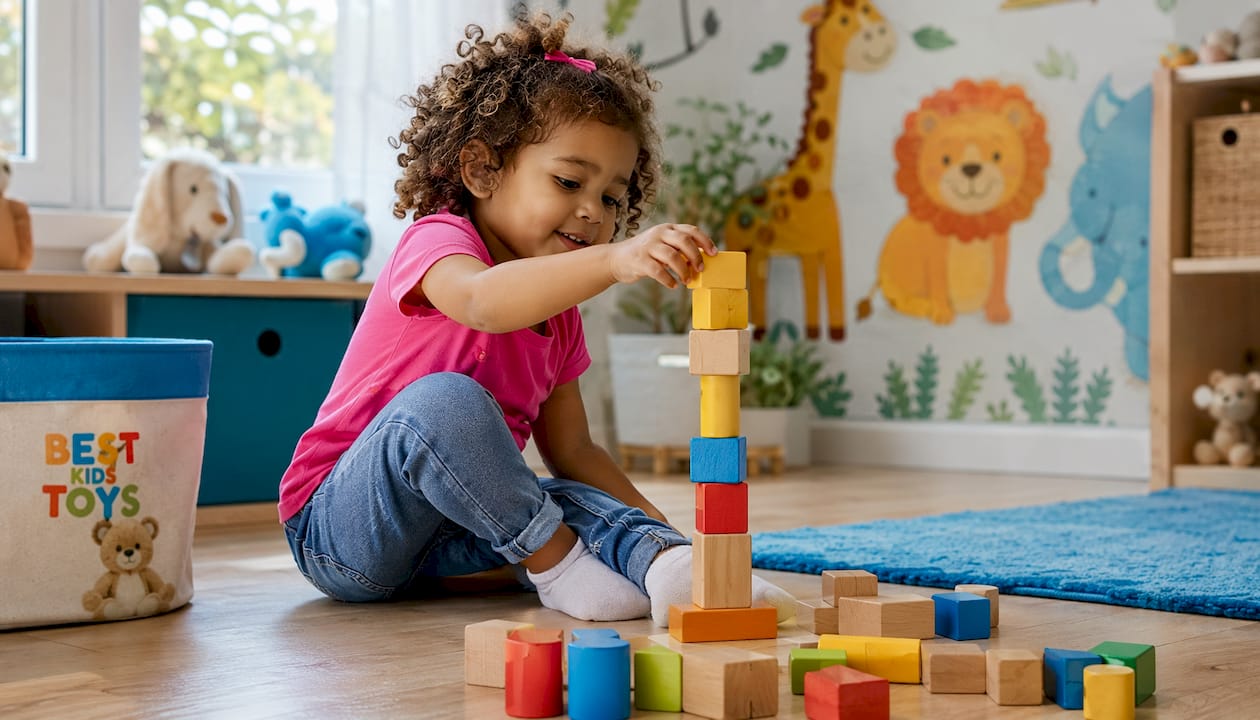
The Best Kids Toys Natural Wooden Block Set supports building, sorting, balancing, and imaginative play across years. Simple wooden blocks often provide more play value and longevity than complex kits because they support many types of play without locking in a single pattern. Present it: Set out a small selection of blocks on a mat, then let your child lead.
Practical life and real tools
The Best Kids Toys Practical Life Starter Set covers pouring, sweeping, and buttoning, which are more transferable than most store-bought toys. Child-sized real implements engage 3-year-olds more effectively than toy imitations. Present it: Fill a small pitcher halfway with water and place a bowl beside it.
Early literacy tactile materials
The Best Kids Toys Alphabet & Number Matching Cards build pre-reading neural pathways and early numeracy together. Tactile letter and number work at this age maps directly to later reading fluency. Present it: Lay out three to four cards face-up and invite matching by touch.
Fine-motor and threading
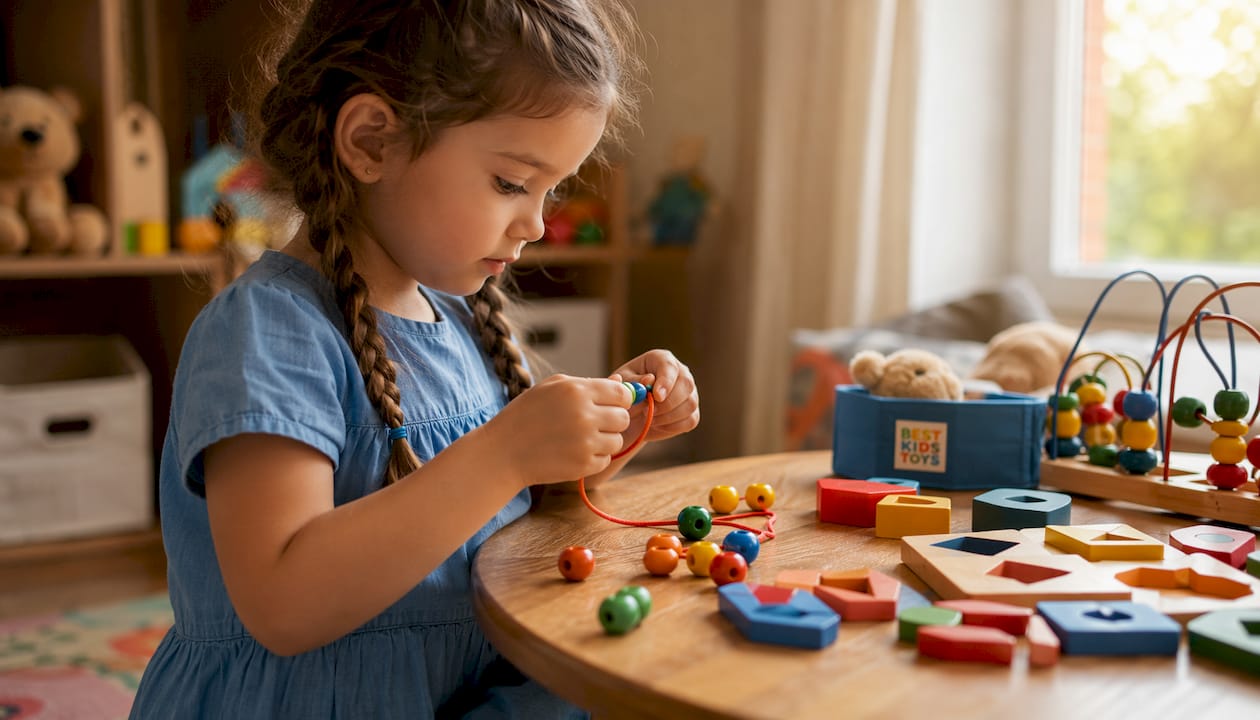
The Best Kids Toys Fine-Motor Lacing & Threading Set develops hand-eye coordination and pencil-grip strength. Both skills are foundational for writing readiness. Present it: Thread one bead to demonstrate, then hand the lace to your child.
Cooperative games and turn-taking
Simple cooperative board games round out the collection by adding turn-taking and emotion regulation. NAEYC recommends puzzles, sorting collections, and cooperative play as core tools for preschoolers. Present it: Play one round together first so the rules feel familiar before solo or peer play.
Buying fewer, better items pays off. One high-quality multi-use set like the Natural Wooden Block Set replaces a shelf of single-purpose toys and keeps a child engaged far longer. For more on why simplicity drives learning, see Thebestkidstoys’s editorial on how simplicity and purpose improve outcomes.
| Best for | Materials | How to use (single step) | Price range | Durability & cleaning |
|---|---|---|---|---|
| Spatial reasoning | Natural wood, non-toxic paint | Place puzzle on tray, pieces beside it | Budget–mid | Wipe with damp cloth |
| Open-ended building | Solid natural wood | Set out small block selection on mat | Mid–heirloom | Dry wipe; occasional light oil |
| Independence & life skills | Wood, cotton, metal | Fill pitcher halfway; place bowl beside it | Budget–mid | Wipe wood; hand-wash fabric |
| Pre-reading & numeracy | Cardstock, natural wood | Lay 3–4 cards face-up for matching | Budget | Wipe cards; store flat |
| Fine motor & grip prep | Cotton lace, natural wood beads | Thread one bead to demonstrate | Budget | Wipe beads; hand-wash lace |
| Turn-taking & logic | Cardboard, wood pieces | Play one round together first | Budget–mid | Wipe pieces; store in box |
How do you choose Montessori toys for a 3-year-old?
The core selection rule is simple: pick something just one step beyond your child’s current skill. Too easy and they disengage; too hard and they give up. Natural materials, non-toxic finishes, and pieces sized above choking risk are non-negotiable at this age.
Red flags to skip:
- Battery-operated or noisy toys that do the work for the child
- Too many features crammed into one item (they scatter focus, not build it)
- Tiny parts under 1.75 inches that pose a choking risk for 3-year-olds
- Vague age labels that skip developmental targets entirely
Five buyer questions to ask before you purchase:
- Is the finish non-toxic and lead-free? Look for explicit CPSC/ASTM compliance on the product page.
- What are the exact piece dimensions? Confirm no small parts for a child under 4.
- What specific skill does this target? A good product page names it clearly.
- What are the cleaning instructions? Wood, fabric, and painted surfaces each need different care.
- What is the return and shipping policy? Clear terms signal a brand that stands behind its products.
Pro Tip: To evaluate an “open-ended” claim, look for simple components that can become bridges, tunnels, or sorting trays depending on the child’s imagination. If the toy only works one way, it is not truly open-ended, regardless of what the label says.
Budget-conscious parents can also supplement with household-based Montessori activities like sorting natural items or using real kitchen tools, which fulfill Montessori principles just as effectively as store-bought kits.
What developmental milestones do these toys support?
Each category connects directly to a milestone cluster that matters at age 3.
Multi-piece puzzles build spatial reasoning and working memory simultaneously. Practical-life sets wire fine motor control, sequencing, and self-care independence in a single activity. Tactile literacy cards create pre-reading neural pathways that support later fluency. Cooperative games develop turn-taking and emotion regulation, two skills preschool teachers consistently flag as the biggest predictors of kindergarten readiness.
The concept of “flow states” is worth understanding here. When a 3-year-old locks onto a task and repeats it with total focus, that is a flow state, and it is exactly what Montessori environments are designed to produce. Two steps help you encourage it at home: reduce the number of competing toys visible at once, and establish a consistent, uninterrupted work area. Even a small corner with a low shelf and a mat signals to your child that this is a place for focused work. For more on open-ended play and independence, Thebestkidstoys has a full editorial worth bookmarking.
Six quick play ideas to encourage independent focus:
- Single-tray presentation: one activity per tray, everything needed and nothing extra
- Limited choice: offer two or three activities, not ten
- Consistent workspace: same mat, same low shelf, every time
- 15–25 minute work window: match session length to your child’s current attention span
- Simple timer: a sand timer gives a visual cue without pressure
- Toy rotation every 10–14 days: swap out half the shelf to restore novelty without overwhelming
Pro Tip: Rotating toys every 10–14 days keeps the shelf feeling fresh. Store off-rotation items in a closed bin so they feel genuinely new when they return. A practical storage guide from Thebestkidstoys walks through exactly how to set this up.
What safety and material checks matter before you buy?
Safety checklist:
- CPSC and ASTM compliance stated explicitly on the product page
- No small parts (pieces must be larger than 1.75 inches for children under 4)
- Non-toxic, lead-free paint or finish confirmed in writing
- Stable construction with no sharp edges or loose hardware
- Secure fastenings on any practical-life tools
Cleaning by material:
- Natural wood: wipe with a barely damp cloth; apply a light food-safe oil occasionally to prevent cracking
- Painted wood: damp cloth only; avoid soaking
- Cotton or fabric components: hand-wash or machine-wash on gentle if the label allows
- Silicone or rubber pieces: warm water and mild soap, air dry
For storage, shallow open baskets on low shelves keep pieces visible and accessible without overwhelming. Single-tray presentation preserves sets and reduces lost pieces. Montessori-inspired materials made from natural wood and non-toxic finishes also tend to clean up faster and last longer than plastic alternatives, which matters when you are investing in heirloom-quality items.
How do Montessori toys fit into daily routines?
The biggest shift most parents make is moving from “toy time” to “work time” as a daily anchor. A consistent 20-minute morning session, before screens or high-energy play, sets a rhythm your child will start to expect and protect. Place the current shelf rotation out the night before so the invitation is ready when they wake up.
Practical-life activities slot naturally into real routines: a pouring activity at breakfast, a simple sorting task before lunch, a lacing set during quiet afternoon time. This mirrors the Montessori prepared environment, where the activity is woven into the day rather than bolted on as a separate event. Pairing a puzzle checklist approach with your puzzle rotation helps you track which complexity level your child is ready to move to next.
Keep the workspace tidy between sessions. A child who returns to a clean, organized shelf is far more likely to choose independent work than one who faces a jumbled pile. That small habit compounds quickly.
Key Takeaways
The most effective Montessori toys for 3-year-olds are multi-use, made from natural materials, presented one activity at a time, and rotated regularly to sustain deep, independent focus.
| Point | Details |
|---|---|
| Buy multi-use over single-use | One quality wooden block set or puzzle replaces many single-purpose toys and lasts years longer. |
| Prioritize natural materials | Look for solid wood, non-toxic finishes, and explicit CPSC/ASTM compliance before purchasing. |
| Present one activity at a time | Single-tray presentation and a consistent workspace are what actually produce focused, independent play. |
| Rotate every 10–14 days | Swapping half the shelf restores novelty and keeps your child returning to the same materials with fresh curiosity. |
| Thebestkidstoys curated picks | The 3–4 years collection at Thebestkidstoys covers all six categories with safety-reviewed, Montessori-aligned selections. |
Why these picks reflect real Montessori goals
Selecting Montessori-aligned toys well requires more than reading a label. The items on this list were chosen because they invite repetition, reward independent effort, and grow with the child rather than locking in a single play pattern. Thebestkidstoys specializes in Montessori-inspired selections and reviews every product for safety and developmental fit before it reaches the collection. The curation focus is always on independence and preschool readiness, which means each item has a clear skill target, a natural material, and a presentation method that works without adult intervention.
This article is general educational information. For specific developmental concerns, consult a qualified early childhood professional.
Ready to shop the curated 3–4 years collection
Thebestkidstoys has done the vetting so you do not have to spend an afternoon comparing product pages. The 3–4 years collection brings together all six categories covered here, including the Wooden Puzzle Set, Natural Wooden Block Set, Practical Life Starter Set, Alphabet & Number Matching Cards, and Fine-Motor Lacing & Threading Set, each safety-reviewed and ready to ship.
For hands-on literacy and fine motor practice in one compact format, the Little Learners Montessori Busy Book is a standout pick that parents return to again and again. Orders over $60 ship free, and the site’s return policy is clearly listed on every product page. Browse the collection and find the two or three items that match where your child is right now.
Useful sources and further reading
- Good Toys for Young Children by Age and Stage | NAEYC — authoritative developmental guidance on toy categories for preschoolers, including puzzles, sorting, and cooperative play
- MS State Extension: Play and Focus in Early Childhood — research-backed guidance on reducing overstimulating toys to support extended concentration
- Best Montessori Toys for 3-Year-Olds | montessoritoys.info — practical category breakdowns and puzzle-complexity progression guidance
- Happiest Baby: Montessori Toy Safety — clear checklist of safety certifications and finish standards to verify on product pages
- Workspace for Children: Best Gifts for Three-Year-Olds — budget-friendly Montessori approaches including DIY and household-based activities
- The Kavanaugh Report: Montessori Activities for Families — real-family examples of household-based Montessori work that supplements store-bought materials
- Open-Ended Toy Commentary | onejuliekim.com — expert perspective on why simpler, multi-functional toys outperform complex kits for long-term play value