



Keep Kids Building: Magnetic Monorail Sets for STEAM Parents
A magnetic monorail toy is a building set of modular magnetic track blocks paired with a small motorized train that glides along a guided path, simulating the look of a levitating monorail without any real levitation involved. It suits families who want hands-on STEM building, don’t mind the patience assembly takes, and have a bit of floor space to spare. If that sounds like your household, keep reading.
TL;DR:
- Magnetic monorail toys rely on simple magnets guiding the train on motor-driven wheels, not real electromagnetic levitation systems used in full-scale maglev trains.
- Starter sets usually include around 30 to 40 pieces and one motorized train, ideal for younger children or casual builders, while deluxe sets offer more parts, trains, and complex features for experienced kids.
- To ensure safety and expandability, choose sets with fully encapsulated magnets, appropriate size for your space, and options for additional parts or trains later on.
- Organize setups with templates and labeled storage to sustain engagement, and charge trains only on supervised surfaces to prevent damage and maintain playtime flow.
- These toys promote spatial reasoning, fine motor skills, and open-ended creativity, aligning with Montessori principles and encouraging self-directed, hands-on learning.
Table of Contents
- What magnetic monorail toy sets are and how they work
- Starter versus deluxe kits: what’s actually in the box
- Why parents buy magnetic monorail toys: benefits and trade-offs
- How to choose the right magnetic monorail set
- Setup, storage, and play strategies that keep kids engaged
- Why we recommend magnetic monorail sets for hands-on learning
- Our picks for magnetic monorail play
- Where to learn more about maglev and levitation science
- Sources
- FAQ
What magnetic monorail toy sets are and how they work
At toy scale, the magic is mechanical, not magnetic levitation in the engineering sense. Track blocks snap together using embedded magnets that align each piece, while the little train itself rolls on motor-driven wheels, with additional magnets helping it hug the guideway and stay balanced as it moves.
That’s a world apart from actual maglev technology. Real systems use electromagnets, permanent magnets, or superconducting coils to lift and propel a vehicle, and electromagnetic suspension (EMS) designs need constant sensor feedback to hold a stable gap between train and track, according to the U.S. Department of Energy. Toy monorails skip all of that. They achieve the appearance of gliding motion through simple magnet-guided wheels, not closed-loop control systems.
Full-scale magnetic levitation relies on active engineering systems, not simple magnets. Engineering-grade maglev uses electromagnets, permanent magnets, or superconducting coils to create true levitation, a detail worth sharing with curious kids who ask if their toy train is “really floating.”
Here’s the short version you can use with your child:
- The toy train has wheels and a motor, so it rolls rather than floats.
- Magnets in the track blocks snap pieces together and help guide the train’s path.
- Real maglev trains use powerful magnets and computer control systems to lift entire train cars off the rail.
Starter versus deluxe kits: what’s actually in the box
Most magnetic monorail toys come in two tiers, and knowing the difference before you buy saves you from a mismatched gift.
Starter sets typically include around 30 to 40 pieces and a single motorized train, enough for a basic oval or figure-eight layout. They’re a smart entry point for younger children or for testing whether your child takes to the format before committing to a bigger investment.
Deluxe sets include a larger number of pieces, often with two or more trains, extra support pillars, and specialty blocks like switches, bridges, or looped sections. They usually ship with a USB charging cable and an instruction booklet, giving older kids room to design sprawling, multi-level layouts.
A few parts matter more than others when you’re comparing sets:
- The starter cube or base, which anchors the entire layout and often houses the charging port.
- Straight and curved track blocks, which determine how creative a layout can get.
- Support pillars, which let kids build elevated sections and add visual drama.
- Charging cables, since a train that won’t hold a charge stalls playtime fast.
Why parents buy magnetic monorail toys: benefits and trade-offs
The appeal goes beyond the novelty of a train that glides around a track. Building the layout works spatial reasoning and planning skills, while snapping small magnetic pieces together builds fine motor control. Because there’s no fixed way to build the track, kids get to make their own design choices from start to finish, which lines up closely with Montessori and other open-ended play philosophies that favor self-directed exploration over scripted outcomes.

That said, the format isn’t effortless. Building a big layout takes real time, and tearing it down for storage takes more. You’ll want a dedicated play surface, since a monorail loop can sprawl across a good chunk of floor. Younger children, especially those still developing patience for multi-step tasks, may lose interest before a large build is finished, so matching the set’s scale to your child’s attention span matters as much as the piece count.
Pro Tip: Start with a small, achievable layout on day one so your child feels a quick win before tackling anything bigger.
How to choose the right magnetic monorail set
Picking the right set comes down to matching the toy to your child and checking a short list of practical details before you check out.
- Match the tier to your child’s age and attention span: a starter set suits younger children or first-time buyers, while a deluxe set rewards a child who already enjoys building toys.
- Check that magnets are fully encapsulated in the plastic housing, since exposed or loose magnets are a genuine safety hazard for young children.
- Confirm the footprint: measure your available play space and look for sets that offer a carrying case or storage bin for between sessions.
- Look for expandability, meaning the set can accept replacement blocks or additional trains later without buying an entirely new kit.
- Check charging details, since most motorized trains use small rechargeable battery packs that need adult-supervised charging.
- Verify that the brand offers accessible customer support and a clear warranty in case a piece breaks or a train stops charging.
EMS maglev systems require constant closed-loop sensor feedback to stay stable, a layer of engineering that toy sets don’t attempt to replicate, according to a 2023 review in Energies. That gap is exactly why toy monorails stay simple, affordable, and safe for home play.
Watch for red flags before buying: no parts list on the product page, vague or missing age guidance, and customer service that’s hard to reach if a piece arrives damaged.
Setup, storage, and play strategies that keep kids engaged
A little organization up front goes a long way toward keeping the train running, literally and figuratively.
For short play sessions, keep a couple of simple layout templates on hand so your child can build a working loop in a minute or two rather than starting from scratch every time. When it’s time to pack up, labeled bins or zip-top bags sorted by piece type make next time’s setup faster, and a dedicated baseboard lets you preserve a mid-build layout without losing progress. To keep interest fresh, rotate the monorail with other magnetic building toys, try timed building challenges, or turn it into a two-person project where siblings each design a section of track. For sets with bigger, more complex layouts, pacing expectations the way you would for any elaborate building project helps avoid frustration.
- Charge trains only on adult-supervised surfaces, away from bedding or curious younger siblings.
- Inspect charging connectors periodically for wear, since a damaged port is the most common reason a train stops running.
- Store small parts separately from bigger blocks to avoid a five-minute hunt before every play session.
Pro Tip: Pre-charge the train fully before gift-giving so the first play session starts without a delay.
Why we recommend magnetic monorail sets for hands-on learning
The approach is based on Montessori principles, which means toys are checked for material quality, safety, and whether they hold a child’s interest past the first week. Magnetic monorail sets are chosen because they reward patience with a working, motorized payoff, and because parts can be replaced if damaged. The combination of durability and open-ended design is valued in the selected sets.
— Danica Hodge
Our picks for magnetic monorail play
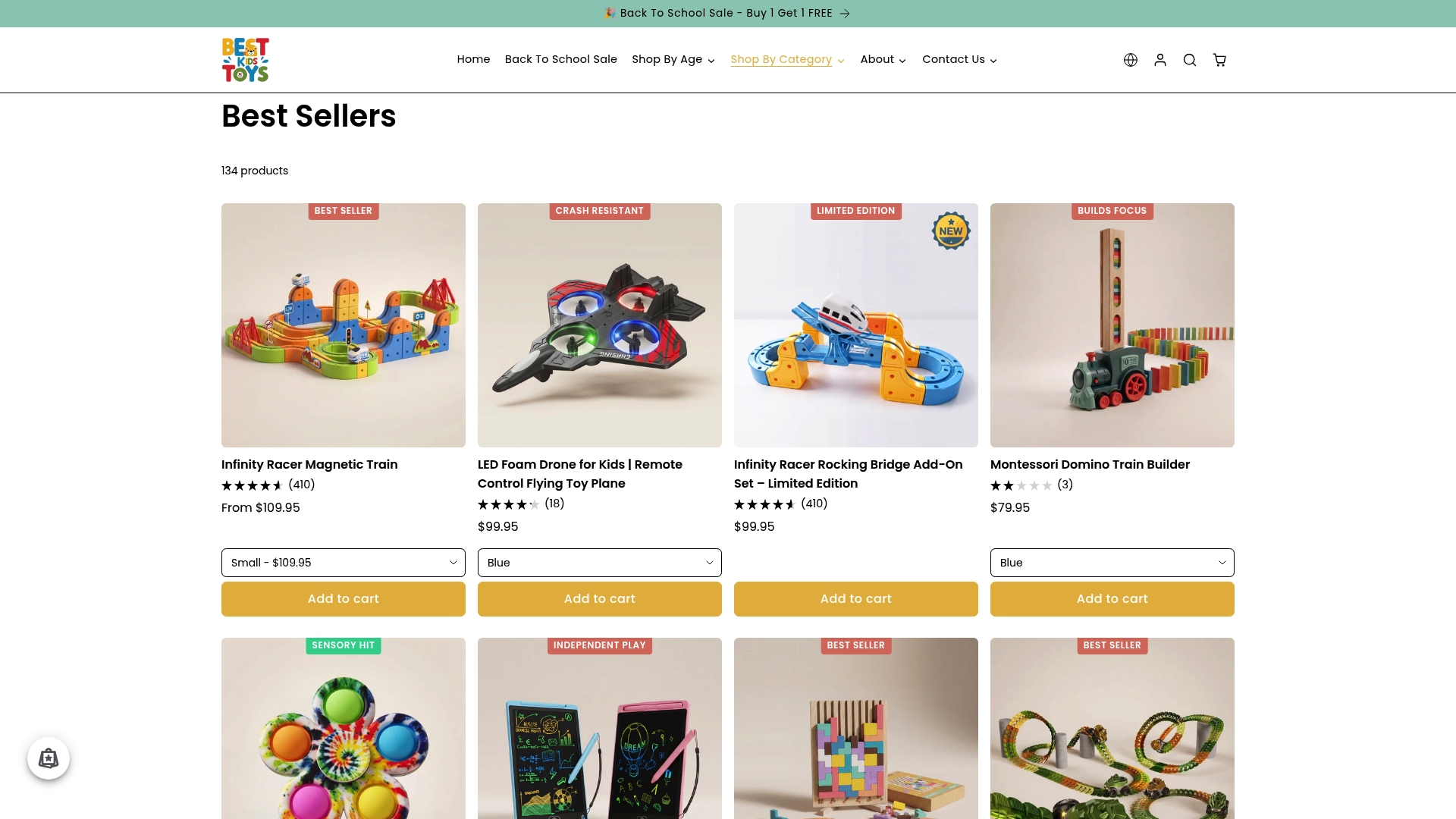
Ready to bring one home? The Infinity Racer Magnetic Train Set gives kids a screen-free STEM build with a motorized rail cube design that rewards creative layouts, while the Magnetic Race Track Set adds a self-driving car element for kids who want variety in their builds. Both meet key criteria such as having encapsulated magnets, availability of replacement parts, and rechargeable trains designed for repeat play.
- Encapsulated magnets and clear age guidance on both sets.
- Rechargeable trains with accessible charging cables.
- Expandable with additional Montessori STEM Toys as your child’s interest grows.
Shipping is free on orders over $60, and current markdowns run up to 40% off site wide, so browse the full Montessori STEM Toys collection to find the set that fits your child’s next build.
Where to learn more about maglev and levitation science
For families who want to dig into the real engineering behind maglev trains, these sources explain the mechanics in plain terms:
- How maglev works, U.S. Department of Energy
- Magnetic levitation, IEEE Technology Navigator
- Control methods for EMS-type maglev vehicles, a 2023 review in Energies
Sources
- How maglev works | U.S. Department of Energy
- Magnetic Levitation | IEEE Technology Navigator
- Control Methods for Levitation System of EMS-Type Maglev Vehicles: An Overview (Energies, 2023)
FAQ
Is a magnetic monorail toy the same as a Maglev train?
No. A magnetic monorail toy uses magnet-guided wheels and a small motor to move along a track, while a true maglev train uses electromagnets or superconducting coils with active control systems to actually lift the vehicle off the rail, per the U.S. Department of Energy.
What age group are magnetic monorail sets appropriate for?
Age guidance varies by product, so check the specific listing before buying, since piece size and set complexity differ between starter and deluxe kits. Starter sets with fewer, larger pieces tend to suit younger builders, while deluxe sets with more pieces and switches fit children who already enjoy multi-step building projects.
What comes inside a deluxe magnetic monorail set?
A deluxe set typically includes 60 or more track pieces, multiple motorized trains, support pillars, specialty blocks like switches or bridges, a USB charging cable, and an instruction booklet. That’s a step up from a starter set, which usually has around 30 to 40 pieces and a single train.
How much do magnetic monorail sets cost?
Pricing varies by brand, piece count, and included accessories, so check the specific product page for the current price before buying. Sets from Best Kids Toys are listed on their respective product pages, where current promotions may also apply.