



Spinning Drum Montessori: Benefits for Infants and Toddlers
What makes the spinning drum Montessori toy so powerful for early development?
The spinning drum Montessori toy is one of the most beloved classic materials in early childhood education, and for good reason. Designed for babies 6 months and up, this wooden drum features bright colored panels and a mirror surface that captivates little eyes and sets tiny hands in motion. It is not just a toy. It is a carefully designed sensory tool that builds real skills through joyful, self-directed play.
Here is what the spinning drum delivers from the very first spin:
- Visual tracking: The rotating colored panels train babies to follow movement with their eyes, a foundational skill for reading and coordination.
- Hand-eye coordination: Reaching for, batting, and eventually spinning the drum connects what a baby sees to what their hands do.
- Auditory stimulation: The soft, rhythmic sound produced when the drum spins engages a baby’s developing sense of hearing.
- Cause-and-effect learning: Babies quickly discover that their touch makes something happen, sparking curiosity and confidence.
- Fine and gross motor skills: Gripping, batting, and spinning build both small muscle control and broader arm strength.
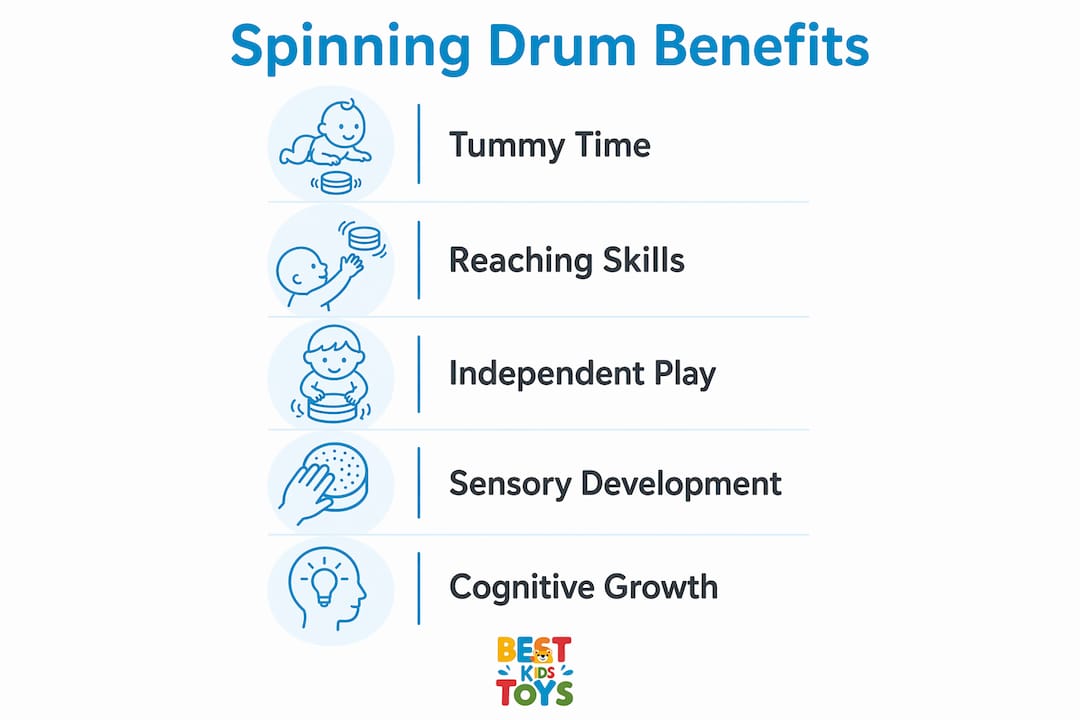
- Core strength: During tummy time, lifting the head to watch the drum strengthens neck and core muscles.
- Self-recognition: The mirror panel introduces babies to their own reflection, a delightful and developmentally rich moment.
Table of Contents
- How the spinning drum supports your baby’s growth at every stage
- How the spinning drum builds sensory skills and independent play
- How to choose a quality Montessori spinning drum in the United States
- How to introduce the spinning drum in a Montessori environment
- Montessori toys that complement the spinning drum beautifully
- Thebestkidstoys has the spinning drum collection your child deserves
- Key Takeaways
How the spinning drum supports your baby’s growth at every stage
One of the most wonderful things about this toy is that it grows with your child. Each stage of development brings a new way to engage with it.
- 3–6 months (tummy time observer): At this stage, you spin the drum and your baby watches. The colorful panels and gentle sound are enough to hold their gaze and encourage head lifting, which strengthens neck and shoulder muscles.
- 6–8 months (first reach): Your baby starts batting at the drum with an open hand. This is the beginning of intentional movement, and every successful hit is a small triumph that builds confidence.
- 8–10 months (controller): Now the brain gears are really churning. Babies begin to actively spin the drum themselves, experimenting with speed and stopping it on purpose. Cause-and-effect understanding takes a real leap forward here.
- 10+ months (advanced drummer): Toddlers use both hands, vary their speed, and may even try to peek at their reflection mid-spin. Rhythm exploration and self-directed play become the focus.
At each stage, the drum shifts from a passive stimulus to an active learning tool, which is exactly what Montessori-inspired play is designed to do.
Pro Tip: Place the drum just beyond your baby’s reach during tummy time. That little stretch encourages head lifting and physical effort. As they get stronger, gradually move it closer so they can bat and eventually grasp it. This simple adjustment maximizes both motor development and the feeling of success.
How the spinning drum builds sensory skills and independent play
Watch a baby with a spinning drum and you will see something remarkable: they figure it out on their own. That self-directed exploration is the heart of Montessori sensory play.
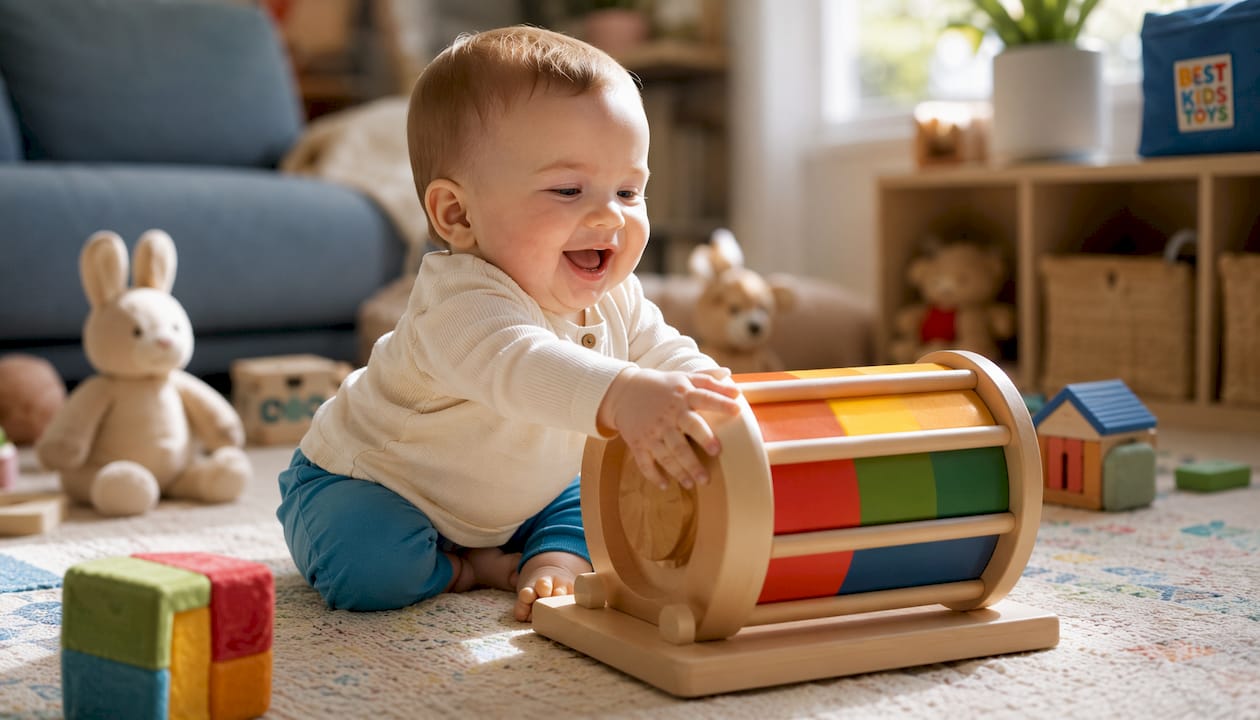
The visual stimulation alone is rich. High-contrast, multi-colored panels catch a young baby’s attention immediately, and the mirror panel adds a whole new layer. Seeing their own face reflected back is genuinely fascinating for infants and supports early self-awareness.
The auditory side is equally engaging. The soft, rhythmic sound produced when the drum spins is soothing rather than jarring, which makes it appropriate even for very young babies. Over time, children begin to connect the speed of their spin to the sound it makes, a lovely early lesson in physics and control.
Here is what independent play with the spinning drum looks like in practice:
- A baby bats the drum, hears the sound, and immediately tries again. That loop of action and response is pure cause-and-effect learning.
- As wrist flexibility develops, spinning becomes smoother and more deliberate. Fine motor control improves with every session.
- Children begin to slow the drum down intentionally, showing growing control over their movements and their environment.
- The mirror panel invites babies to lean in, tilt their heads, and explore their own reflection, all without any adult prompting.
This kind of self-directed play builds real cognitive confidence. Your child learns that they can make things happen, and that is a powerful foundation for lifelong learning.
How to choose a quality Montessori spinning drum in the United States
Not every spinning drum on the market is created equal. When you are choosing one for your baby, the materials and construction matter as much as the design. Child development expert Danica Hodge and the team at Thebestkidstoys emphasize that the best Montessori-inspired toys combine safety, durability, and genuine developmental value.
Here is what to look for:
- Natural solid wood construction: A quality wooden spinning drum uses 100% solid wood, not particleboard or plastic. Wood is durable, tactilely satisfying, and naturally safe for babies.
- Non-toxic, water-based paint: The colors should be vibrant but finished with child-safe, non-toxic paint. Babies put everything in their mouths, so this is non-negotiable.
- Child-safe mirror panel: The reflective surface should be made from safe, shatterproof material rather than glass.
- Smooth, easy spin: The drum should rotate freely with minimal force so even a young baby’s light touch produces a result.
- No batteries required: A true Montessori spinning drum is powered entirely by the child’s own movement. No lights, no electronic sounds.
- Size appropriate for infant reach: The drum should be sized so a baby can comfortably bat and eventually grasp it without straining.
Thebestkidstoys curates its Montessori toy collection with exactly these standards in mind. Every product goes through a quality and safety review before it reaches your home, so you can shop with confidence.
Pro Tip: Pair the spinning drum with soft, supportive baby shoes or bare feet during tummy time to maximize sensory input. Brands like EBMINI® DRILLO design barefoot crawling shoes that keep little feet comfortable while preserving the tactile feedback babies need during floor play.
How to introduce the spinning drum in a Montessori environment
The Montessori approach is all about prepared environments and patient observation. Introducing the spinning drum well makes a real difference in how much your child gets from it.
Start by placing the drum on a low, flat surface at your baby’s eye level during tummy time. Let them observe it before you spin it. When you do spin it, do so slowly and let the colors and sound do the work. Resist the urge to demonstrate repeatedly. One gentle spin, then wait. Babies need time to process what they see and decide what to do next.
As your child grows more confident, step back further. The goal is for them to reach, bat, and eventually spin the drum entirely on their own. Your role shifts from demonstrator to quiet observer, which is exactly right. Supervision is still important for safety, but hovering can interrupt the independent discovery that makes this toy so valuable.
Keep sessions short and pressure-free. Ten minutes of genuine engagement is worth far more than thirty minutes of distraction. Rotate the drum in and out of your child’s play space to keep it feeling fresh and interesting.
Montessori toys that complement the spinning drum beautifully
The spinning drum works best as part of a broader Montessori play environment. A few well-chosen companions can round out your baby’s sensory and motor development in meaningful ways.
Tactile and fine motor toys like Montessori sensory texture matching discs add a hands-on dimension that the spinning drum does not cover. Feeling different textures builds the same careful, attentive touch that makes the drum so satisfying to spin.
Color sorting toys are a natural next step as babies move into toddlerhood. A color sorting sensory toy builds on the color recognition the spinning drum introduces and adds a new layer of problem-solving.
Open-ended Montessori materials like wooden stacking rings, object permanence boxes, and simple puzzles all share the same core principle: the child is in charge, and the toy responds to their actions. Together, these tools create a play environment where curiosity leads and learning follows naturally. You can find a thoughtfully curated selection of Montessori toys for independent learning that pair beautifully with the spinning drum at Thebestkidstoys.
Thebestkidstoys has the spinning drum collection your child deserves
Thebestkidstoys makes finding the right Montessori toy genuinely easy. The spinning drum collection is hand-picked for developmental quality, safety, and real play value, so you are not sorting through hundreds of options hoping for the best. Every toy meets the material and safety standards that child development experts recommend, and the collection is built around the principle that the best childhood moments come from screen-free, self-directed exploration.
Right now, Thebestkidstoys offers up to 40% off select toys and free shipping on orders over $60. Browse the Montessori busy book and the full spinning drum range, and find the perfect match for your little one’s next stage of discovery.
Key Takeaways
The spinning drum Montessori toy builds visual tracking, hand-eye coordination, auditory awareness, and cause-and-effect understanding in babies from 6 months onward.
| Point | Details |
|---|---|
| Recommended starting age | Designed for babies 6 months and up, with benefits growing at every developmental stage. |
| Core developmental gains | Builds visual tracking, fine and gross motor skills, core strength, and cause-and-effect learning. |
| Placement matters | Positioning the drum just beyond reach during tummy time maximizes physical effort and motor development. |
| Material standards | Choose 100% solid wood, non-toxic paint, and a child-safe mirror panel for safe, lasting play. |
| Thebestkidstoys collection | Offers expert-reviewed, safety-tested Montessori spinning drums with up to 40% off and free shipping over $60. |