



Shape and Color Sorter: Best Picks for Early Learning
What makes a shape and color sorter so good for child development?
A shape and color sorter is an educational toy that invites children to match and group objects by their physical attributes, typically shape, color, or both. Simple as it looks, this little toy is doing a lot of heavy lifting for your child’s growing brain. It builds fine motor control, sharpens visual discrimination, and lays the groundwork for early math thinking, all through play.
According to Playgroup WA, sorting and matching activities strengthen fine motor control, eye-hand coordination, visual discrimination, and foundational pre-math skills like counting and pattern creation. These aren’t abstract benefits. They show up in how your child holds a crayon, reads letters, and eventually adds numbers.
Key benefits at a glance:
- Builds hand strength and pincer grip through grasping and placing pieces
- Trains the eye to notice differences in shape, size, and color
- Introduces early math concepts like grouping, counting, and patterns
- Encourages independent, screen-free exploration
- Supports language development when caregivers name shapes and colors during play
Table of Contents
- Developmental skills that sorting activities build in young children
- How to use color sorters effectively with your child
- How to choose the right sorting toy for your child’s age and stage
- Popular and highly rated shape and color sorter toys worth knowing
- Why Thebestkidstoys is a trusted source for sorting toys
- Key Takeaways
- Why sorting toys deserve more credit than they get
- Thebestkidstoys has the sorting toys your child is ready for
Developmental skills that sorting activities build in young children
Shape sorting activities work across several developmental areas at once, which is part of what makes them such a great investment of playtime.
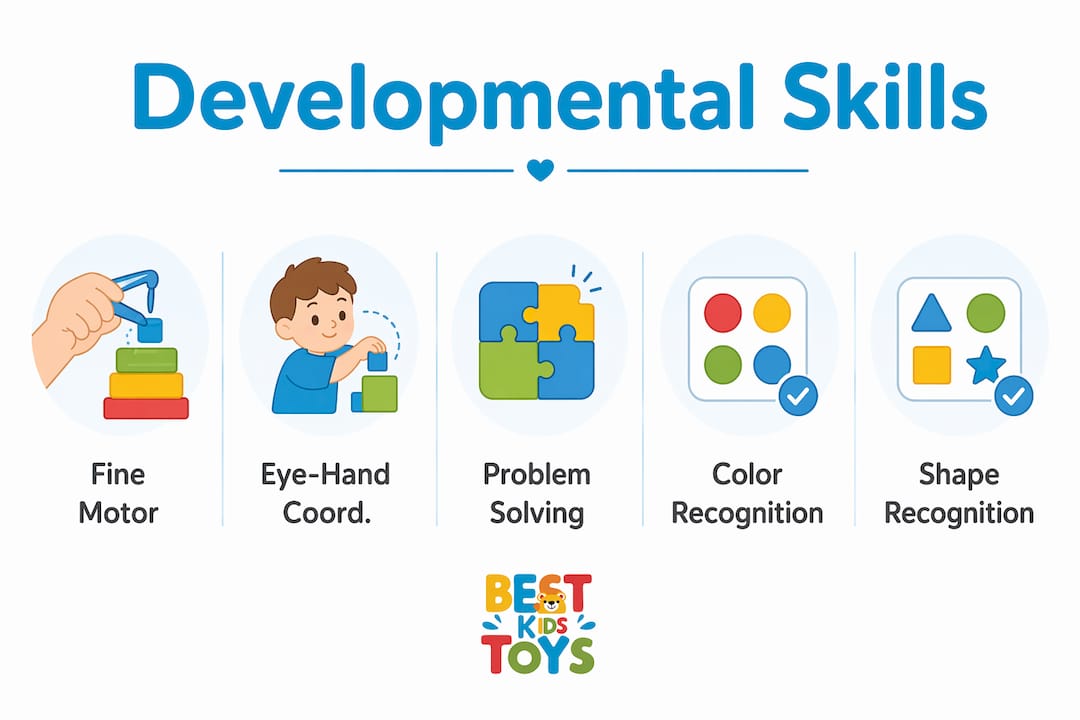
Fine motor control and eye-hand coordination improve as children pick up pieces and guide them into matching slots or containers. This kind of precise hand movement directly supports writing readiness. Research from Playgroup WA shows that about 75% of preschoolers show improved shape recognition after regular sorting activities.
Visual discrimination is the ability to spot subtle differences between objects, like noticing that a square and a rectangle are not the same. This skill transfers directly to reading, where children must distinguish letters like “b” and “d.”
Skills developed through color sorting toys and shape sorting activities:
- Fine motor control and pincer grip
- Eye-hand coordination
- Visual discrimination (shape and color)
- Early math readiness: counting, grouping, and pattern recognition
- Problem-solving and logical thinking
- Language skills through attribute naming
- Attention and focus during task completion
How to use color sorters effectively with your child
Getting the most from a sorting toy comes down to how you play alongside your child, not just what toy you choose.
ZERO TO THREE recommends starting with only two categories at a time. Two shapes or two colors keeps frustration low and confidence high. Once your child sorts those correctly and consistently, you add a third. This gradual build keeps the brain gears churning without tipping into overwhelm.
Caregiver involvement makes a real difference and can be enhanced with sun safety awareness activities kids will actually do that foster interactive learning and engagement. Research from NAEYC shows that the deepest learning happens when parents ask open-ended questions during sorting, not yes-or-no questions, but ones that require your child to think and describe. Try “How did you know that was a circle?” instead of “Is that a circle?”
After your child has mastered sorting real physical objects, you can move toward pictorial or more abstract representations. NAEYC advises that this progression to abstract sorting should only happen once physical attribute recognition is solid.
Tips for effective sorting play:
- Start with two categories, then add more as confidence grows
- Ask open-ended questions to encourage reasoning
- Name shapes and colors out loud during play
- Let your child lead the sorting and correct their own mistakes
- Celebrate effort, not just correct answers
Pro Tip: To focus purely on shape recognition, use same-color objects so your child can’t rely on color as a shortcut. To focus on color, use same-shape objects. This technique, recommended by NAEYC’s math and science resources, isolates the skill you’re targeting and makes learning much more intentional.
How to choose the right sorting toy for your child’s age and stage
Not all sorting toys are created equal. The best ones grow with your child, hold up to daily play, and are built with safety in mind.
Age and complexity matter most. Babies and young toddlers (12–18 months) do best with simple two-shape sorters and large, easy-to-grip pieces. Preschoolers aged 3–4 can handle more shapes, colors, and sorting categories. By ages 4–5, children are ready for toys that introduce patterns, sequences, or multi-attribute sorting.
Material safety is non-negotiable. Look for non-toxic finishes, BPA-free plastics or sustainably sourced wood, and pieces large enough to avoid choking hazards. Montessori-inspired toys that emphasize quality craftsmanship tend to use natural materials and avoid unnecessary electronic features.
What to look for when selecting a color sorting toy:
- Non-toxic, child-safe materials and finishes
- Piece size appropriate for the child’s age
- Variety of shapes and colors to challenge growing skills
- Durable construction that survives enthusiastic play
- Open-ended design that allows multiple ways to sort and explore
- Alignment with Montessori or play-based learning principles
The Montessori Wooden Colorful Tetris Children’s Toy is a great example of a toy that checks all these boxes, offering shape variety, natural wood construction, and open-ended play potential.
Popular and highly rated shape and color sorter toys worth knowing
The market has plenty of options, and a few categories consistently earn high marks from parents and educators alike.
Wooden peg sorters are a classic for good reason. They feature large, colorful pegs or blocks that toddlers sort into matching holes or trays. The tactile feedback of wood makes them especially satisfying for little hands.
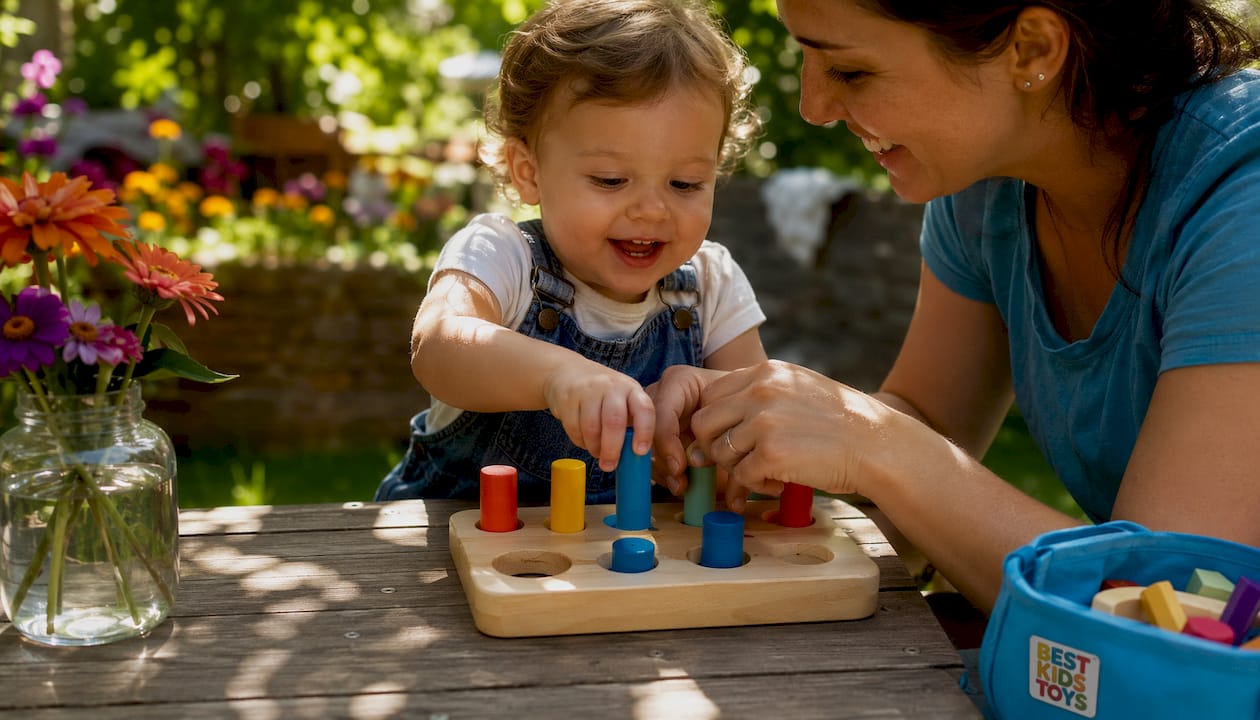
Sensory sorting bins take the activity further by combining color sorting with texture exploration. The Color Sorting Sensory Toy at Thebestkidstoys is a Montessori-designed option that builds fine motor skills while engaging multiple senses at once.
Shape puzzle boards ask children to fit geometric pieces into matching cutouts, reinforcing both shape recognition and spatial reasoning. These work beautifully for ages 2–4.
Multi-attribute sorting sets include pieces that vary in shape, color, and size, letting older preschoolers practice sorting by more than one rule at a time. This is where educational sorting games start to feel genuinely challenging and exciting.
Quiet learning books with sorting pages offer a portable, screen-free option for on-the-go learning. The My First Quiet Learning Book combines sorting activities with other early learning concepts in one compact format.
For parents browsing educational toys for ages 3–4, sorting toys remain one of the most recommended categories by early childhood educators across the United States.
Why Thebestkidstoys is a trusted source for sorting toys
Thebestkidstoys built its catalog around one clear idea: every toy should do something meaningful for a child’s development. The team reviews each product for safety, developmental value, and play quality before it earns a spot in the collection.
- Montessori-inspired selection focused on screen-free, skill-building play
- Every product reviewed for safety standards and non-toxic materials
- Curated for specific developmental stages, from toddlers to early school age
- Current promotions include up to 40% off and free shipping on orders over $60
- Parent-friendly browsing with collections organized by age and skill
Key Takeaways
Shape and color sorters are among the most developmentally rich toys available for children ages 1–5, building fine motor skills, visual discrimination, and early math readiness through hands-on play.
| Point | Details |
|---|---|
| Start simple | Begin with two categories only, then add complexity as your child builds confidence. |
| Ask open-ended questions | Questions like “How did you know that was a circle?” deepen reasoning beyond simple matching. |
| Isolate the skill | Use same-color objects to teach shape, or same-shape objects to teach color recognition. |
| Choose safe, quality materials | Look for non-toxic finishes, age-appropriate piece sizes, and durable Montessori-inspired construction. |
| Thebestkidstoys | Offers a curated range of Montessori-inspired sorting toys reviewed for safety and developmental value, with free shipping over $60. |
Why sorting toys deserve more credit than they get
Parents often underestimate how much a simple sorting toy accomplishes. The toy looks basic. A few colored pieces, a tray, maybe some holes. But what happens cognitively when a two-year-old picks up a red circle and decides where it belongs is genuinely complex. They’re comparing, categorizing, self-correcting, and building the mental frameworks that reading and math will later depend on.
The real mistake I see is rushing past the physical stage too quickly. Many caregivers move to flashcards or apps before a child has truly mastered sorting real objects in their hands. The research is clear on this: abstract representations only stick after the concrete experience is solid. A child who has spent months sorting wooden shapes by touch and sight is far better prepared for a worksheet than one who skipped straight to the picture cards.
The other underrated move is simply talking during the activity. Not instructing, but asking. “Why did you put that one there?” does more for language and reasoning development than any amount of silent, correct sorting ever could. The toy is the invitation. Your questions are what make it a real learning experience.
Thebestkidstoys has the sorting toys your child is ready for
Sorting out which toy to buy shouldn’t feel harder than the sorting activity itself. Thebestkidstoys takes the guesswork out by offering a hand-picked collection of sensory and sorting toys that are safe, developmentally appropriate, and genuinely fun for children to use. Every product in the collection meets high safety and developmental standards, so you can feel confident about what you’re putting in your child’s hands.
Whether your little one is just starting out with two shapes or ready for multi-attribute sorting challenges, Thebestkidstoys has options matched to their stage. Browse the full educational toys for ages 4–5 collection or explore the toddler range to find the right fit today.