



What Montessori Toys Actually Cost (And When to Splurge)
Small wooden Montessori pieces typically fall in a lower price range, mid-range items like activity cubes and puzzles generally cost more, and larger equipment such as Pikler triangles or play kitchens can be substantially more expensive. Curated subscription kits usually have a considerable price range per box. Here’s the short version: Montessori toys can be a worthwhile investment if you shop selectively instead of collecting every item with the label slapped on it.
That’s the real secret nobody tells new parents. You don’t need a full shelf of “Montessori” gear. You need a handful of well-made, single-concept pieces that actually match what your child is working on developmentally right now.
- Low range ($8–$25): teethers, grasping toys, simple wooden rattles
- Mid range ($25–$80): stackers, knob puzzles, sorting sets
- High range ($100–$400+): climbing triangles, play kitchens, large wooden playsets
- Subscription kits ($50–$300): staged, age-matched boxes delivered on a schedule
Quick Answer: According to The Good Trade, small wooden Montessori toys typically run $15 to $60, with curated kits and larger equipment climbing well past that.
Key Takeaways
Montessori toy prices range from $8 for simple infant pieces to $400+ for large equipment, and the premium is worth paying when it buys durability, single-concept design, and resale value.
| Point | Details |
|---|---|
| Know your price bands | Budget $8–$25 for infants, $25–$80 for toddlers, and $100–$400+ for large equipment. |
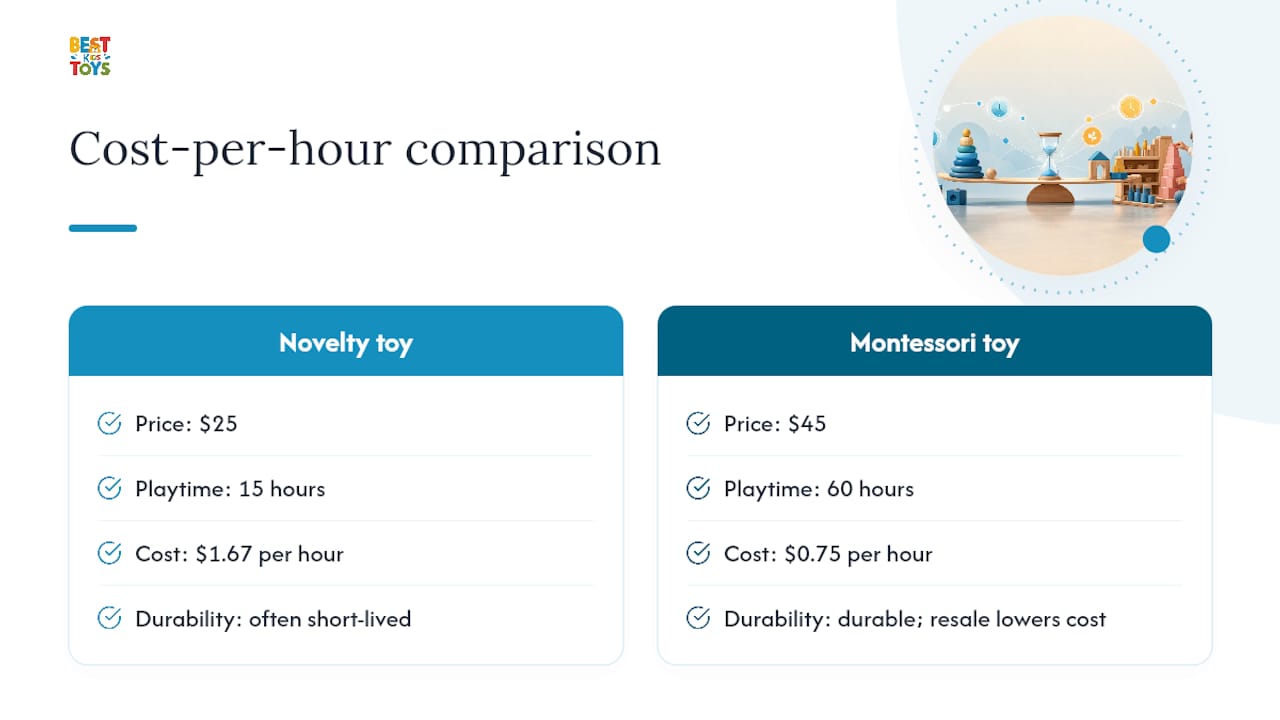
| Calculate cost-per-hour | A $45 wooden puzzle used 60 hours often costs less per hour than a $25 toy used 15 hours. |
| Buy for the current stage | Match purchases to your child’s active developmental skill, not a general age range. |
| Save through resale and secondhand | Quality wooden toys hold resale value, lowering the real lifetime cost. |
| Start with curated core sets | Thebestkidstoys’ age-based collections and starter items like the Little Learners Montessori Busy Book help you buy fewer, better pieces. |
Table of Contents
- Montessori Toy Cost by Age and Type
- Why Do Montessori Toys Cost More Than Regular Toys?
- Is the Price Premium Actually Worth It?
- Where to Buy Montessori Toys Without Overspending
- What Most Buying Guides Get Wrong About Price
- Sources
Montessori Toy Cost by Age and Type
Montessori toy pricing tracks pretty closely with the size and complexity of the piece, and it helps to think in terms of what your child is actually doing developmentally at each stage rather than just their age in months.
Infants (0–12 months)
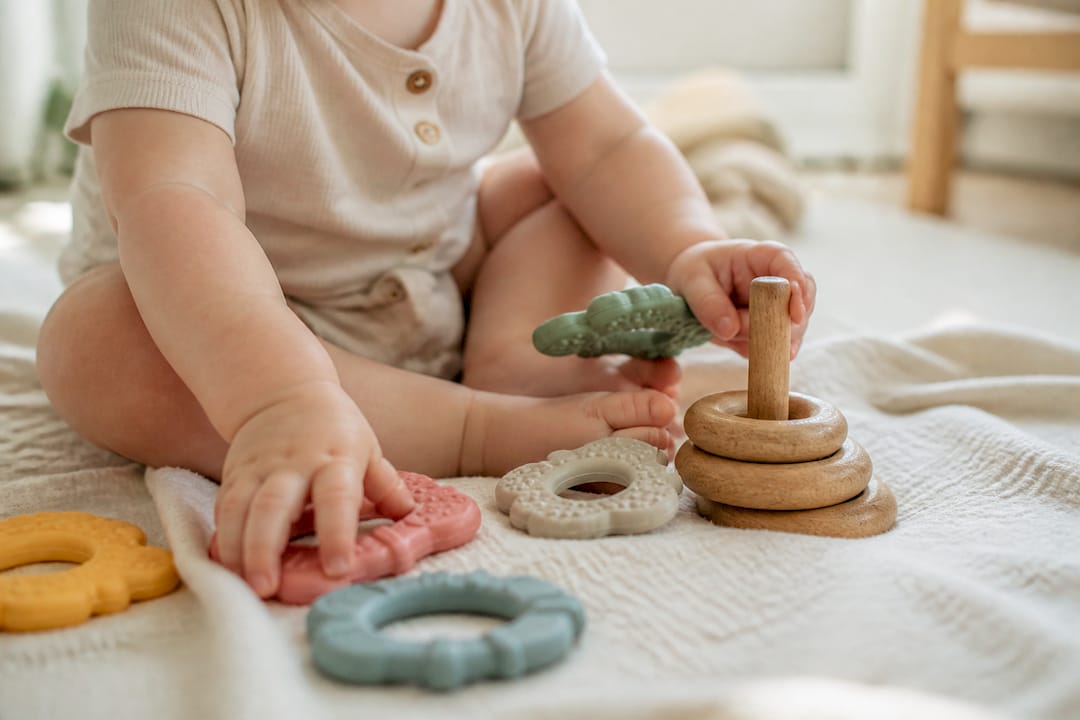
Babies don’t need complexity. They need contrast, texture, and safe things to grip and mouth. Simple wooden rings, ribbon-and-bead grasping toys, and soft teething shapes are generally among the more affordable Montessori toy options. This is the cheapest stage to outfit, and honestly, the stage where cheap works fine. A $12 wooden rattle does its job just as well as a $40 one.
Toddlers (1–3 years)
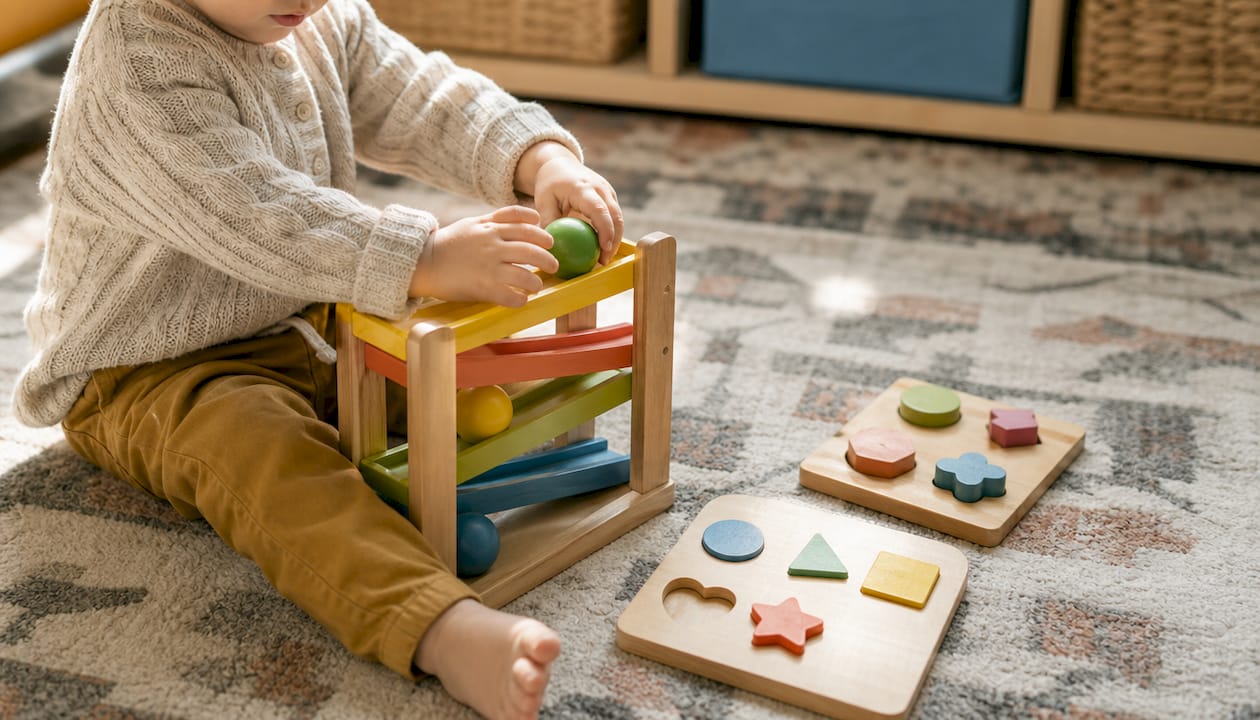
This is where price starts climbing because the toys start doing more. Stackers, simple shape puzzles, and ball-drop boxes tend to be moderately priced Montessori toys. These pieces need tighter craftsmanship since toddlers test durability by throwing, chewing, and standing on everything within reach.
Preschoolers (3–5 years)
Activity cubes, multi-piece wooden puzzles, and mid-size playsets are often found in a middle price range. According to GoodBuy Gear, specific items like wooden bead stairs often start around $15, while more elaborate play kits commonly begin near $80. This is also the age range where open-ended, multi-step toys start paying off in a way flashier toys don’t. If you want to see why that matters for engagement over time, open-ended play tends to hold a preschooler’s attention far longer than single-use novelty items.
Large equipment and furniture-scale pieces
Pikler triangles, play kitchens, and climbing arches are generally among the higher-priced Montessori items. These are furniture, essentially, and priced like it. Solid hardwood construction, weight testing, and multi-year durability all factor into that number.
Subscription and curated kits
Boxes that arrive pre-packed with stage-appropriate materials are available at various price points depending on frequency and contents. They’re convenient if you don’t want to research individual toys yourself, but The Good Trade notes that curated kits and larger equipment can run $50 to $300 or more, and buying pieces individually is almost always cheaper over time than paying for that curation month after month.
Pro Tip: Before buying a subscription kit, check whether it includes anything you could easily source individually for less. Curation has value, but you’re paying for someone else’s shopping list.
Why Do Montessori Toys Cost More Than Regular Toys?
Three things drive up the price tag on Montessori-style toys, and only two of them are actually about quality.
- Materials. Solid wood costs more than injection-molded plastic, and non-toxic, food-grade finishes add another layer of expense. Sustainably sourced hardwood isn’t cheap to begin with.
- Production scale. Small workshops and independent makers can’t match the per-unit cost of a factory churning out plastic toys by the millions. Handcrafted or small-batch production means higher labor cost per piece.
- Design and safety testing. A well-designed Montessori toy usually isolates one skill at a time, which requires tighter engineering tolerances and more rigorous safety testing than a multi-function plastic gadget.
- The label premium. Here’s the part worth knowing: slapping “Montessori” on a product doesn’t require meeting any actual standard. According to The Montessori-Minded Mom, the label itself often adds a marketing markup that has nothing to do with material quality or educational design.
That last point matters more than most parents realize. A $60 “Montessori” toy and a $60 generic wooden puzzle can offer identical developmental value. The name on the box isn’t the thing you’re paying for. The design, the materials, and the fit with your child’s current stage are.
Is the Price Premium Actually Worth It?
Run the numbers before you decide, because “expensive” and “costly” aren’t the same thing once you factor in how long a toy actually gets used.
Here’s a cost-per-hour comparison. Say you buy a $25 plastic light-up toy that holds your toddler’s interest for maybe 15 total hours before it’s ignored. That’s roughly $1.67 per hour of play. Now compare a $45 wooden puzzle designed for progressive difficulty, one that gets revisited across several developmental stages for 60 hours total. That works out to $0.75 per hour, less than half the cost of the “cheaper” toy. Kukoo Montessori frames this exact comparison: durable, well-designed toys frequently cost less per hour of engagement than cheap novelty items, simply because they last and get used repeatedly instead of forgotten in a bin.
Resale value tightens the math even further. Quality wooden toys hold up well enough that many parents recoup a meaningful chunk of the original price by reselling once a child outgrows them, which lowers the real lifetime cost well below the sticker price. The best return on investment, though, comes from buying toys that match what your child is working on right now. A sorting toy purchased six months too early just sits on a shelf, no matter how well it’s made.
Where to Buy Montessori Toys Without Overspending
You don’t have to pay full retail on everything, and you shouldn’t.
- Specialty Montessori retailers carry the most curated, developmentally accurate selection, but usually at the highest prices.
- Larger retailers with Montessori-style lines often price lower, though quality and design accuracy vary more.
- Secondhand marketplaces like consignment shops, Facebook Marketplace, and toy libraries frequently surface high-quality wooden toys at a fraction of retail. The Montessori-Minded Mom lists several of these channels as reliable ways to cut cost without cutting quality.
- Seasonal sales are worth waiting for on big-ticket items like play kitchens or climbing sets.
- DIY substitutions work for plenty of early activities. A muffin tin and pom-poms can replace a $30 sorting set.
When buying used, check for missing small parts, verify the item hasn’t been recalled, and make sure the surface can be cleaned and sanitized. For anything new and higher-priced, look for ASTM or CPSC compliance listed on the packaging or product page. That compliance is one of the few objective markers separating a genuinely well-made toy from one just wearing the label.
Pro Tip: Buy your core, high-use pieces new for safety assurance, and save the secondhand hunting for larger equipment where wear is easier to inspect and the savings are bigger.
How Thebestkidstoys Weighs Price Against Developmental Value
Every toy Thebestkidstoys features gets checked against a short list: durability under real toddler use, single-concept design, safety compliance, and a clear fit for a specific age range. An affordable starter pick is usually a simple wooden puzzle or sorting activity under $30, built to survive years of handling. A premium pick tends to be a multi-stage playset or activity set built for progressive skill-building across ages. Our advice for most families: start with two or three core items that match your child’s current stage before expanding further, following the same independent learning principle that guides Montessori toy design.
What Most Buying Guides Get Wrong About Price
Most advice on this topic treats price as a proxy for quality, and that’s backward. The number on the tag tells you almost nothing about whether a toy fits your child’s current developmental stage, which is the only variable that actually determines whether it gets used.
Conventional wisdom pushes parents toward building out a full “Montessori shelf” early, buying broadly across categories just in case. That’s expensive and largely unnecessary. A better framework: buy narrow and deep. Two or three toys that precisely match a sensitive period beat a dozen toys that vaguely gesture at “educational.”
Where I’d push back hardest is on subscription kits. They’re not bad, but they’re priced for convenience, not value, and parents paying $50 to $300 a box are often paying to skip research they could do themselves in twenty minutes. Buying individual pieces, checking resale value on quality wood toys, and leaning on curated age-based collections gets you the same developmental outcome for less money and less waste.
— Danica Hodge
Shop Smart: Curated Picks by Age, Without the Guesswork
Figuring out exactly which piece fits your child’s stage is the hardest part of this whole equation, and it’s exactly what Thebestkidstoys’ age-based collections are built to solve. Instead of scrolling through hundreds of generic listings, you get a shortlist already narrowed to what actually fits your child’s developmental window.
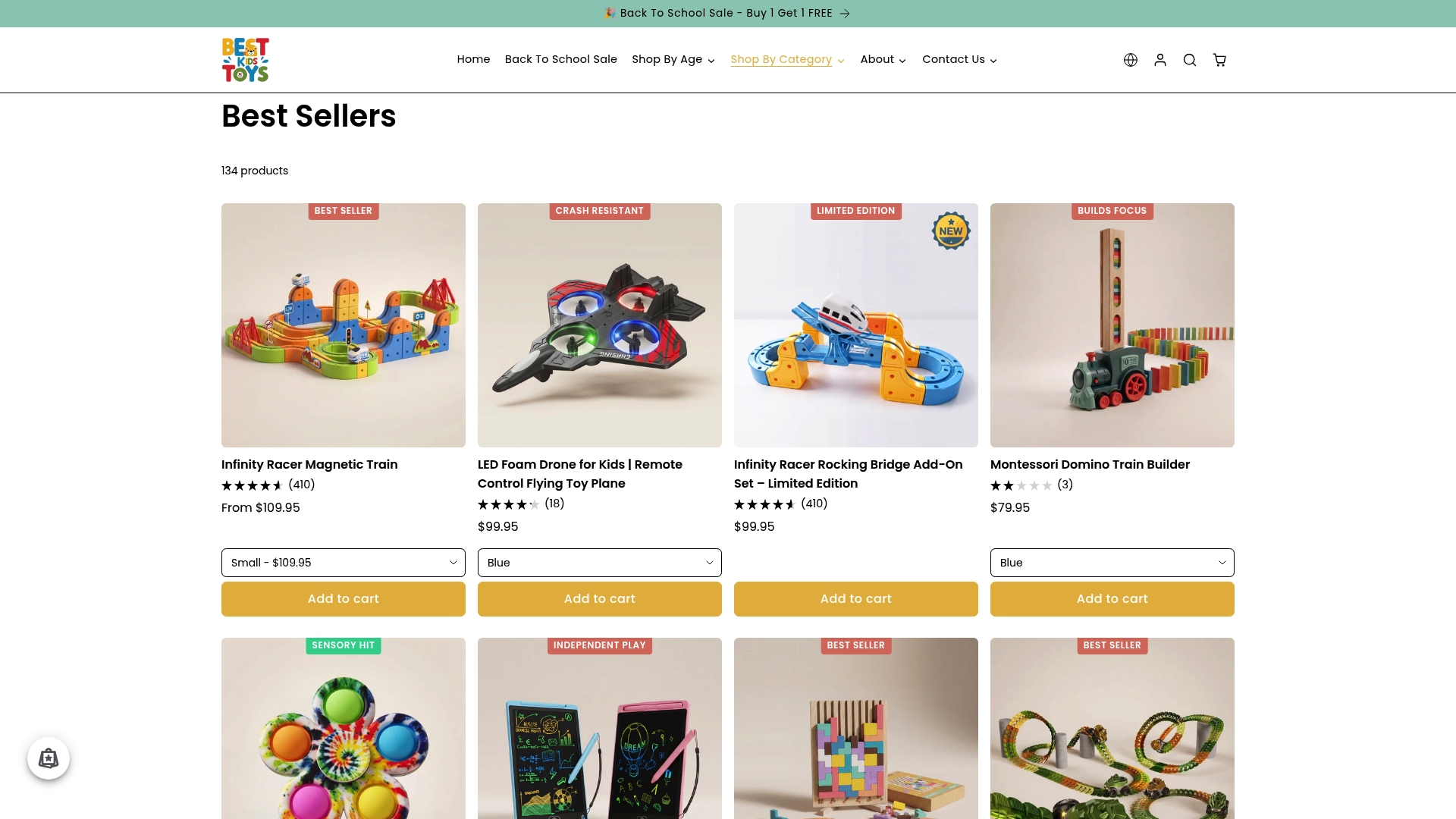
Browse the Toys for Kids Ages 3–4 collection or explore the Little Learners Montessori Busy Book as an affordable, single-concept starting point. Orders over $60 ship free, and current promotions include 40% off select items, so a small core set often costs less than one impulse buy elsewhere. Start with two or three high-value pieces matched to your child’s stage rather than a cart full of low-cost novelty items. Check the age collection that matches your child today, and build from there as their skills grow.
Sources
- 10 Best Montessori Toys For Your Toddler (2026) - The Good Trade
- Where to Find Cheap Montessori Toys: 10 Places to Buy — The Montessori-Minded Mom
- Montessori Toys vs. Regular Toys: The Honest Comparison Every Parent Should Read | Kukoo Montessori
- The Best Affordable Montessori Toys for Kids of All Ages - GoodBuy Gear