



How to Encourage Independent Play at Every Age
Independent play is defined as a child’s ability to explore, create, and problem-solve on their own without constant caregiver direction. This skill does not arrive fully formed. It develops gradually from infancy, starting with just 2–5 minutes at 3–4 months and building toward 30-plus minutes by age 2–3. Knowing how to encourage independent play at each stage saves you from frustration and sets your child up for real developmental wins. The benefits are concrete: stronger creativity, better problem-solving, and growing confidence that carries well beyond the playroom.
How to encourage independent play: setting up the right environment
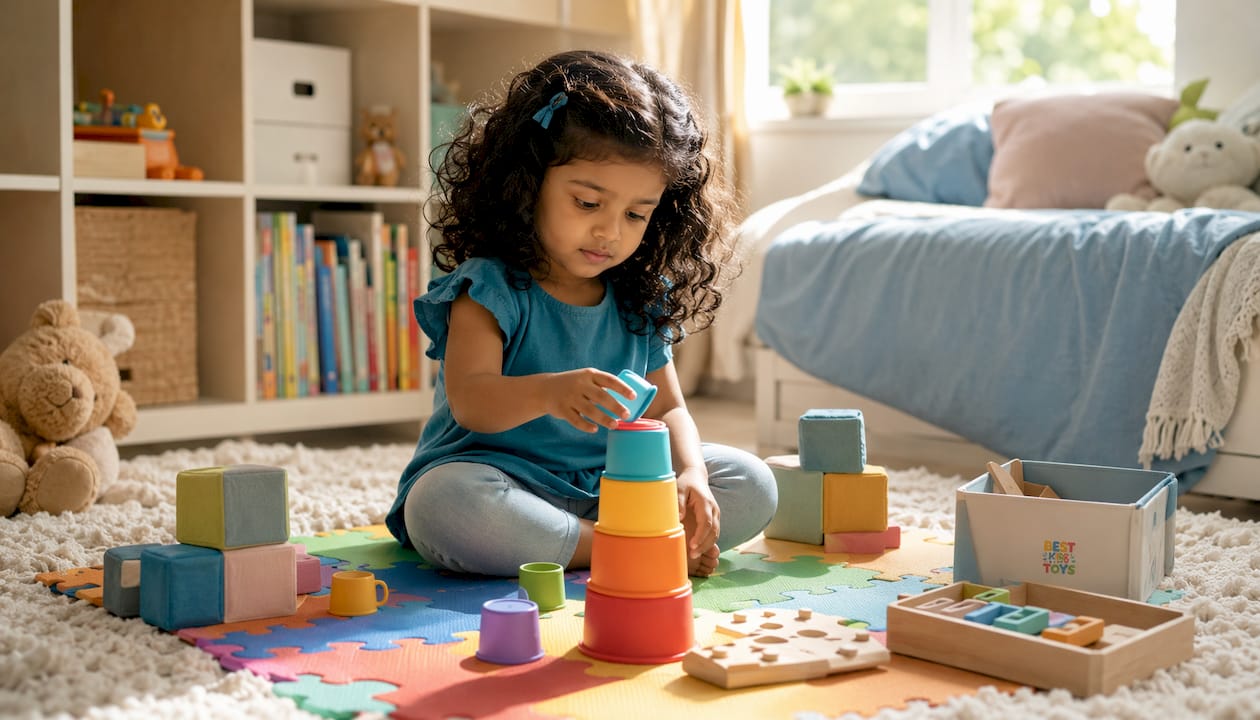
The physical space your child plays in shapes how long and how well they play alone. A cluttered room with 40 toys scattered across the floor does not spark creativity. It triggers decision fatigue.
Rotating 8–12 toys at a time keeps engagement high and prevents the overwhelm that shuts play down. Swap out a batch every week or two, and you will notice your child returning to familiar toys with fresh eyes. This is sometimes called a “Yes Space,” a safe, contained area where everything within reach is fair game and you do not need to say no every 30 seconds.
Toy type matters just as much as quantity. Open-ended toys, the kind with no single “right” answer, keep a child’s brain gears churning far longer than single-purpose gadgets. A set of wooden blocks can become a tower, a road, a fence, or a spaceship. A puzzle with one solution gets solved and set aside.
| Toy type | Effect on solo play |
|---|---|
| Open-ended (blocks, loose parts) | Extends play duration, builds creativity |
| Single-purpose (battery-operated) | Short engagement, limited imagination |
| Sensory materials (sand, water, dough) | Deep focus, self-regulation practice |
| Pretend play props (scarves, figures) | Narrative thinking, emotional processing |
Screens deserve a direct mention here. Screen time does not develop problem-solving, creativity, or emotional regulation the way active play does. Passive stimulation from a screen feels engaging but leaves the skills that matter undeveloped. Keeping screens out of the play space protects the quality of your child’s solo time.
Pro Tip: Browse open-ended toys for kids curated by Thebestkidstoys to find Montessori-inspired options that hold a child’s attention without batteries or screens.
What is the best time of day for independent play?
Timing is one of the most underrated factors in solo play success. A tired, hungry, or overstimulated child will not play independently for long, no matter how perfect the setup.
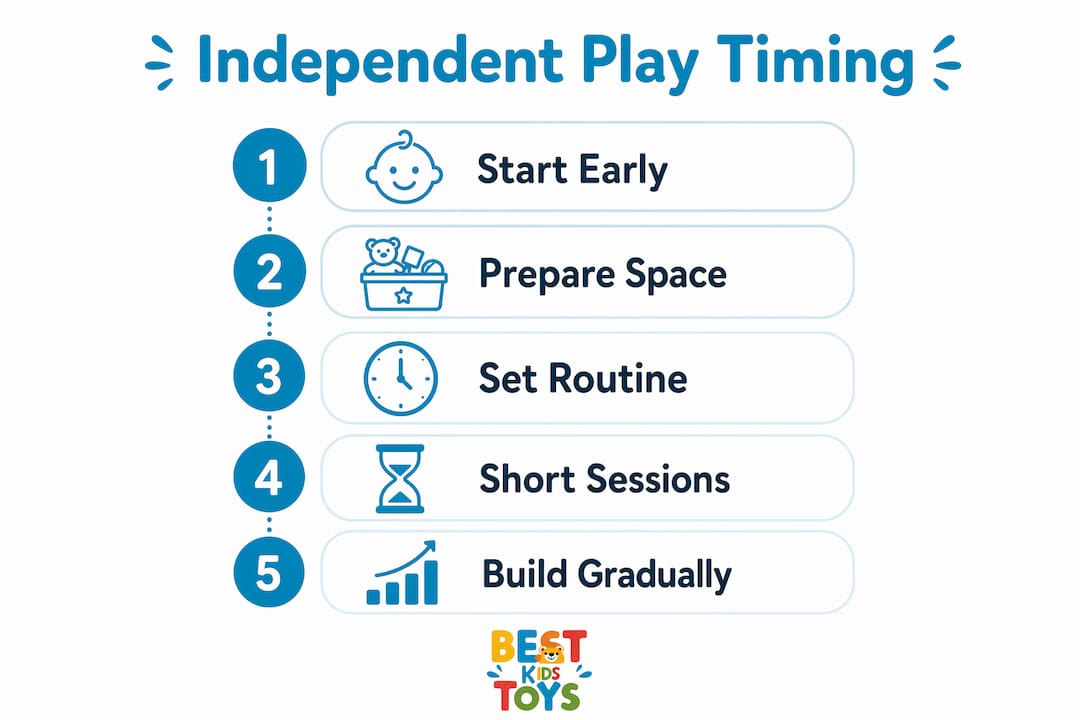
Schedule play at the start of a wake window, right after a nap and a snack, when your child is at their most alert and content. This single shift removes most of the fussiness that parents mistake for a child “not being ready” for independent play. The conditions matter more than the method.
Age-appropriate duration targets give you a realistic baseline:
- 4–6 months: 2–5 minutes of solo exploration
- 6–9 months: 5–10 minutes with caregiver nearby
- 9–12 months: 10–15 minutes in a safe, contained space
- 12–18 months: 15–20 minutes with occasional check-ins
- 2–3 years: 30 or more minutes with growing confidence
- 4–6 years: 45–60 minutes in structured or imaginative play
Children’s attention spans grow roughly 2–5 minutes per year of age. Expecting a 2-year-old to play alone for an hour sets both of you up for disappointment.
Before you step back, spend 5–15 minutes in focused, undivided connection with your child. This “bucket-filling” approach, giving your child your full attention before solo time, reduces separation anxiety and makes the transition to alone play feel natural rather than abrupt. Think of it as filling their emotional tank before asking them to run on their own.
Pro Tip: Build independent play into your morning routine right after breakfast. Consistency teaches your child what to expect, and predictability makes the transition smoother every single day.
How do you build independent play confidence step by step?
Moving from co-play to solo play works best as a gradual process, not a sudden handoff. These steps give you a clear path forward.
- Start with parallel play. Sit near your child and do your own activity, reading, folding laundry, journaling, while they play. Your presence provides security without directing the play.
- Use sportscasting. Narrate your child’s play without judgment or instruction: “You’re stacking the red block on the blue one.” This technique, borrowed from child development research, makes children feel seen without interrupting their focus or telling them what to do next.
- Increase your distance gradually. After a few days of parallel play, move a few feet away. Then to the doorway. Then briefly out of sight. Each step builds trust.
- Return before distress. Consistent return before a child reaches full distress is the foundation of secure independent play. Come back calmly, acknowledge the play, then step away again. This teaches your child that you always come back.
- Introduce a transitional object. A favorite stuffed animal or small comfort item gives younger children a sense of security when you are not in the room.
The most common mistake parents make is rescuing too quickly. The moment a child whimpers, many caregivers rush in, which teaches the child that fussing brings attention. A brief pause, 30–60 seconds, before responding gives your child a chance to self-settle and re-engage.
Avoid over-entertaining as well. When you constantly suggest what to play next or jump in to solve every problem, you train your child to wait for direction rather than generate their own ideas. Independent play is about autonomy and creative exploration, not quiet, perfect behavior.
Pro Tip: For toddlers building solo play skills, the Little Learners Montessori Busy Book from Thebestkidstoys gives children a self-directed activity that holds attention without requiring you to guide every step.
Why is my child not playing independently? Common challenges explained
Most parents hit a wall at some point. The good news is that the most common obstacles have clear, practical solutions.
Social referencing is normal, not failure. When your child looks back at you every few minutes for reassurance, that is healthy developmental behavior. Caregivers should stay visible but non-intrusive so children can check in and return to play without anxiety. A warm smile or a nod is all they need.
Unrealistic expectations cause the most frustration. A 4-month-old playing independently for 20 minutes is not developmentally realistic. A 3-year-old who needs 10 minutes of connection before solo play is not being clingy. Matching your expectations to your child’s actual developmental stage removes most of the friction.
“Independent play is not about a child being quiet or perfectly occupied. It is about a child learning to trust their own curiosity, make choices, and find satisfaction in their own ideas. That process is messy, imperfect, and completely worth it.”
Common pitfalls to watch for:
- Too many toys out at once. Reduce to 8–12 items and rotate regularly.
- Intervening at the first sign of boredom. Boredom is the spark that ignites creativity. Give it 60 seconds before stepping in.
- Inconsistent timing. Playing independently at random times makes it harder for children to settle. A predictable routine builds confidence.
- Using screens as a substitute. Screen time does not build the same skills as hands-on, self-directed play.
If your child consistently shows extreme distress during any solo play attempt, or if independent play skills seem significantly delayed compared to developmental milestones, a conversation with your pediatrician or a child development specialist is a reasonable next step. Most challenges resolve with patience and consistency, but professional guidance is always available when you need it.
Key Takeaways
The most effective way to encourage independent play is to combine a prepared environment, age-matched timing, and a gradual step-back approach that builds your child’s confidence over weeks, not days.
| Point | Details |
|---|---|
| Start early and stay realistic | Independent play begins at 3–4 months; match session length to your child’s age. |
| Prepare the space first | Limit toys to 8–12 items and rotate regularly to maintain focus and reduce overload. |
| Fill the bucket before stepping back | Give 5–15 minutes of focused connection before solo play to reduce anxiety. |
| Use sportscasting, not direction | Narrate play without instructing to help children feel seen and stay engaged. |
| Return before distress | Consistent, calm returns build the trust that makes solo play feel safe. |
What I have learned from watching children play alone
By Danica Hodge
After years of observing children in play-based settings, the pattern I see most often surprises parents: the children who struggle most with independent play are usually the ones whose caregivers try the hardest. Over-involvement, however loving, teaches children to outsource their imagination.
The shift that changes everything is small. Stop solving. Stop suggesting. Sit nearby, stay warm, and let the silence do its work. Children have a natural pull toward exploration when adults resist the urge to fill every quiet moment with direction.
I have also seen parents give up after two or three difficult attempts and conclude their child “just isn’t the type.” Independent play is a learned skill, not a personality trait. Every child can build it with the right conditions and enough time. The Montessori approach to building independence captures this well: prepare the environment, trust the child, and get out of the way.
Consistency matters more than perfection. A five-minute solo play session that happens every single morning builds more capacity than a 30-minute session that happens once a week. Small, steady, and predictable wins every time.
— Danica Hodge
Toys that make independent play easier from day one
Thebestkidstoys curates Montessori-inspired toys designed specifically to support self-directed play at every developmental stage. Each product is reviewed for safety, play value, and the kind of open-ended design that keeps children engaged without needing you to run the show.
The Little Learners Montessori Busy Book is a standout for toddlers building early solo play habits. For children working through sensory exploration, the sensory toy collection offers hands-on options that develop focus and self-regulation. Parents of 3 and 4-year-olds will find age-matched picks in the toddler educational toy range. Free shipping applies on orders over $60, and a 40% off sale is currently running across select items.
FAQ
What age can a child start independent play?
Independent play starts as early as 3–4 months with sessions of just 2–5 minutes. The skill builds gradually with age and consistent practice.
How long should a 2-year-old play independently?
A 2-year-old can typically manage 20–30 minutes of solo play when well-rested, fed, and set up in a prepared space with 8–12 toys available.
Why does my child keep looking at me during independent play?
Social referencing is a normal developmental behavior. Stay visible but non-intrusive, offer a reassuring smile, and your child will return to play on their own.
Is screen time the same as independent play?
Screens do not replace independent play. Passive screen stimulation does not build problem-solving, creativity, or emotional regulation the way hands-on solo play does.
How do I get my 18-month-old to play alone without crying?
Start with parallel play, sitting nearby while your child plays, then gradually increase distance over several days. Filling their attention bucket with 5–15 minutes of focused connection before solo time reduces separation anxiety significantly.