



Give a STEAM Gift That Teaches: 51 Piece Cube Track Picks for Parents
A cube track is a 3D modular magnetic track toy built from snap-together cubes and a motorized mini vehicle, and it is a genuine STEAM winner for kids around age 3 and up. If you are shopping for one, pick your set size based on your child’s age and your play space, and lean toward sets with USB-rechargeable trains for the easiest, most joyful play sessions.
TL;DR:
- USB-rechargeable trains reduce ongoing battery costs and provide longer, uninterrupted play sessions compared to disposable battery models.
- Safety considerations include checking age guidance and small-parts warnings, especially for younger children, to prevent choking hazards.
- Curated educational shops are a reliable source for safe, developmentally appropriate cube track sets that pass safety and quality standards.
- Enhancing play involves charging the train fully, securing supports before running, and combining tracks with other building sets for creative storytelling.
Table of Contents
- The parts that make a cube track come alive
- The STEAM and developmental benefits behind the play
- How to choose the right cube track set
- Where to buy a cube track and what to check first
- Setup tips and play ideas that extend the fun
- Why parents trust our cube track recommendations
- Shop curated cube track picks at Best Kids Toys
- A closing note from our team
- Sources
- FAQ
The parts that make a cube track come alive
Every cube track set starts with a handful of core pieces, and once you know what they do, product listings start to make a lot more sense. The magnetic cubes form the frame, the rails snap into the cube faces to create the road, and a small motorized train zips along the completed path. Connectors and support pieces hold everything upright, which is what lets builders send tracks climbing walls, looping upside down, or spiraling across a table.
- Cubes: the connector points where rails attach and tracks change direction.
- Rails: the magnetic road segments the train travels along.
- Motorized train: the small vehicle that drives the loop once the track is built.
- Connectors and supports: pieces that stabilize vertical or inverted sections.
The magnets are the real trick here. They snap firmly enough that a well-built track can run inverted or vertical without pieces sliding apart. Power comes in two flavors: USB-rechargeable trains, which some product listings describe as the charging method for the motorized train, or disposable batteries, which cost more over time. Piece count matters too: more cubes and rails mean longer, more elaborate builds, while smaller sets keep things simple for first-time builders.
The STEAM and developmental benefits behind the play
Cube track play looks like fun, and it is, but it is also quietly doing a lot of developmental work. Kids build a track, watch the train derail or stall, then adjust the angle or add support cubes until it runs clean. That loop of building, testing, and revising is early engineering thinking in its purest form.
- Engineering practice: trial and error teaches kids to test an idea and fix what fails.
- Spatial reasoning: planning a 3D path strengthens sequencing and visualization skills.
- Fine motor practice: snapping small magnetic pieces together builds hand control.
- Shared learning: guided building gives parents a natural way to ask questions and extend the play.
Reviewers and parents frequently describe cube-track building as a hands-on way to build spatial reasoning and early problem-solving skills, according to product reviews and descriptions for these toys. That lines up with what we see in other construction play, too, where building block play strengthens spatial thinking in similar ways. Pair that with the broader case for early STEM play shaping logical thinking, and a cube track starts to look less like a toy and more like a standing invitation to think like an engineer.
How to choose the right cube track set
Picking a set comes down to six things: age, piece count, materials, power, safety labeling, and budget. Get those right and everything else falls into place.
- Match age to complexity. Younger builders do best with simpler sets and larger pieces; check the manufacturer’s age guidance for magnet and choking cautions.
- Pick piece count with a purpose. Product listings commonly show sets in 51, 81, and 123-piece counts, and more pieces mean more ambitious 3D builds.
- Check the material. Listings often point to ABS plastic with locking or twist connections as durability features worth looking for.
- Favor USB charging. A rechargeable train cuts down on battery costs and keeps play sessions from stalling out.
- Scan for safety labeling. Confirm age recommendations and small-parts warnings are printed clearly on the box or listing.
- Budget for extras. Leave room for expansion packs since spare cubes and rails are often sold separately.
Pro Tip: A 51-piece starter set is a smart choice for a shared family build, while a 123-piece kit gives an older kid room to design something genuinely ambitious on their own.
Where to buy a cube track and what to check first
Cube track sets show up through a few different channels, and each comes with its own trade-offs. Brand-direct storefronts often carry the widest color and accessory selection but may offer limited customer support. Large retailers and marketplaces are convenient and fast to ship, though return policies and spare-parts availability vary widely. Curated educational toy shops tend to vet sets for safety and developmental value before listing them, which saves you the guesswork.
- Confirm the listing ships to your address and states delivery timelines clearly.
- Check return policies before buying, especially for electronic or motorized components.
- Look for a seller who lists safety certifications and age guidance up front.
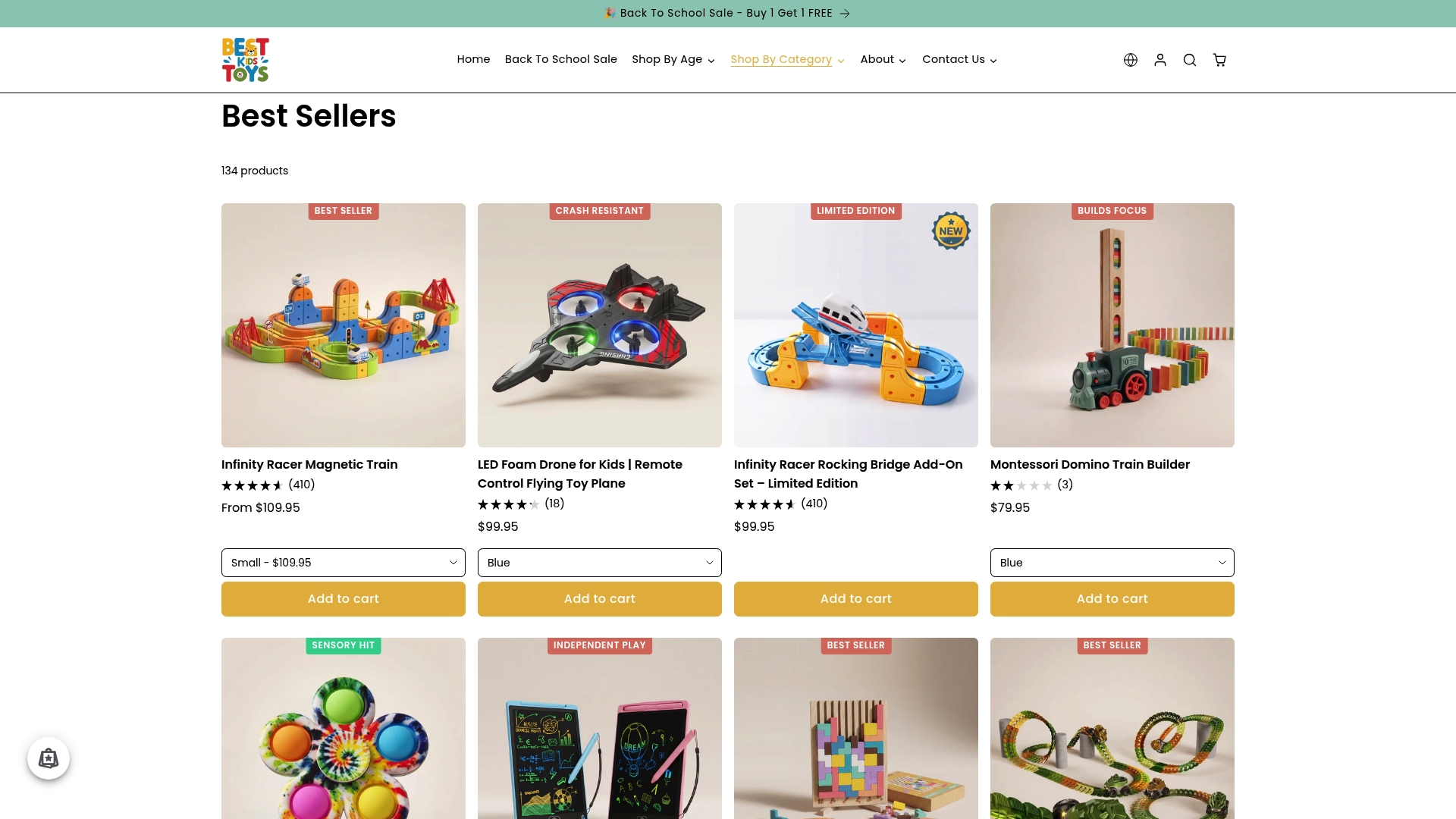
At Best Kids Toys, our Montessori STEM Toys collection groups track-style building sets alongside other hands-on STEM picks, and our Infinity Racer trains and Montessori Domino Train Builder both bring that same build-and-run energy to the table.
Setup tips and play ideas that extend the fun
A little setup goes a long way toward smooth, mess-free play. Clear a flat base area first, since a wobbly surface undoes even a well-engineered track. Secure any tall supports before running the train, and charge the motor fully so play does not stop halfway through a race.
- Race the clock. Time how fast the train completes a loop, then rebuild the track to beat that time.
- Run cause-and-effect experiments. Test what happens when a slope gets steeper or a curve gets tighter.
- Build a story around it. Turn the track into a delivery route or a rescue mission to bring in imaginative play.
- Mix in other building sets. Combine cubes with blocks or domino pieces for a bigger, wilder layout.
Pro Tip: Store magnetic cubes in a shallow bin rather than a deep toy box so kids can see and sort pieces by color or shape before building.
Keep the train’s charging port free of dust and wipe cubes down occasionally, since sticky fingers and magnets do not mix well over time.

Why parents trust our cube track recommendations
Some toy providers specialize in Montessori-inspired educational toys built around development and independent, screen-free play. Their product catalogs often go through review processes focused on developmental value, not just novelty, to support meaningful playtime.
Play that challenges a child to build, test, and rebuild is play that sticks with them long after the track comes apart.
That is the standard we hold cube track sets and every construction toy to before they earn a place in our collection.
— Danica Hodge
Shop curated cube track picks at Best Kids Toys
If you want a cube track set that has already been checked for build quality and play value, our curated collections make the choice easier. Browse Montessori STEM Toys for hands-on building sets, or look at our Infinity Racer trains and Montessori Domino Train Builder for track-style play with a Montessori foundation.
- Check the listed age range before adding a set to your cart.
- Use site filters to narrow by price, piece count, or play style.
- Some shops offer free shipping on orders above a certain threshold and may run seasonal promotions on select toys.
Start with our best sellers if you are not sure where to begin.
A closing note from our team
Watching a child debug their own track, again and again, until the train finally makes it around clean, is one of the small joys of this job. If you are picking your first set, start simple, charge the train fully, and let curiosity take it from there. Browse our collections anytime, and reach out if you have questions.
— Danica Hodge
FAQ
Do it yourself cube track?
Yes, most cube track sets are designed for hands-on assembly at home, with cubes and rails that snap together without tools. Kids can build simple loops first, then add height, curves, or inversions as they get comfortable with the pieces.
Where can I buy rail cubes?
Rail cubes are sold through brand-direct storefronts, large retailers, marketplace listings, and curated educational toy shops. Curated shops like Best Kids Toys group these sets alongside other STEM building toys, which makes comparing age range and piece count easier.
What age is ClickRail for?
Age guidance varies by set, so always check the specific product listing before buying, since magnet size and piece count affect the recommended age range. Smaller, simpler sets tend to suit younger builders, while larger kits with more pieces suit older kids ready for complex 3D designs.
What is a rail cube?
A rail cube is a magnetic connector piece that lets track segments snap together to build a 3D path for a motorized mini train. Rail cubes allow builders to send tracks vertical, inverted, or looping, since the magnetic connections hold firmly once pieces lock in place.