



Behavioral Schemas: A Guide for Parents and Educators
Behavioral schemas are defined as mental frameworks that organize categories of information, allowing children to interpret new experiences rapidly and without conscious effort. Rooted in Jean Piaget’s schema theory in psychology, these cognitive structures form early in childhood and shape everything from how a toddler stacks blocks to how a fifth grader processes a history lesson. Understanding how schemas influence behavior gives you a real advantage as a parent or educator. When you recognize the mental patterns driving a child’s actions, you can work with those patterns instead of against them.
What are behavioral schemas and how do they develop?
Schemas are mental frameworks) that organize categories of information, developed early in childhood, allowing rapid interpretation without conscious thought. Think of them as mental filing cabinets. Every new experience gets sorted into an existing folder, or a new folder gets created when nothing fits.
Piaget described two processes that drive schema development: assimilation and accommodation. Assimilation happens when a child fits new information into an existing schema. A toddler who calls every four-legged animal a “dog” is assimilating. Accommodation happens when the existing schema must change to fit new information. When that same toddler learns that cats are different from dogs, the schema expands. Both processes are constantly active during early childhood, which is why the preschool years are such a critical window for cognitive growth.
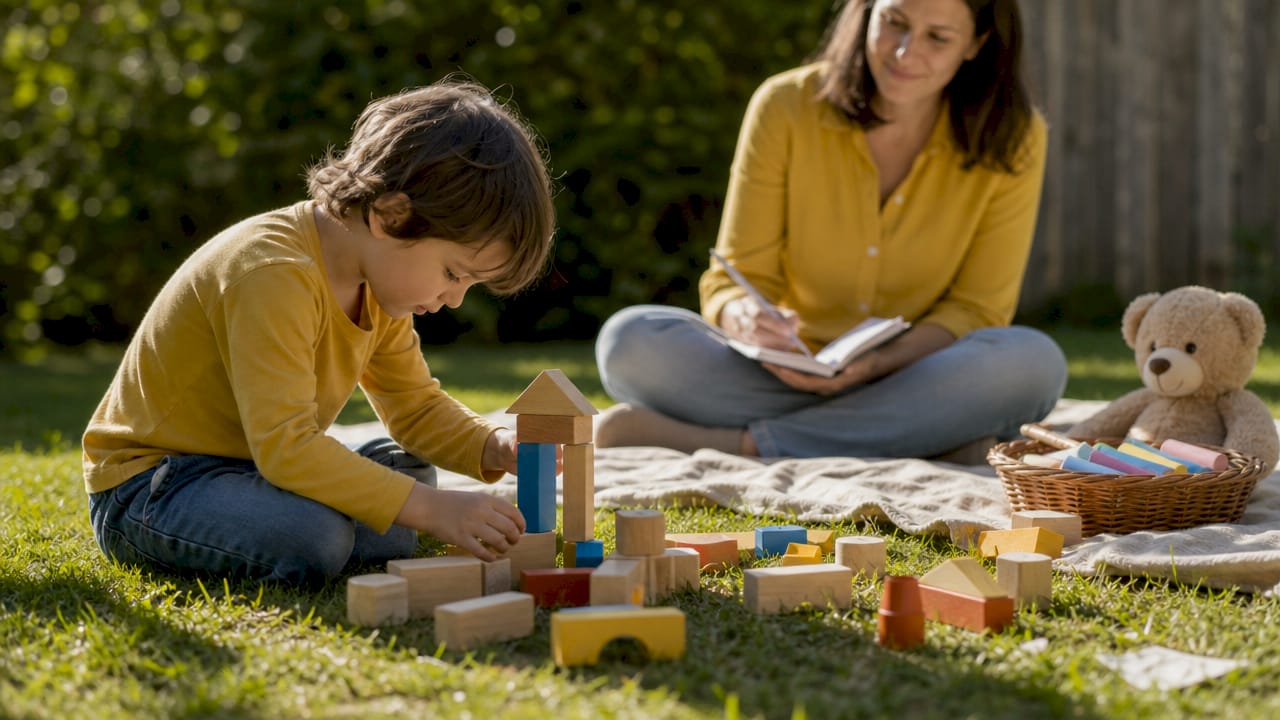
Schemas also become automatic over time. Once a mental framework is established, the brain uses it as a shortcut. This efficiency is useful, but it comes with a cost. Schemas are largely inflexible) once established, often distorting or ignoring contradictory information. A child who has learned that “school is boring” will filter classroom experiences through that lens, noticing evidence that confirms the belief and overlooking moments that challenge it.
Key factors that shape schema formation in early childhood include:
- Repeated experiences: The more often a child encounters a pattern, the stronger the schema becomes.
- Emotional significance: Experiences tied to strong emotions form schemas faster and hold on longer.
- Social modeling: Children build schemas by watching caregivers, teachers, and peers.
- Sensory input: Hands-on, physical experiences create richer, more durable mental frameworks than passive observation.
What are common behavioral schemas seen in children?
Common children’s play schemas include trajectory, positioning, transporting, connecting, transforming, rotating, enclosing, enveloping, and orientation. Recognizing these patterns helps you understand what a child is actually practicing when their behavior looks repetitive or even disruptive.
Each schema shows up as a repeated behavioral pattern tied to a specific type of exploration. A child obsessed with throwing objects is working through the trajectory schema, testing how force, angle, and distance interact. A child who constantly lines up toys is exploring the positioning schema, building an early sense of order and sequence. These are not random behaviors. They are the brain gears churning through real cognitive work.
| Schema type | How it looks in play | Developmental benefit |
|---|---|---|
| Trajectory | Throwing, dropping, rolling objects | Spatial reasoning, cause and effect |
| Enclosure | Building fences, surrounding objects | Boundary awareness, mathematical thinking |
| Transporting | Carrying items from place to place | Motor planning, categorization |
| Transformation | Mixing materials, changing states | Scientific thinking, creativity |
| Connecting | Linking blocks, tying things together | Engineering concepts, sequencing |
| Rotation | Spinning wheels, turning objects | Physics concepts, pattern recognition |
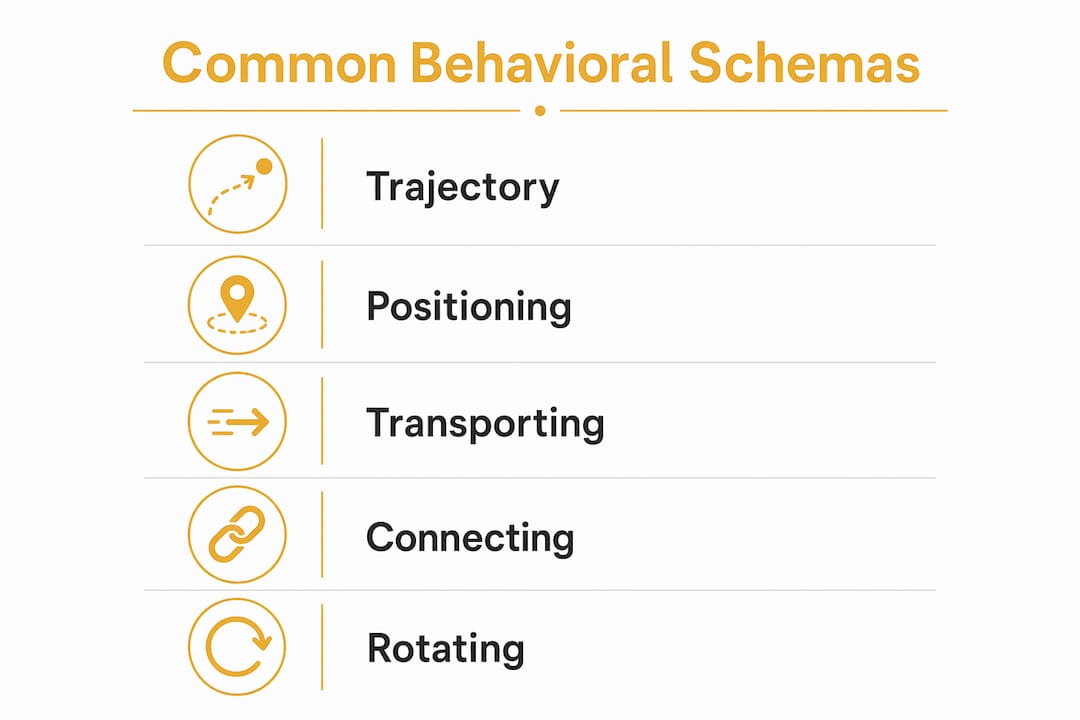
These schemas connect directly to cognitive and motor skill development. A child who spends twenty minutes filling and dumping a bucket is not wasting time. That child is building the neural pathways that will later support math, science, and logical reasoning.
Pro Tip: When a child’s behavior seems repetitive or odd, ask yourself which schema it might represent. Naming the schema shifts your response from frustration to curiosity, and that shift changes the entire interaction.
How do schemas influence behavior in classroom learning?
Schema activation is the process of connecting new information to what a child already knows. Activating existing schemas before presenting new concepts enhances long-term retention and comprehension in students. That mental “hook” makes new material stick because the brain has somewhere to attach it.
The flip side is equally important to understand. When a child lacks a relevant schema, new information feels disconnected and hard to retain. A student who has never seen a farm will struggle to engage with a story about harvesting crops. The words are there, but the mental framework to hold them is missing. Educators who build background knowledge before introducing new content are, in effect, building schemas first.
Schema rigidity creates a different set of challenges. Schemas influence what we pay attention to, often causing biases by focusing on schema-consistent information and ignoring contradictions. In a classroom, this shows up when a child dismisses feedback that conflicts with their self-image, or when a student who believes they are “bad at math” stops trying before the lesson even begins.
Cognitive behavioral patterns shaped by maladaptive schemas can also produce distorted thinking. Cognitive behavioral research identifies 10–15 primary cognitive distortions representing systematic errors in schema-driven thinking. Under stress, children often rely on three or four core distortions, such as mind reading (“the teacher hates me”) or overgeneralization (“I always fail”). These are not character flaws. They are schema-driven shortcuts that need gentle, consistent redirection.
Practical signs that schema rigidity is affecting a child’s learning include:
- Refusing to try new tasks because “I already know I can’t do it.”
- Misremembering instructions in ways that match their expectations, not what was actually said.
- Reacting with strong emotion when routines change unexpectedly.
- Consistently interpreting neutral feedback as criticism.
Memory is reconstructive, meaning children rebuild past events based on fragments filled in by their schemas. This explains why two students can experience the same classroom moment and walk away with completely different memories of it.
How can you support positive schema development in children?
Maladaptive schemas are deep, enduring themes formed in childhood that impact thoughts, feelings, and behaviors negatively, often requiring active work to change. They typically form when core childhood needs, such as safety, connection, or autonomy, go unmet over time. Recognizing them early gives parents and educators the best chance to redirect them before they calcify.
Here is a practical framework for supporting healthy schema development:
-
Name the schema out loud. When you observe a child in a repeated behavioral pattern, label it warmly. “You love figuring out how things connect, don’t you?” This builds self-awareness without judgment.
-
Offer schema-aligned activities. A child deep in the rotation schema thrives with spinning tops, gears, and wheels. Matching the activity to the schema keeps engagement high and learning deep. Sensory toys that invite hands-on exploration are particularly effective here.
-
Use cognitive restructuring for maladaptive patterns. Cognitive restructuring involves evaluating the objective truth of automatic beliefs. With children, this looks like asking, “Is that always true?” or “Can you think of a time when the opposite happened?” Done consistently, it weakens the grip of negative schemas over time.
-
Practice schema therapy principles at home. Schema therapy combines cognitive, experiential, and behavioral methods to target deep-rooted patterns. Parents do not need to be therapists to apply the core idea: identify the pattern, name it without shame, and practice a different response repeatedly.
-
Build new experiences deliberately. Schemas change through new, repeated experiences. A child with a rigid “I am not creative” schema needs many low-stakes creative wins before that belief shifts. Plan for them intentionally.
-
Collaborate across home and school. Schemas do not stay in one environment. A pattern that forms at home shows up in the classroom, and vice versa. Regular communication between parents and teachers creates a consistent environment for schema change.
Pro Tip: Schemas include emotions and bodily sensations, not just thoughts. A child who tenses up before reading aloud is experiencing a schema at the physical level. Addressing the body response, through breathing or movement, is just as important as addressing the thought.
Key Takeaways
Behavioral schemas are the cognitive frameworks that shape how children perceive, remember, and respond to the world, and understanding them is the most direct path to effective teaching and parenting.
| Point | Details |
|---|---|
| Schemas form early and fast | Mental frameworks develop through repeated experiences in early childhood and become automatic quickly. |
| Play schemas reveal development | Patterns like trajectory, enclosure, and rotation signal real cognitive work happening through play. |
| Schema activation improves learning | Connecting new content to existing schemas boosts retention and comprehension in students. |
| Rigidity creates learning barriers | Schema-driven cognitive distortions cause children to filter out information that challenges their beliefs. |
| Change requires consistent practice | Maladaptive schemas shift through repeated new experiences, cognitive restructuring, and cross-environment support. |
What I have learned from watching schemas in action
Every educator and parent I have spoken with over the years describes the same turning point: the moment they stopped seeing a child’s repetitive or resistant behavior as a problem and started seeing it as information. That shift is not small. It changes the entire relationship between adult and child.
What surprises most people is how physical schemas are. We tend to think of cognition as something that happens in the head. But a child who freezes when asked to read aloud, or who melts down when a routine changes, is experiencing their schema in their whole body. The emotional and sensory components are not side effects. They are the schema. Addressing only the thinking part while ignoring the physical response is like fixing half the circuit.
The other thing I would push back on is the idea that maladaptive schemas are rare or extreme. They are not. A child who has decided they are “not a math person” by age seven has a maladaptive schema. It is not clinical. It is common. And it responds beautifully to patient, consistent, experience-based redirection. The key word is consistent. One good experience does not rewrite a schema. Twenty good experiences, spread across months, start to.
Educators and parents do their best work when they coordinate. A child who hears the same message at home and at school, “You are capable of figuring hard things out,” builds that belief into their schema faster than one who hears it in only one place. That coordination is worth every awkward parent-teacher conference it takes to achieve.
— Hugh
Toys that grow with your child’s developing schemas
Children learn best when their play matches the schema they are actively exploring. The right toy at the right stage does not just entertain. It gives a child’s developing mind exactly the kind of challenge it is ready for.
The Best Kids Toys carries a curated selection of Montessori-inspired toys designed to meet children where their schemas are. From wooden toys for toddlers that invite hands-on transformation and connection play, to educational toys for grandkids that support creativity and independence across age groups, every product is reviewed for quality and developmental fit. You can also browse age-specific collections for kids ages 3–4 and ages 4–5 to find toys that align with where your child is right now. Free shipping applies on orders over $60, and current sales make it easy to build a schema-rich play environment without stretching the budget.
FAQ
What are behavioral schemas in simple terms?
Behavioral schemas are mental frameworks that organize how a person interprets and responds to experiences. They form in early childhood and act as automatic shortcuts for thinking and behavior.
How do schemas influence behavior in children?
Schemas shape what children pay attention to, how they remember events, and how they react to new situations. A child with a strong “I am capable” schema approaches challenges differently than one with a “I always fail” schema.
What is the difference between adaptive and maladaptive schemas?
Adaptive schemas support healthy thinking and behavior, while maladaptive schemas distort perception and create negative patterns. Maladaptive schemas typically form when core childhood needs go unmet and require consistent, experience-based work to change.
How can educators use schema theory in the classroom?
Educators activate existing schemas by connecting new content to what students already know, which improves retention and comprehension. Recognizing schema rigidity helps teachers address learning resistance with targeted, patient strategies rather than discipline.
What types of play support healthy schema development?
Hands-on, open-ended play that matches a child’s active schema, such as building, sorting, spinning, or filling and emptying, supports the strongest cognitive development. Montessori-aligned and sensory toys are particularly well suited to schema-based learning.
Recommended
- Exploring the World of Kids Toys: A Parent’s Guide – Best Kids Toys
- Sensory Toys: Sensory Toys That Boost Cognitive and Emotional Developm – Best Kids Toys
- Educational Baby Toys: Educational Baby Toys That Support Cognitive an – Best Kids Toys
- Why Montessori Toys Are Good for Kids: A Parent’s Complete Guide – Best Kids Toys