


What It Is
More Than a Toy — It's a Mini Worksite
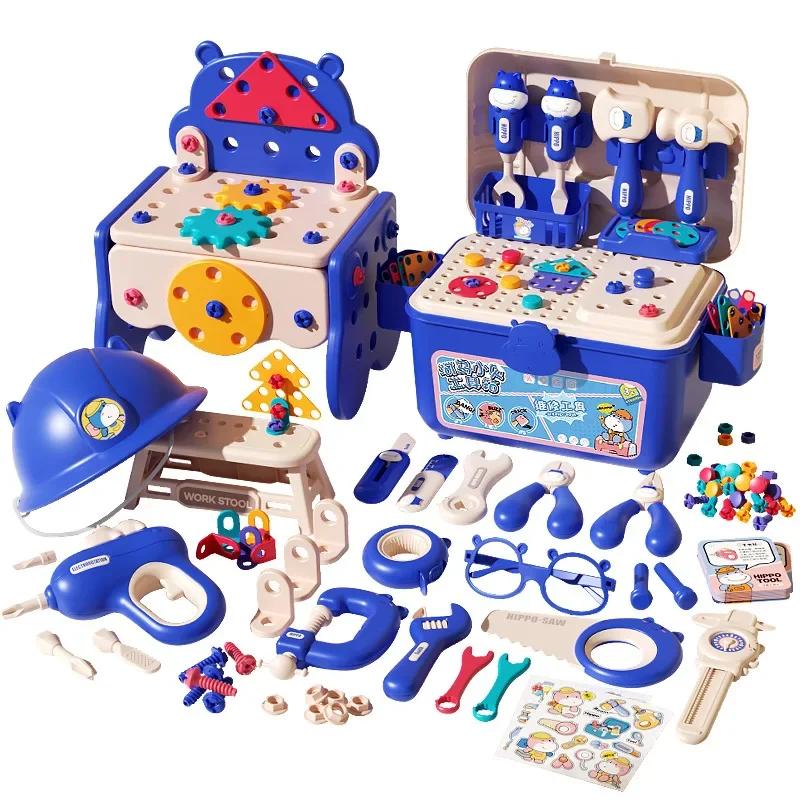
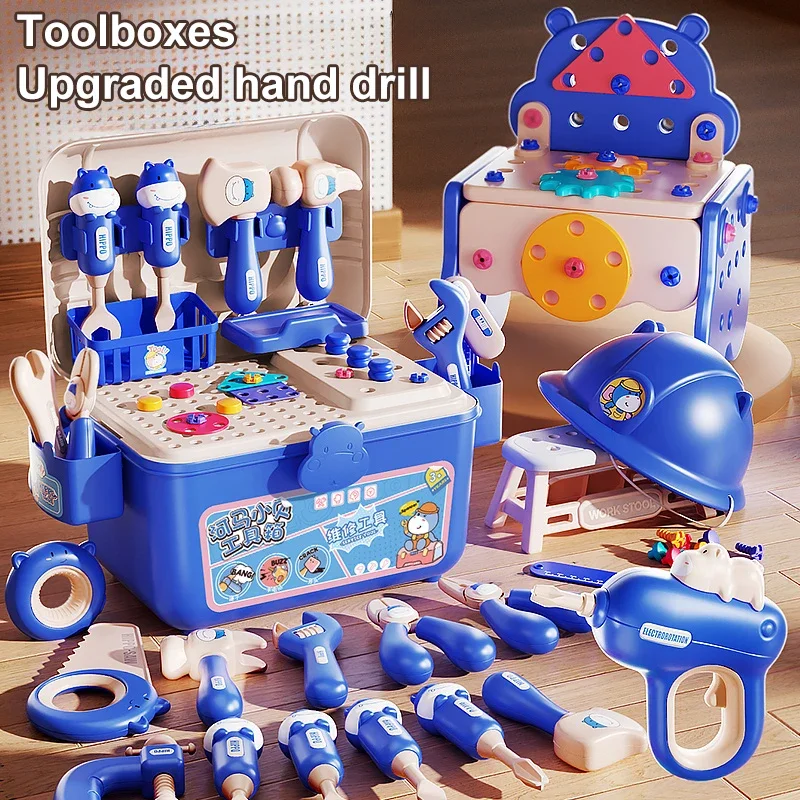
A children's toy drill set is built to look and feel like the real thing — without any of the hazards. At its core it's a battery-powered drill sized for small hands, typically bundled alongside other pretend construction tools: a toy hammer, screwdriver, wrench, and chunky building blocks made for tiny fingers to grip and connect.
These kits have been popular for years, but the best versions available today go well beyond a spinning bit and a whirring sound. They're purpose-designed to invite open-ended play, giving kids the freedom to "build" whatever their imagination demands.
"Watch a three-year-old with a toy drill for ten minutes and you'll see concentration, storytelling, and problem-solving all happening at once — it's quietly remarkable."
| Power source | Battery-powered (AA batteries) |
| Material | Non-toxic ABS plastic & soft rubber grip |
| Recommended age | 2–5 years |
| What's included | Toy drill, screwdriver, hammer, wrench, construction blocks |
| Suitable for | All children |
Child Development
How a Toy Drill Actually Helps Your Child Grow
Play that looks simple on the surface is often the most developmentally rich. A toy drill demands that a child grip, aim, press a trigger, and watch the result — all simultaneously. That multi-step physical loop is exactly what builds fine motor control and hand-eye coordination over time.
Beyond the physical side, construction play opens up a world of imaginative narrative. Children don't just "drill a block" — they build homes, fix rocket ships, run construction companies. That storytelling dimension exercises language, sequencing, and creative thinking in ways that screens rarely can.
Fine Motor Skills
Gripping, pressing and guiding the drill strengthens the small muscles children rely on for writing and drawing later.
Hand-Eye Coordination
Lining up the drill bit with a block target trains visual-motor integration in a natural, playful context.
Creative Thinking
Open-ended construction play encourages kids to plan, build, and invent stories around what they're making.
Problem Solving
Fitting pieces together and figuring out how to build a stable structure introduces early spatial reasoning.
One parent I spoke to mentioned her daughter's crayon grip improved noticeably after a few weeks of regularly playing with her tool kit — a small but meaningful sign of those underlying motor gains showing up in real life.
Safety First
What Makes a Children's Drill Safe to Use?
Safety is where a cheap toy drill and a well-designed one really diverge. The best sets share a handful of features that parents should look for before handing anything over to a two-year-old.
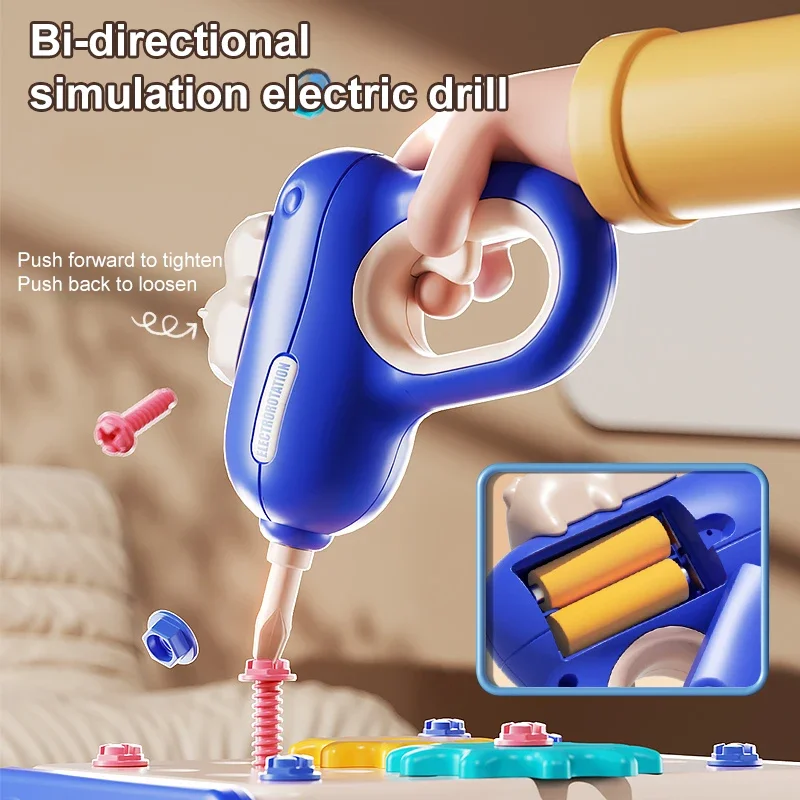
The body should be made from durable, non-toxic ABS plastic — the same material used in Lego bricks — with no sharp mold lines that small hands might catch. The grip should feature a rubberized coating that makes the drill easy to hold without slipping. Battery compartments that require a screwdriver to open are an important detail parents often overlook — they prevent curious toddlers from accessing batteries unsupervised.
| Materials | Non-toxic ABS plastic & rubber |
| Grip | Soft, textured, slip-resistant |
| Battery access | Screw-locked compartment |
| Moving parts | Enclosed, low-speed mechanism |
Play Ideas
Turning a Toy Drill into a Learning Adventure
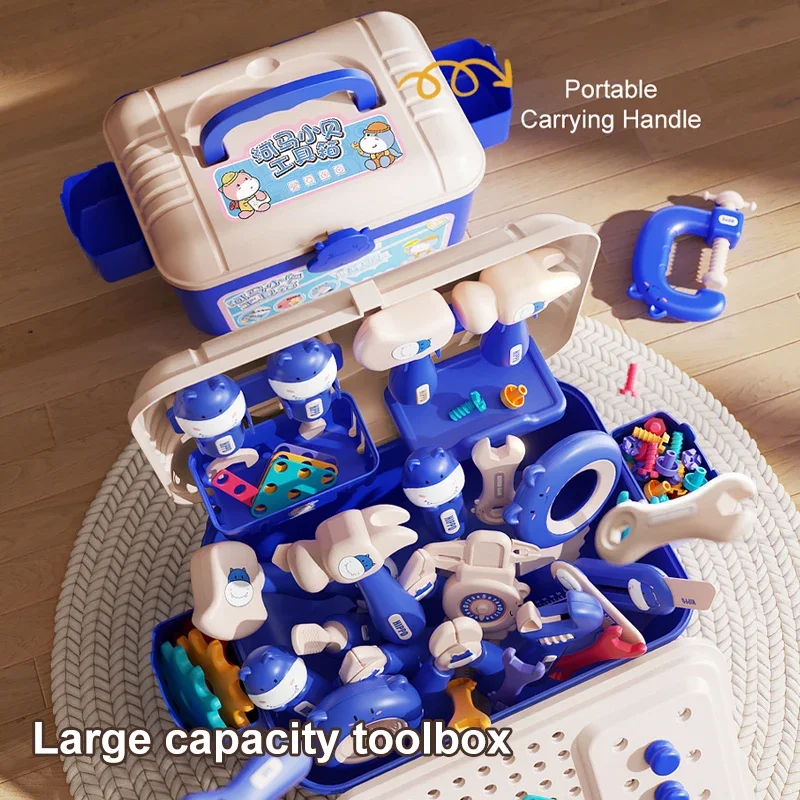
The tool kit is only as good as the play context around it. Setting up a simple construction scenario takes about five minutes but transforms the experience entirely. Here are five easy ways to get the most out of the set at home:
Flatten a few cereal boxes and tape them to the floor. Give your child a "blueprint" and ask them to build the structure. The toy drill handles the "bolting" while other tools fill in the details.
Point out something in the house that's "broken" and invite your child to fix it with the toy kit. The permission to be the helper is incredibly motivating for small children.
Ask questions while they work: "What are you building?" "Who's going to live there?" This turns construction play into language development without it feeling like a lesson.
Combine the toy blocks with duplo, cardboard tubes, and fabric scraps. The more varied the materials, the richer the problem-solving involved.
Sit alongside your child rather than directing them. Building in parallel sparks natural conversation, imitation, and shared pride in what you've both created.
Buying Guide
How to Pick the Right Drill Set for Your Child
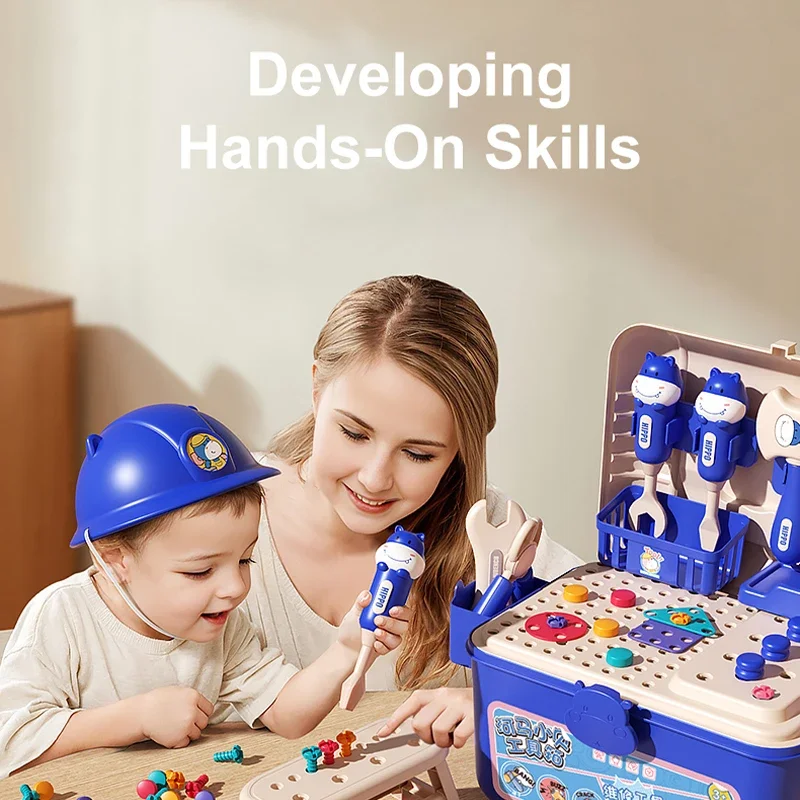
The market is crowded, and not every toy drill set is worth your money. Here's what genuinely matters when you're comparing options:
Safety Certification
Look for CE, EN71, or ASTM markings — signs the toy has passed independent safety testing.
Durability
Thick plastic walls, metal screws in the battery compartment, and reinforced trigger mechanisms are signs of a set built to last.
Age Match
A 2-year-old needs chunkier, lighter components. A 5-year-old benefits from more intricate challenges and wider tool variety.
Learning Value
Sets with building challenges, instruction cards, or varied block shapes offer far more play longevity than a drill alone.
"The best toy drill set is one that gets picked up every single day — not the flashiest box in the shop."
Complete kits that bundle the drill with screwdrivers, a toy hammer, a wrench, and building blocks consistently outlast single-tool purchases. Children switch between tools naturally during play, and having the full set means the activity never stalls.
A Genuinely Worthwhile Investment
A well-made children's toy drill set earns its place in any playroom. It builds real physical skills, fuels imaginative play for years, and gives children the satisfying experience of making things with their own hands. Look for safety-certified materials, a full tool bundle, and a size that matches your child's age — and you'll have a gift they'll still be reaching for long after the novelty wears off.